Protein variant lowered inflammation-linked gene activity in mice
Experiments in mice with premature aging and naturally aged mice found lower activity of a gene for an inflammatory signal, with four or five animals per group.
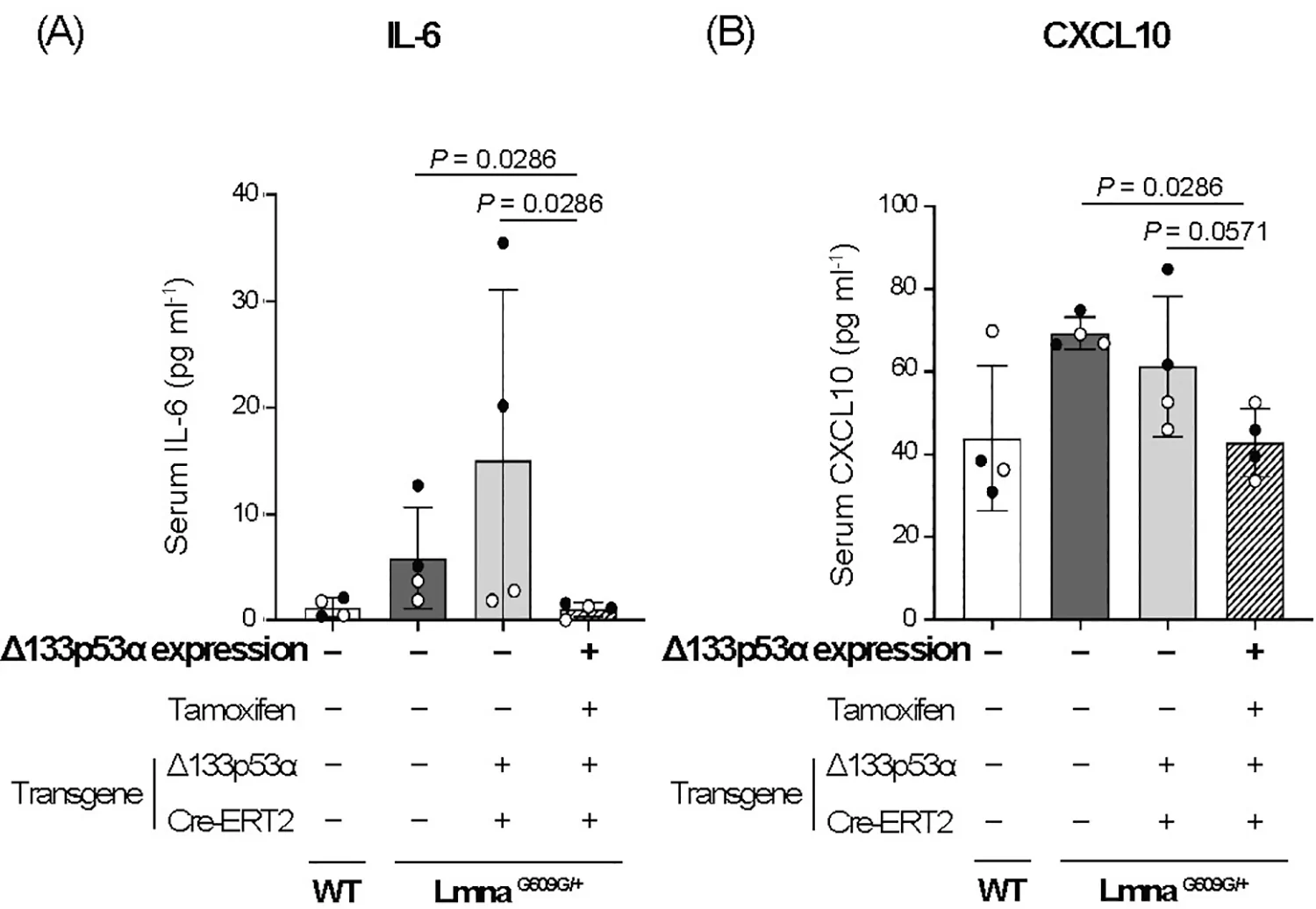
Limit: Only 4 or 5 mice per group were analyzed
Edited by Boris Djordjevic · AgingResearch.News
Researchers compared mice modeling progeria, a premature-aging disorder, and naturally aged mice that did or did not produce Δ133p53α. This human protein variant inhibits senescence, a state in which cells stop dividing. The experiment used four or five mice per group.
In progeria-model mice aged 15 weeks and 10 months, the variant reduced activity of the gene for CXCL10, an inflammation-promoting signaling protein, in the liver, spleen and brain compared with age-matched controls. In naturally aged mice, it reduced the gene’s activity in the spleen and brain at age 2 years. An exploratory blood screen only suggested lower CXCL10 protein levels. Separately, an analysis of human spleen tissue data linked higher gene activity for the variant to lower activity of the CXCL10 gene.
Why it matters
Inflammation is a feature of both accelerated and natural aging. The authors proposed CXCL10 as a potential target of the protein variant’s anti-inflammatory activity.
Caveats
These molecular results did not establish health or lifespan benefits from reducing CXCL10. The mouse groups were small, and the human tissue association did not establish cause and effect.
The paper
National Institutes of Health
Geromedicine, Aug 27, 2026, Open access

