Added drugs help chemotherapy curb prostate cancer spread in mice
In male mice with transplanted prostate tumors, two weeks of chemotherapy plus drugs targeting nondividing cells suppressed cancer spread and strengthened immune activity.
Our read
Interventions- Studied:
- Experiments in male mice with transplanted prostate tumors, against mice receiving docetaxel alone (Randomized)
- What changed:
- With LCL161 added to docetaxel, more mice were free of liver metastases: 67%
- The catch:
- Metastasis was assessed after only two weeks of treatment
- In the record:
- One of 14 papers on docetaxel on record: 2 with results in people, 1 in animals.
- Why it’s aging research:
- Something that builds up with age.
Editor of record: Boris Djordjevic · AgingResearch.News
Male FVB mice with transplanted prostate tumors received docetaxel chemotherapy, drugs targeting senescent cells, or combinations for two weeks in an animal experiment. Researchers randomly assigned mice to treatment groups after confirming tumor development.
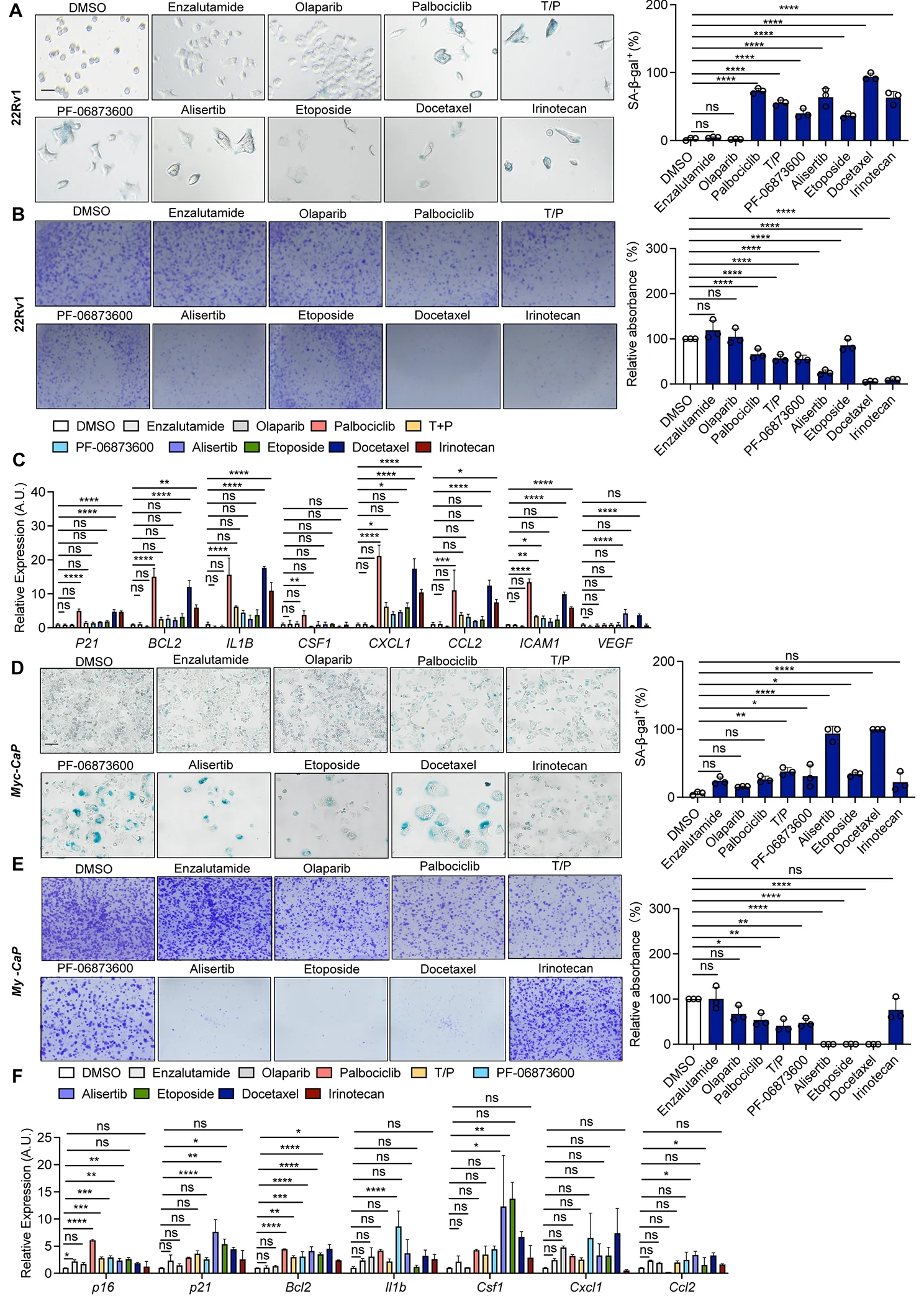
Docetaxel induced senescence, a state in which cells stop dividing, and reduced tumor growth. Alone, it did not activate immunity against tumors or slow cancer spread. Adding senolytic drugs, which kill senescent cells, further suppressed tumor growth and spread and increased the activity of cancer-fighting immune cells. The drugs tested were ABT-263 and LCL161. In separate experiments in human and mouse prostate cancer cells grown in the lab, several cancer drugs induced senescence. Chemotherapy-induced senescent cells released inflammatory substances and factors that remodel the material surrounding cells.
Why it matters
Senescence, an aging-related process, can restrain tumors or promote their spread. The work addresses whether targeting senescent cells could shift that balance during chemotherapy.
Caveats
These were experiments in cells and male mice, not a trial in people. The two-week mouse experiments do not establish benefits or harms for patients with advanced prostate cancer.
The paper
Senolytic Interventions Enhance the Anti-metastatic Activity of Chemotherapy in Prostate Cancer
University of Massachusetts Chan Medical School
Cancer Research, Sep 21, 2026, Open access, accepted manuscript

Comments
Be the first to comment.