Association between physical activity and blood pressure control among Moroccan adults with hypertension
Declared no competing interests
Abstract
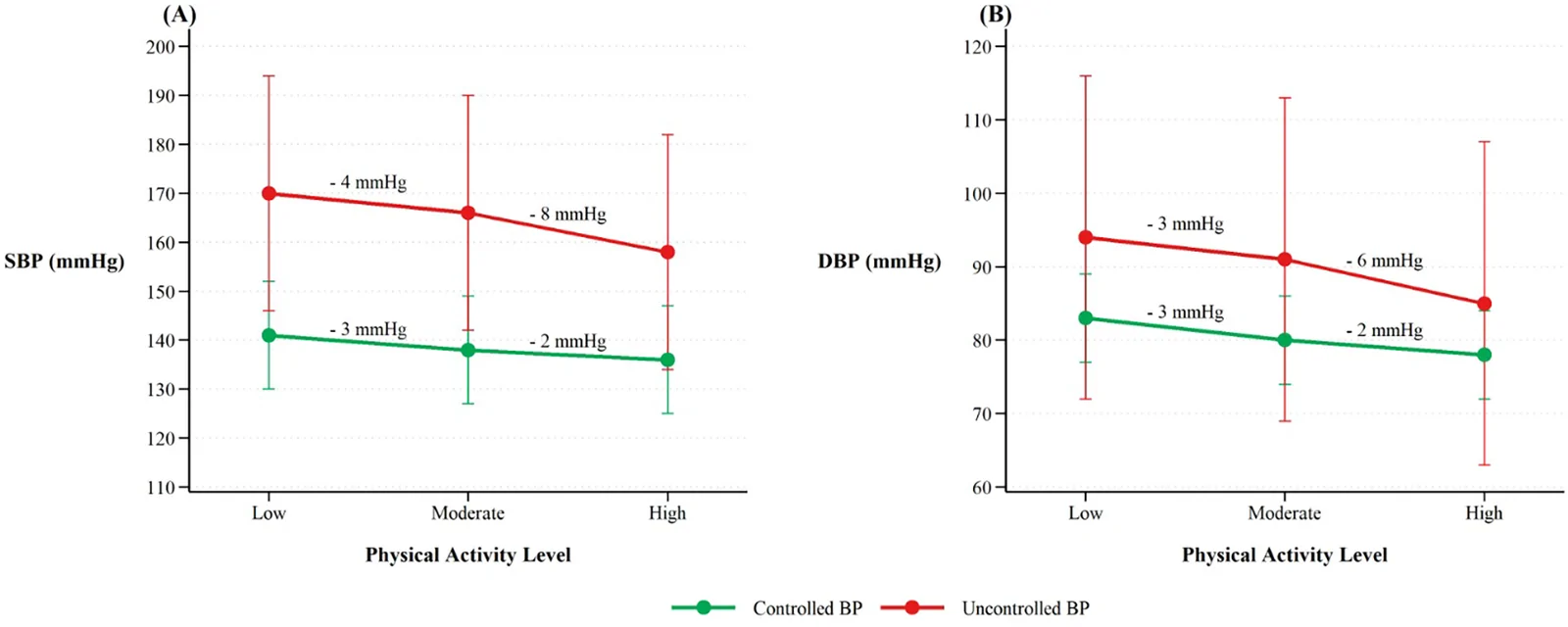
BACKGROUND: Hypertension remains one of the leading causes of cardiovascular morbidity and premature mortality worldwide, with blood pressure control rates remaining particularly in low- and middle-income countries. In Morocco, the relationship between physical activity levels and blood pressure control among hypertensive adults remains insufficiently documented. Accordingly, this study aimed to estimate the prevalence of uncontrolled blood pressure and determine whether graded physical activity levels were independently associated with blood pressure control among treated hypertensive adults attending Moroccan primary healthcare center. METHODS: A cross-sectional study included 612 treated hypertensive adults consecutively recruited during routine follow-up at a primary healthcare center in Kenitra, Morocco, between July and December 2025. Physical activity was assessed using the validated Moroccan IPAQ. Blood pressure was measured, and was interpreted according to the 2023 European Society of Hypertension recommendations. Multivariable logistic regression adjusted for age, sex, income, family history, smoking, salt intake, waist-to-height ratio, diabetes and dyslipidemia, medication adherence, and antihypertensive treatment. Candidate variables were selected at p ≤ 0.20, multicollinearity was assessed using variance inflation factors, and model calibration was evaluated using the Hosmer-Lemeshow test. RESULTS: The mean age of participants was 58.5 ± 11.1 years, and 57.0% were women. Of the 612 participants, 36.1% had low physical activity, 39.1% had moderate physical activity, and 24.8% had high physical activity. Overall, 66.0% had uncontrolled blood pressure. Compared with low physical activity, moderate physical activity was associated with 51% lower odds of uncontrolled blood pressure (AOR = 0.49; 95% CI: 0.31-0.77), whereas high physical activity was associated with 69% lower odds (AOR = 0.31; 95% CI: 0.18-0.52). Higher odds of uncontrolled blood pressure were observed among participants aged >60 years, current smokers, those with an elevated waist-to-height ratio or high salt intake, and those with combined diabetes and dyslipidemia. CONCLUSION: Greater physical activity was linked to more favorable blood pressure control among treated hypertensive adults in Morocco. These findings highlight the potential relevance of physical activity to improve cardiovascular outcomes in Morocco.
From the paper
- Participants
A total of 612 adults with hypertension were included, of whom 349 (57.0%) were women.
- Result
… age >60 years (AOR = 1.51; 95% CI: 1.01–2.27; p = 0.046), family history of hypertension (AOR = 1.74; 95% CI: 1.16–2.61; p = 0.007), combined diabetes and dyslipidemia (AOR = 2.38; 95% CI: 1.32–4.28; p = 0.004), elevated WHtR (AOR = 2.41; 95% CI: 1.39–4.18; p = 0.002) …
Results, Factors associated with uncontrolled blood pressure
- Events by group
Blood pressure control was observed in 171 of 469 participants receiving monotherapy (36.5%), compared with 37 of 143 participants receiving two or more antihypertensive agents (25.9%; p = 0.019).
- Limitation
Its cross-sectional design precludes causal inference, and reverse causation is possible.
Quoted word for word from the full text on PubMed Central.
The paper
Université Ibn-Tofail
Frontiers in Sports and Active Living, 3 Sep 2026, Open access