Excess proteins in blood vessel cells shortened life in mice
Increasing either of two proteins accelerated vascular aging, while removing one extended lifespan in mice engineered to overproduce the other.
Limit: Proteins were elevated from birth rather than increasing gradually with aging
Edited by Boris Djordjevic · AgingResearch.News
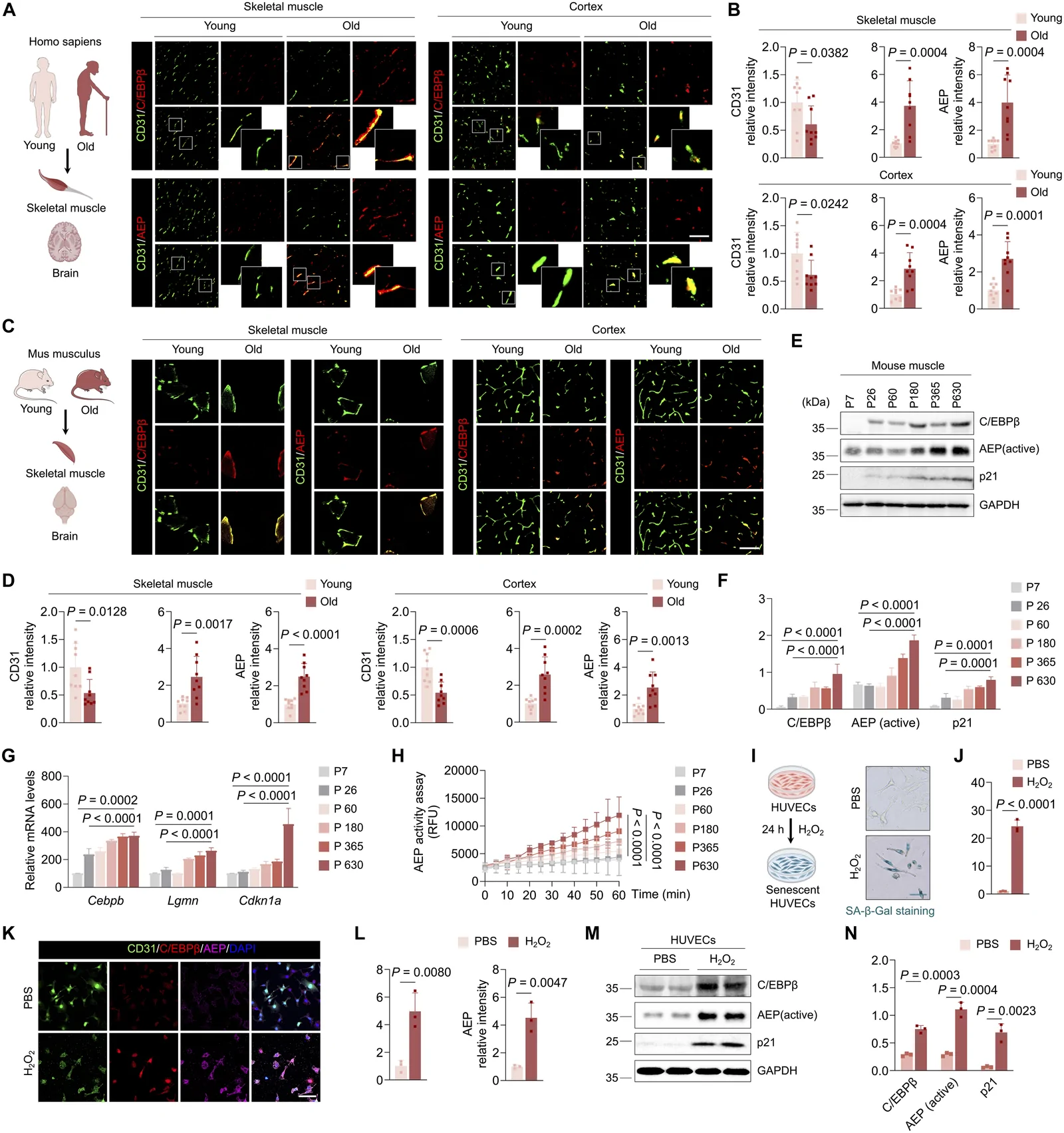
In experiments in mice, researchers increased either of two proteins in endothelial cells, which line blood vessels. C/EBPβ controls gene activity; AEP is an enzyme that cuts proteins. Increasing either accelerated blood vessel aging and shortened lifespan compared with normal littermates.
Tests with isolated proteins showed that AEP cut NAMPT, an enzyme needed to produce nicotinamide adenine dinucleotide (NAD+), a molecule involved in cellular energy use. In mice, the pathway depleted NAD+ throughout the body and promoted senescence, a state in which cells stop dividing. Removing AEP or producing a version of NAMPT resistant to cutting eased vascular aging and extended lifespan in mice engineered to overproduce C/EBPβ in vessel-lining cells. An AEP-inhibiting drug also reduced vascular decline in these engineered mice.
Why it matters
Small blood vessels help maintain nutrient balance and clear waste. The authors propose that senescence in their lining cells helps link vascular decline to aging across the body.
Caveats
The lifespan-extension experiments used genetically altered mice; they do not establish that blocking the pathway extends life during normal aging or in people. The abstract and supplied excerpts do not quantify the lifespan changes.
Nicotinamide mononucleotide is part of David Sinclair's daily regimen in LifespanMore supplements
The paper
Endothelial C/EBPβ/AEP pathway drives vascular deterioration and systemic aging
Chinese Academy of Sciences
Science Advances, Sep 16, 2026, Open access


