Carbon Emission Impact of Semaglutide in People with Obesity in the UK Using a Disease Modelling Approach
Stake: Authors work for Novo Nordisk, which develops semaglutide, hold shares in it and receive grants from it.
Abstract
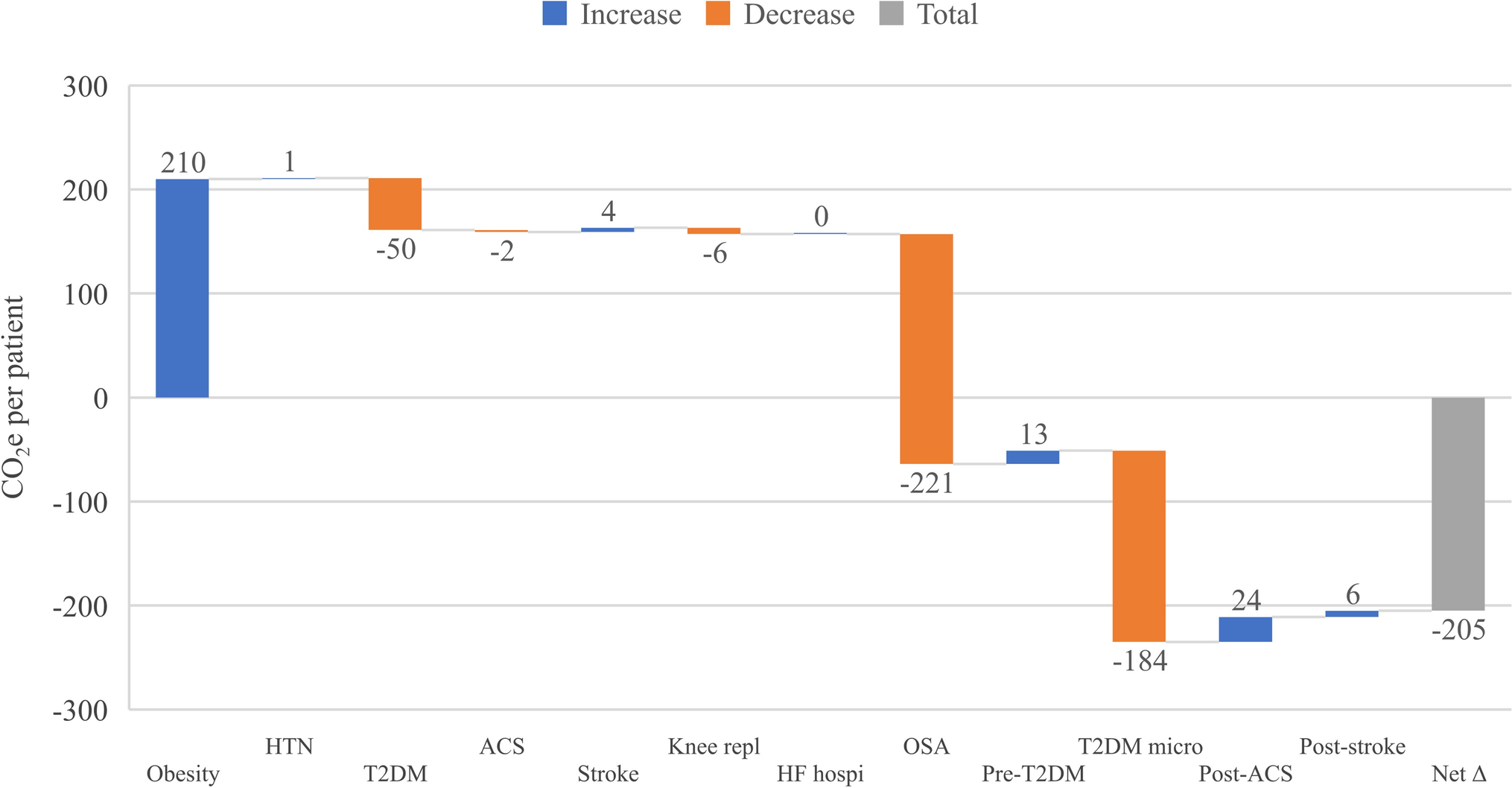
OBJECTIVE: We aimed to assess the carbon footprint and clinical outcomes of once-weekly semaglutide in people with overweight or obesity in the UK using a disease modelling approach. METHODS: A per-patient carbon footprint analysis was conducted to estimate emissions related to obesity management with semaglutide 2.4 mg as an add on to diet and exercise versus diet and exercise alone. A Markov state-transition cohort model (Core Obesity Model) was used for the analysis. Data were sourced from STEP and SELECT trials across three populations: (1) body mass index [BMI] ≥ 30 or ≥ 27 with one or more obesity-related complications (BMI30+/BMI27+C), (2) BMI ≥ 27 with one or more complications, including type 2 diabetes mellitus (BMI27+C), and (3) BMI ≥ 27 with established cardiovascular disease (BMI27+CVD). Carbon emissions were estimated using resource-based and cost-based methods. Key outcomes included life-years, quality-adjusted life-years, and incremental carbon footprint effectiveness ratio. RESULTS: In the BMI30+/BMI27+C and BMI27+C populations, semaglutide was dominant, yielding 0.30 and 0.25 additional life-years, 0.51 and 0.46 additional quality-adjusted life-years, while reducing lifetime carbon emissions by 1.8% (9850 vs 10,030 kg of CO₂ equivalent [CO₂e]) and 1.9% (9792 vs 9983 kg CO₂e), respectively. Manufacturing emissions of semaglutide were offset by reductions in carbon emissions resulting from fewer obesity-related complications. In the BMI27+CVD population, semaglutide improved life-years by 0.56 and quality-adjusted life-years by 0.59, but emissions increased (14,700 vs 14,444 kg CO₂e) because of longer survival and increased monitoring. Scenario and sensitivity analyses confirmed the robustness of the results. CONCLUSIONS: Semaglutide offers both clinical and environmental benefits in obesity management, supporting the UK's net-zero emissions goals.
The paper
Novo Nordisk (Denmark); IQVIA (United Kingdom)
PharmacoEconomics, 10 Sep 2026