Orforglipron matches insulin glargine on cardiovascular safety
Over a median two years, major adverse cardiovascular events occurred in 4.2% of orforglipron participants compared with 5.0% of insulin glargine controls.
Lancet
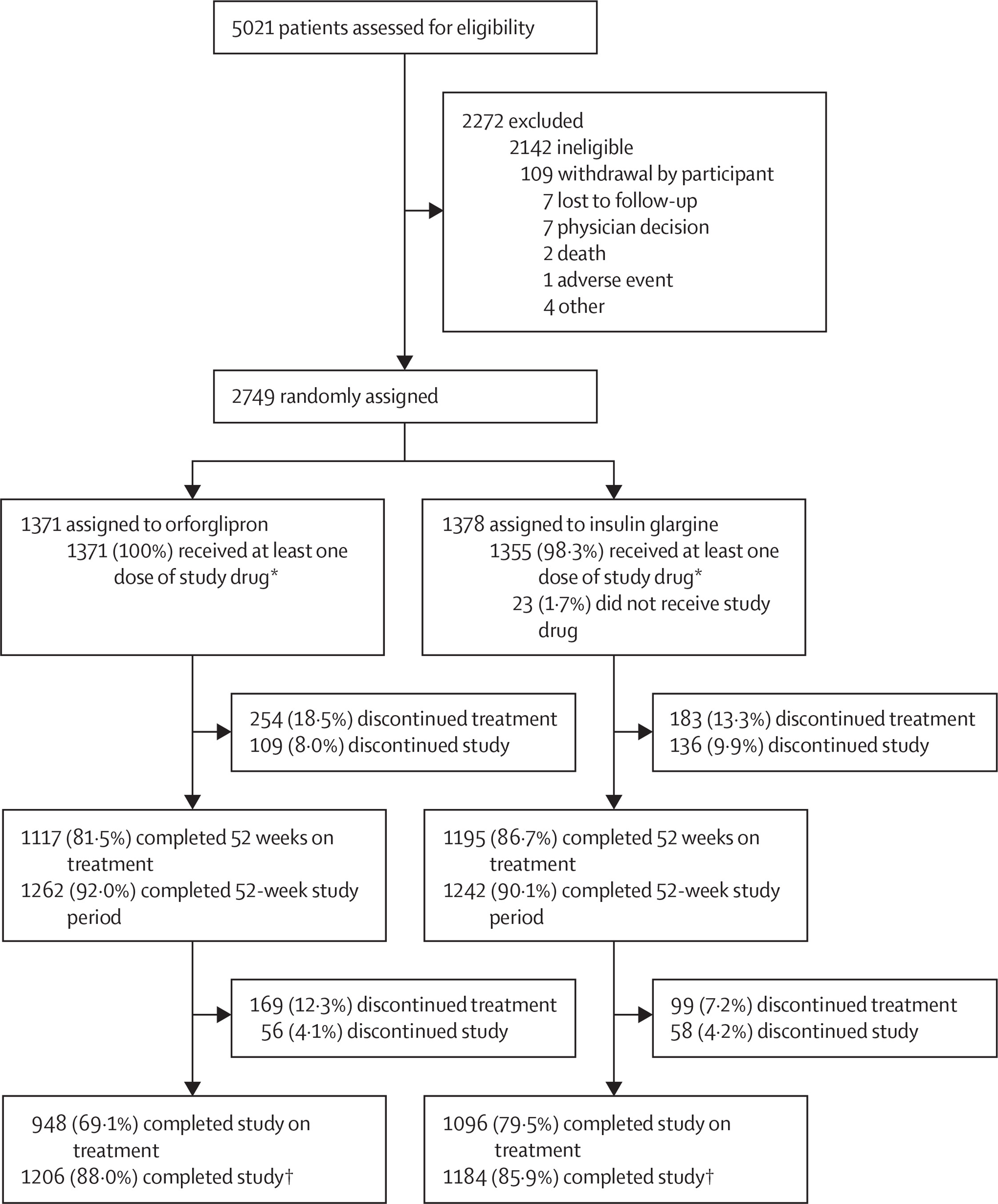
In adults with type 2 diabetes and obesity or overweight who had established cardiovascular or chronic kidney disease, the phase 3 ACHIEVE-4 trial compared oral orforglipron against injectable insulin glargine. Researchers randomly assigned 2,749 participants to receive once-daily orforglipron at maximum tolerated dose or once-daily titrated insulin glargine. Over a median follow-up of 2 years, four-component major adverse cardiovascular events occurred in 57 of 1,358 participants (4.2%) on orforglipron and 67 of 1,343 participants (5.0%) on insulin glargine, meeting the criterion for non-inferiority with a hazard ratio of 0.84 (95% CI 0.59–1.20). Gastrointestinal adverse events occurred in 62.1% of orforglipron recipients compared to 14.2% of insulin recipients. Clinically significant or severe hypoglycaemia was reported in 6.8% with orforglipron against 19.2% with insulin glargine, and 19 participants died in the orforglipron group compared with 43 receiving insulin.
Why it matters
Cardiovascular disease remains a primary driver of morbidity and mortality in aging populations with cardiometabolic disorders. These findings suggest that oral non-peptide GLP-1 receptor agonists can match injectable insulin on cardiovascular safety while reducing severe hypoglycemic episodes.
Caveats
The study used an open-label design, and non-inferiority does not indicate superior cardiovascular protection over insulin glargine. Additionally, gastrointestinal adverse events were frequent with orforglipron and were the most common reason for treatment discontinuation.
The paper
Show 7 more authors
Melanie Jane Davies, David Cox, Jiaxun Chen, Wen-Shuo Wu, Max Denning, Rong Liu, Lisa Ludwig,University of North Carolina at Chapel Hill · Eli Lilly (United States)
Lancet · 30 Sep 2026