Brain scan measures varied by Hispanic/Latino heritage
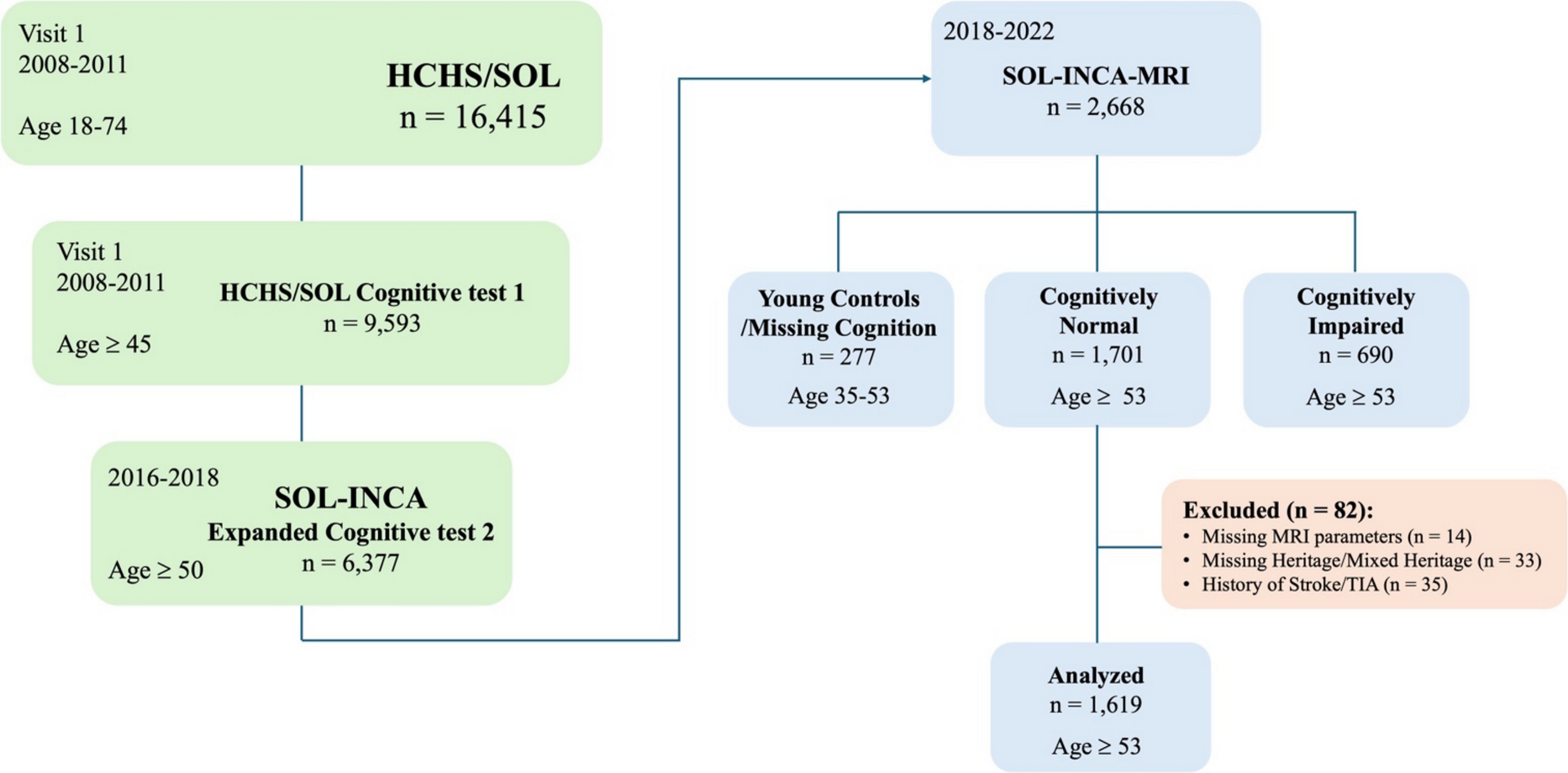
An observational analysis of 1,619 cognitively normal Hispanic/Latino adults found differences in brain white matter measures across heritage groups after accounting for vascular risk factors.
Our read
Populations- Studied:
- Cross-sectional study of 1,619 cognitively normal Hispanic/Latino adults
- What changed:
- Cuban and Puerto Rican participants had higher levels of free water and white matter hyperintensities than Mexican participants
- The catch:
- Participants were cognitively normal, so findings may not apply to people with cognitive impairment
- In the record:
- The 1,681st paper on smoking with results in people; 4,462 on record in all.
- Why it’s aging research:
- It bears on staying healthy in midlife and later life.
Editor of record: Boris Djordjevic · AgingResearch.News
An observational study examined brain MRI scans from 1,619 cognitively normal Hispanic/Latino adults. Researchers compared measures of white matter, the tissue that connects brain regions, across heritage groups. Their models accounted for vascular risk factors, age, sex, education and study center.
Cuban participants had higher levels of free water, a measure of water outside cells, than Mexican participants. They also had higher levels of white matter hyperintensities, areas that appear bright on MRI scans. Puerto Rican participants also had higher white matter hyperintensity levels than Mexican participants. High blood pressure and diabetes were associated with higher free water and white matter hyperintensity levels. The authors concluded that white matter measures differed across heritage groups even after accounting for vascular risk factors.
Why it matters
Small blood vessel disease in the brain contributes to stroke and cognitive decline. The findings highlight the importance of considering differences within Hispanic/Latino populations when studying brain aging.
Caveats
This observational analysis cannot establish what caused the differences. Participants were cognitively normal, so the findings do not necessarily apply to people with cognitive impairment.

Comments
Be the first to comment.