Acute hyperglycemia during hospitalization, nutritional support, and longer-term cardiovascular outcomes: a nationwide real-world data cohort study
Declared no competing interests
Abstract
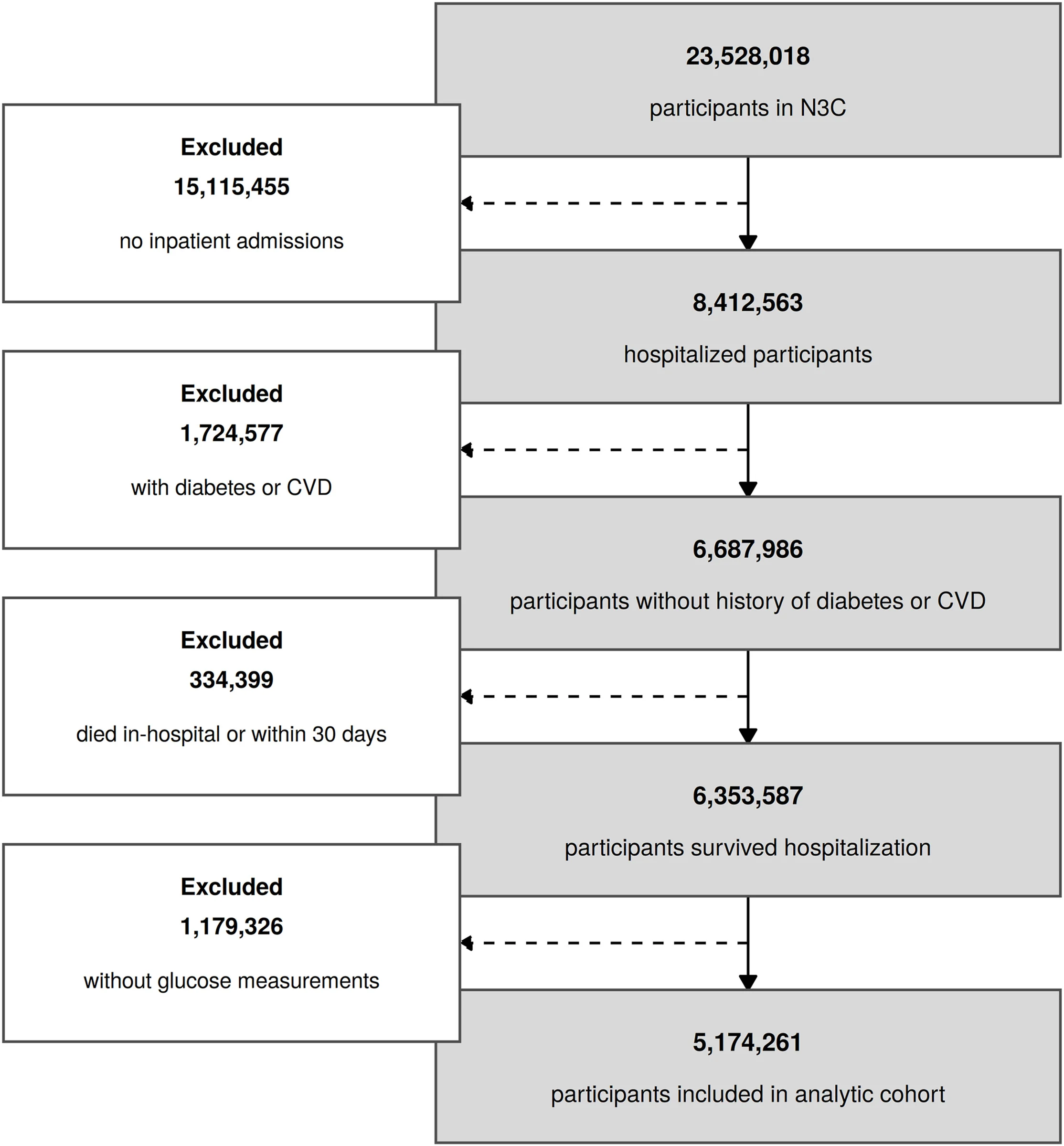
BACKGROUND: Acute hyperglycemia is not only a marker of acute illness severity but may also contribute to worse patient outcomes. However, the longer-term association between acute hyperglycemia and cardiovascular (CV) outcomes, particularly in the context of nutritional support influencing the relation, remains unexplained. OBJECTIVES: To evaluate the long-term association between acute hyperglycemia during hospitalization and incident CV events after discharge, and to examine whether inpatient nutritional support modifies this risk. METHODS: This retrospective cohort study used United States National Clinical Cohort Collaborative data. We included 5,174,261 adults aged ≥18 y hospitalized between 1 March, 2020 and 1 March, 2022, excluding those with baseline diabetes, CV disease (CVD), or death during hospitalization or within 30 d postdischarge. Acute hyperglycemia was defined as blood glucose >180 mg/dL without pre-existing diabetes. Nutritional support was defined as receipt of enteral or parenteral nutrition during hospitalization. The primary outcome was a composite of CV events occurring >30 d postdischarge, including physician-diagnosed cerebrovascular disorders, dysrhythmias, ischemic heart disease, heart failure, and thrombotic disorders. Median follow-up was 2.3 y (IQR: 1.8, 3.4 y). Cox regression models estimated hazard ratios (HR) adjusted for demographics, hypertension, obesity, coronary artery disease, chronic kidney disease, chronic lung disease, and CV medication use. RESULTS: Of 5,174,261 patients [mean (SD) age, 55 (21) y; 48.9% male; 67.2% White], 1,390,281 (26.8%) had acute hyperglycemia. Hyperglycemia was associated with a higher risk of incident CV events [adjusted HR: 1.82; 95% confidence interval (CI): 1.80, 1.84]. Interactions between acute hyperglycemia and nutritional supports were statistically significant for parenteral (P < 0.01) and enteral feeding (P = 0.026). Stratified HRs were 2.11 (95% CI: 2.06, 2.16) for parenteral nutrition, 1.95 (95% CI: 1.92, 1.98) for enteral nutrition, and 1.35 (95% CI: 1.32, 1.38) without nutritional support. CONCLUSIONS: Acute hyperglycemia during hospitalization is associated with higher long-term CVD risk, with pronounced associations among patients receiving parenteral or enteral nutrition.
The paper
Tulane University; Indiana University Health
The American Journal of Clinical Nutrition, 9 Sep 2026