Comparative Genomics Reveals Signatures of Distinct Metabolic Strategies and Gene Loss Associated With Hydra Immortality
Abstract
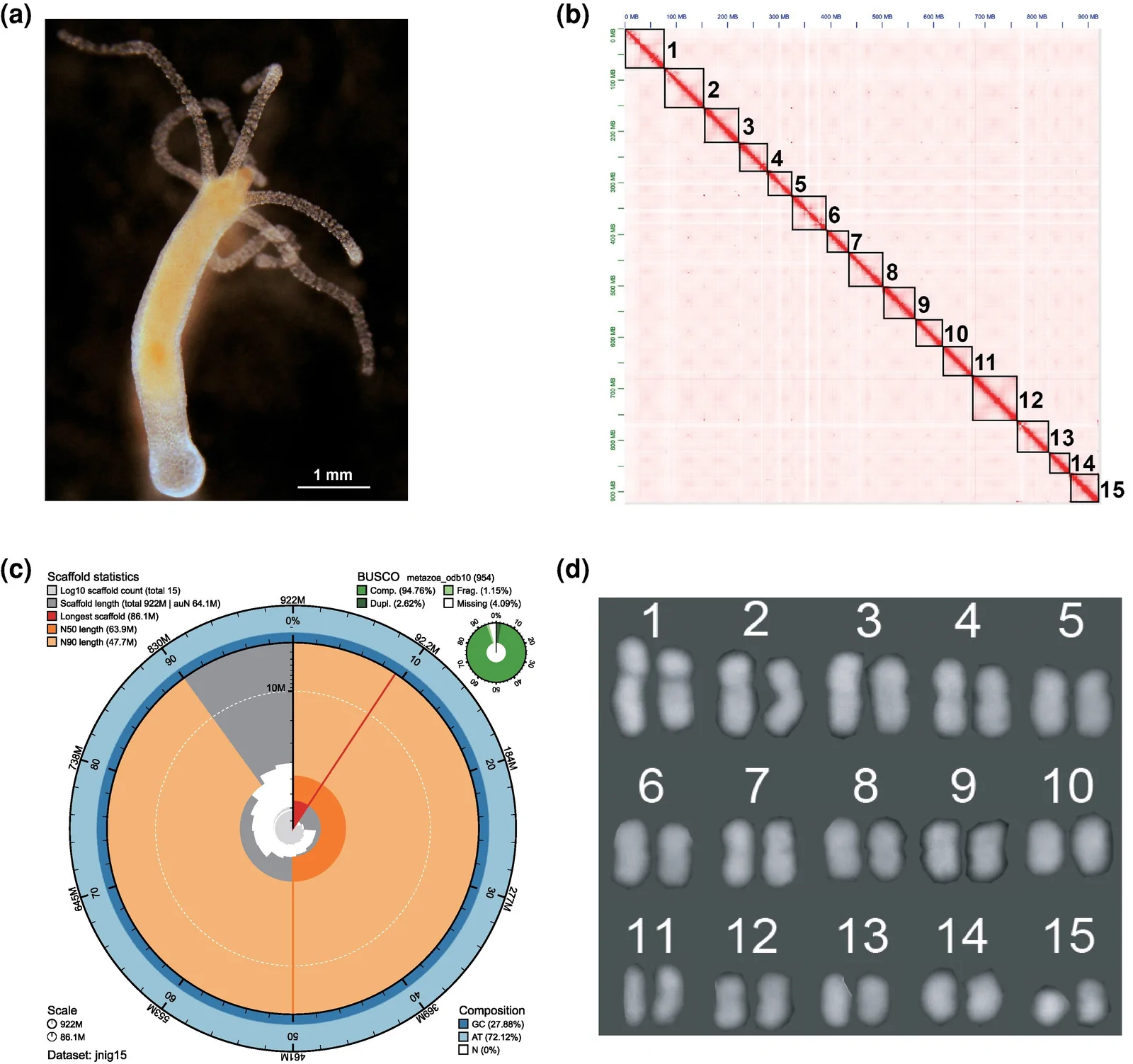
Hydra is a freshwater cnidarian genus that provides a unique comparative model for aging research, contrasting the immortal Hydra vulgaris with the aging-inducible Hydra oligactis. Here, we report a high-quality, chromosome-level genome assembly of H. vulgaris strain AEP.JNIG. Our assembly is comparable in quality to existing resources, facilitating the analysis of genomic diversity across laboratory strains. Epigenomic profiling revealed that gene-body hypermethylation correlates with transcriptional stability and the suppression of spurious transcription in evolutionary conserved genes, suggesting an epigenetic mechanism for genomic integrity. Furthermore, comparative genomics demonstrated that while Hydra conserves fundamental pathways associated with major biological processes implicated in aging, the immortal H. vulgaris paradoxically lacks canonical anti-aging genes (eg Klotho, nicotinamide phosphoribosyltransferase) found in the aging-inducible H. oligactis. Instead, H. vulgaris exhibits a distinct metabolic signature related to mitochondrial energy production and nucleoside triphosphate biosynthesis. Collectively, our comparative genomics results suggest multiple potential mechanisms associated with the H. vulgaris immortality and the aging traits of H. oligactis, providing novel targets for future functional studies.
- Resources: datasets, atlases and tools
- DNA methylation
- Epigenetic regulation of gene expression
- Oxidative phosphorylation
- Purine metabolism
- H. oligactis
The paper
Juntendo University
Genome Biology and Evolution, 26 Aug 2026, Open access