Older thymus makes a different immune receptor mix in mice
Experiments in mice of three ages, alongside thymus transplants, implicated the organ’s supporting tissue in changes to immune receptor diversity and composition.
Limit: Returning peripheral regulatory T-cells could partly explain age-related receptor differences
Edited by Boris Djordjevic · AgingResearch.News
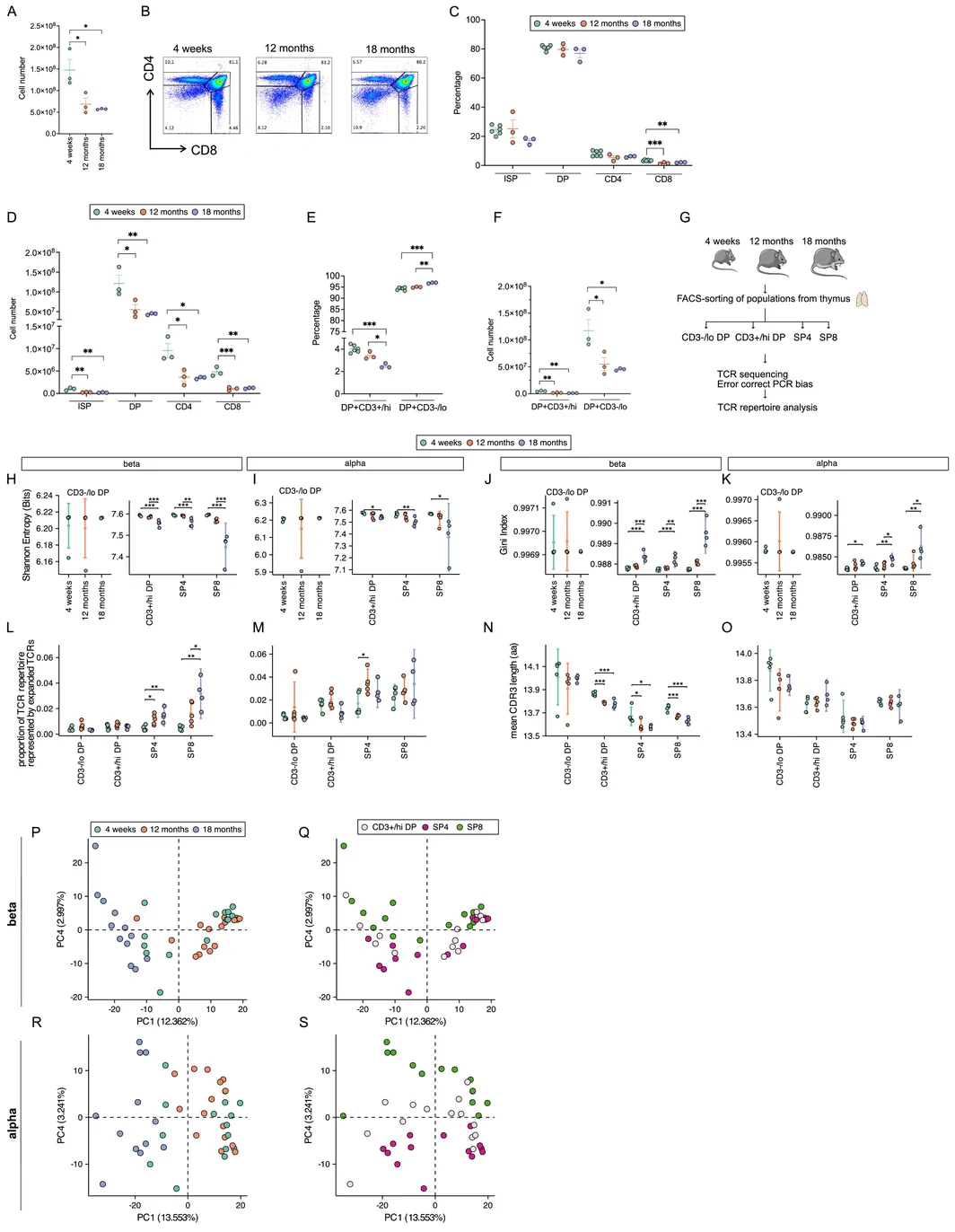
In experiments in male and female C57BL/6 mice aged 4 weeks, 12 months and 18 months, researchers examined the thymus, where immune cells called T cells mature. They sequenced RNA for T-cell receptors, proteins these cells use to recognize targets. The 18-month-old thymus produced a different mix of receptor sequences than the young thymus. It also produced a less diverse mix of one receptor component, with some sequences more heavily represented.
The team transplanted thymuses from 2-week-old or 12-month-old donors unable to make mature T cells into mice born without a thymus. Older transplants generated less diverse, less evenly distributed receptor mixes than younger ones. The authors concluded that the thymus’s supporting tissue contributed strongly to age-related changes in receptor composition and diversity.
Why it matters
Immune function declines with age. Understanding how the thymus shapes the range of targets T cells can recognize may help clarify this decline.
Caveats
Receptor sequencing measured molecular diversity rather than resistance to infection. The experiments involved mice, including genetically altered transplant donors and recipients, not people.
The paper
The Thymic Microenvironment Shapes Age-Related Qualitative Changes in the TCR Repertoire
University College London
Aging Cell, Aug 21, 2026, Open access


Comments
Be the first to comment.