Risk of urologic cancers in patients with hospital-diagnosed recurrent cystitis: a nationwide population-based study
Declared ties to: Aarhus University, University of Oslo, European Research Council and 4 more
Abstract
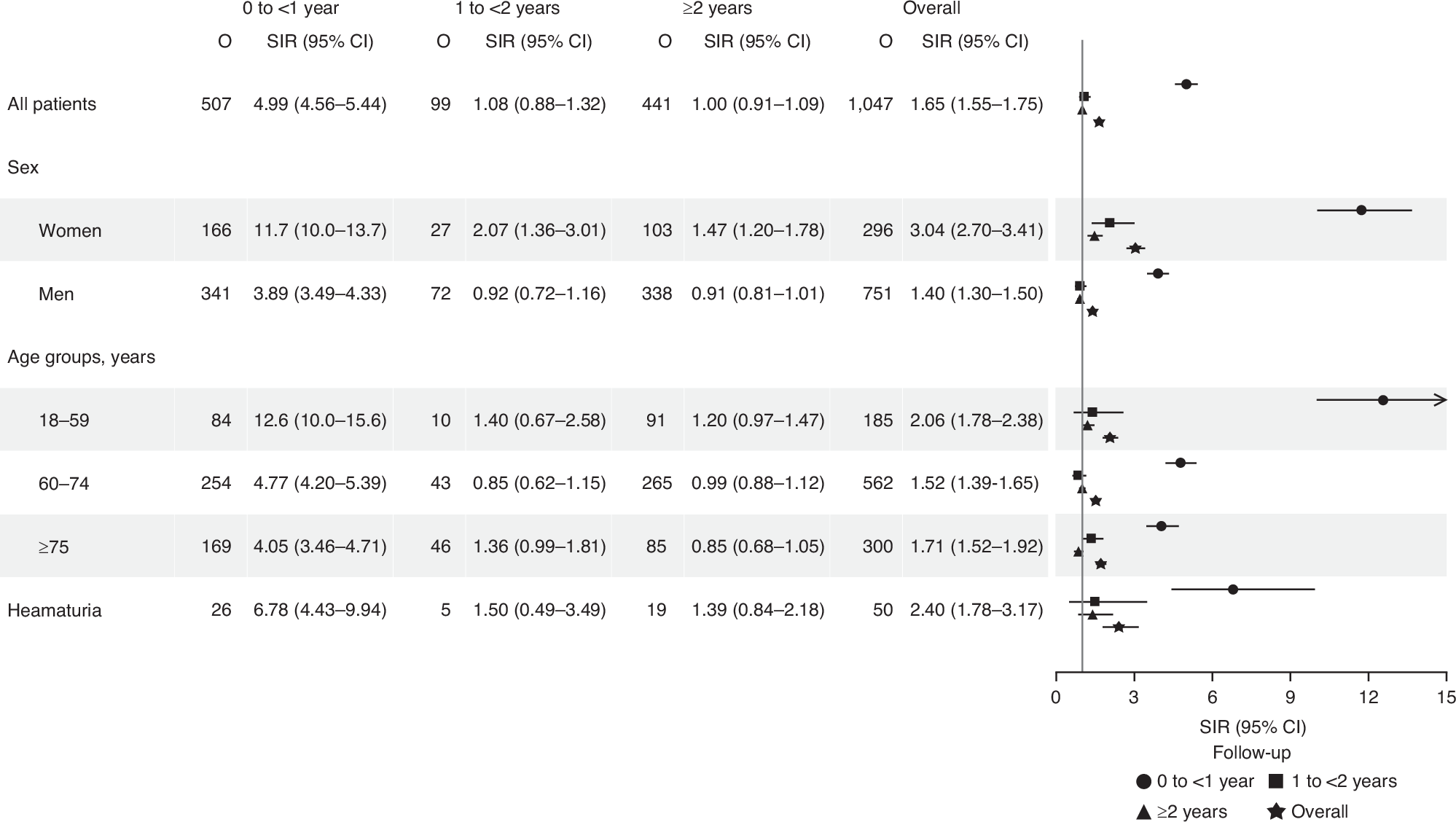
BACKGROUND: Recurrent infections in the urinary tract may promote urologic cancer through chronic inflammation. However, evidence linking infections and the subsequent risk of urologic cancer has been conflicting, and long-term risk remains uncertain. METHODS: In this population-based descriptive cohort study, we included all Danish adults with a first-time hospital discharge diagnosis of recurrent cystitis during 2006-2022 in the Danish National Patient Registry, excluding patients with prior cancer. Urologic cancer diagnoses were ascertained through the Danish Cancer Registry. We calculated cumulative incidences and standardised incidence ratios (SIRs) using incidence rates from the general population. RESULTS: Among 42,377 patients (68% women, median age 62 years), 1047 were diagnosed with urologic cancer (median follow-up 5.7 years). The 1-year risk of any urologic cancer was 1.2% (95% confidence interval [CI], 1.1-1.3%). The corresponding 1-year SIR was 4.99 (95% CI, 4.56-5.44). Beyond 2 years of follow-up, the SIR remained elevated among women only at 1.47 (95% CI, 1.20-1.78). CONCLUSIONS: The elevated short-term risk suggests that recurrent cystitis is a clinical marker of urologic cancer. Yet, with low absolute risks, our results do not suggest additional diagnostic cancer work-up in these patients. In women, long-term risks for urologic cancer remained elevated.
The paper
Aarhus University
British Journal of Cancer, 19 Aug 2026