Muscle-derived molecule improves exercise performance in mice
In mouse experiments, six weeks of a muscle-derived molecule increased voluntary running and enhanced the muscle benefits of exercise training.
Our read
Mechanisms- Studied:
- Experiments in six-week-old male C57BL6/J mice, six weeks, against controls
- What changed:
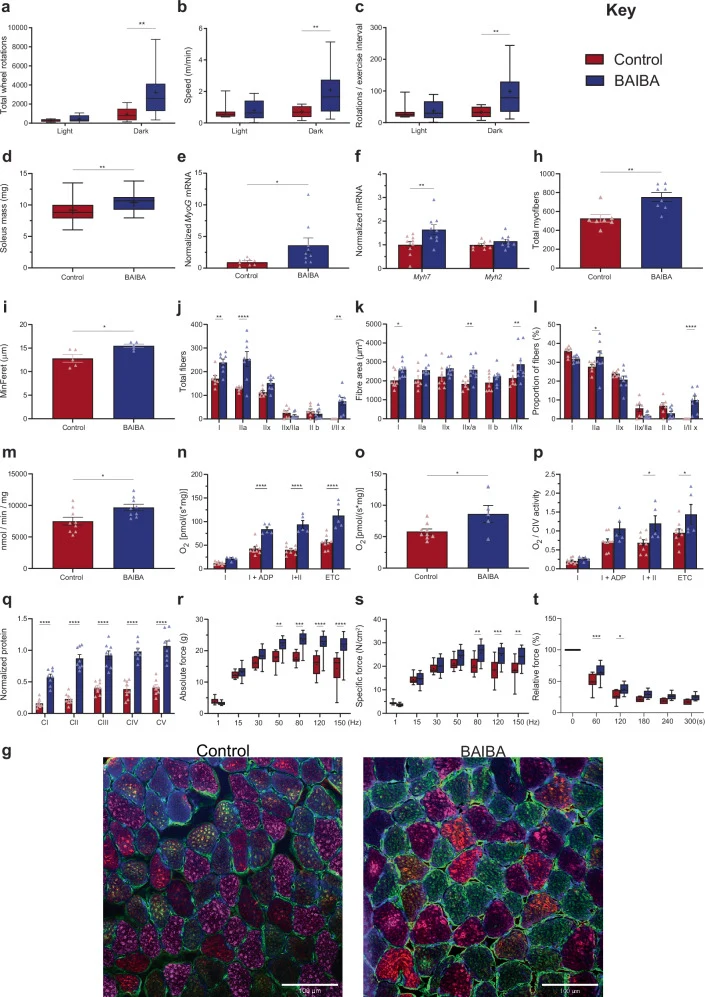
- Treated mice ran faster and completed more wheel rotations than controls
- The catch:
- The main experiment used only young male mice
- In the record:
- One of 9 papers on beta-aminoisobutyric acid on record: none yet with results in people, 2 in animals.
- Why it’s aging research:
- An intervention with evidence on lifespan or healthspan.
Editor of record: Boris Djordjevic · AgingResearch.News
Researchers tested beta-aminoisobutyric acid (BAIBA), a molecule released by muscle, in experiments with six-week-old male C57BL6/J mice. They supplied 100 milligrams per kilogram of body weight daily in drinking water for six weeks. Treated mice ran faster and completed more wheel rotations than controls. In a separate experiment, adding BAIBA to six weeks of exercise training increased muscle force and resistance to fatigue compared with exercise alone.
BAIBA regulated muscle metabolism, structure and function through a protein that controls gene activity. L-BAIBA, one of the molecule’s two mirror-image forms, was the main mediator of muscle effects. Reducing production of this form in mouse hindlimb muscles impaired exercise-induced adaptations and performance gains. BAIBA also reduced muscle dysfunction in a mouse model of diabetes.
Why it matters
Muscle dysfunction in diabetes can limit strength and exercise tolerance. Understanding how muscles adapt to exercise bears on efforts to preserve physical function with age.
Caveats
The supplementation results came from mouse experiments, not a trial in people. The main six-week experiment used young male mice, so it does not establish benefits for older adults.
Exercise is part of Bryan Johnson's Blueprint
The paper
University of Leeds
Nature Communications, Aug 18, 2026, Open access


Comments
Be the first to comment.