Walking and diet plans linked to stronger grip after menopause
In a 12-week randomized trial of 100 postmenopausal women, grip strength improved most with pole-assisted walking, a daily eating window and higher protein intake.
100 postmenopausal women, 12 weeks
Limit: The analysis excluded women who did not complete follow-up
Edited by Boris Djordjevic · AgingResearch.News
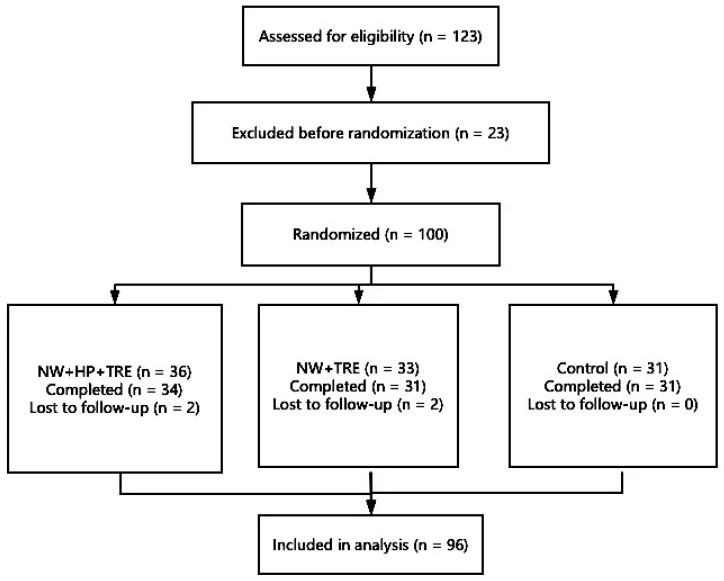
In 100 independently living postmenopausal women aged 56–80, a 12-week randomized trial compared two walking-and-diet programs with usual lifestyle guidance. Both programs included supervised Nordic walking—walking with poles—for about 60 minutes three times weekly and a daily 10-hour eating window. One group also targeted about 1.4 grams of protein per kilogram of body weight daily.
Researchers analyzed the 96 women who completed follow-up. Both programs improved grip strength compared with controls, with the largest improvement in the higher-protein group. Walking speed and repeated chair rises followed a similar pattern. The higher-protein group also had more favorable measures of lean tissue in the arms and legs than either other group. The authors interpreted the results as differences between lifestyle packages, not evidence for any single component.
Why it matters
Muscle decline is a concern after menopause. The work addresses how exercise, protein intake and meal timing might fit together in efforts to maintain muscle health with age.
Caveats
The analysis included only women who completed follow-up, and the trial could not isolate each lifestyle component’s effect. The trial excluded women unable to walk unaided or with conditions that limited safe exercise, and it did not test long-term sustainability.
Time-restricted feeding is part of Bryan Johnson's Blueprint
The paper
Chengdu Sport University; Gdansk University of Physical Education and Sport
Nutrients, Jul 29, 2026, Open access

