HMGCR-Driven Cholesterol Metabolism Promotes Osteoarthritis Progression by Accelerating Synovial Fibroblast Senescence
Abstract
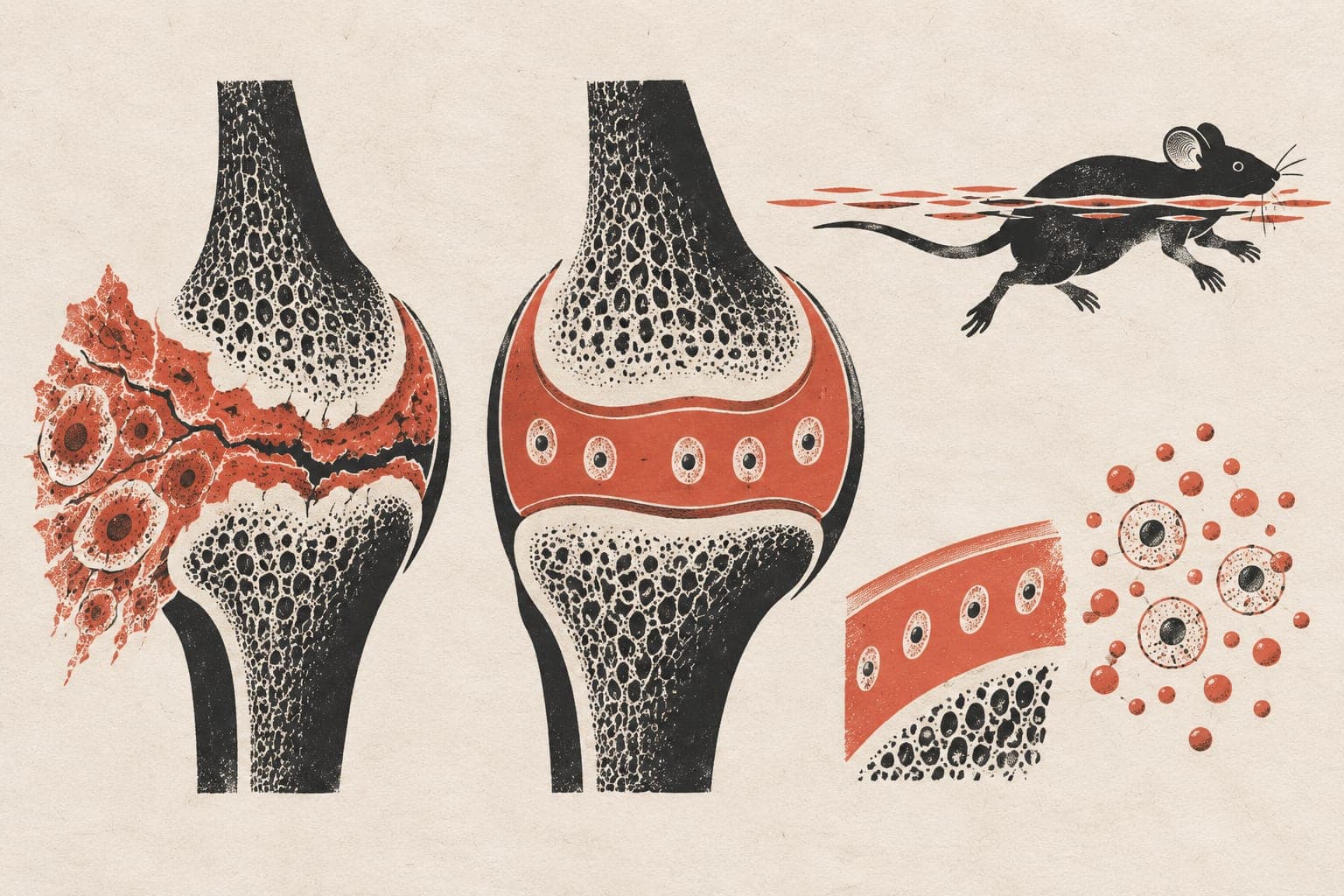
Dysregulated cholesterol metabolism has been implicated in several aging-associated disorders, including osteoarthritis (OA). 3-Hydroxy-3-methylglutaryl-CoA reductase (HMGCR) is the key enzyme in cholesterol biosynthesis, but the role of HMGCR in OA and the underlying mechanism remain unclear. In this study, we found that HMGCR⁺ fibroblasts (FLSs) were significantly increased in the knee synovium of OA patients and OA mice. Elevated expression of HMGCR in synovial FLSs was positively correlated with cellular senescence and OA progression. The inhibition of HMGCR reversed cellular senescence of FLSs induced by TNF-α in vitro. Additionally, the HMGCR-mediated cholesterol biosynthetic pathway contributed to cellular senescence. Targeted inhibition of HMGCR in synovial FLSs via intra-articular adeno-associated virus delivery effectively reversed cellular senescence of FLSs and mitigated synovitis, cartilage degradation, and pain behaviors in OA mice. Mechanistically, the phosphorylation of AKT1 at Ser473 enhanced its binding to Lys140 of Insig1, facilitating AKT1-Insig1 complex formation. The activation of AKT1 induced the phosphorylation of Insig1 at Ser189 and the dissociation of Insig1 from sterol regulatory element‑binding protein cleavage‑activating protein (SCAP), which contributed to HMGCR transcription and cellular senescence of FLSs. Collectively, our study reveals a novel mechanism of HMGCR-driven cellular senescence of FLSs in OA, which highlights HMGCR as a promising therapeutic target for OA.
The paper
Army Medical University
Advanced Science, 13 Jul 2026, Open access