Argentina cohort adds diverse data for brain aging research
The observational cohort combines brain scans and genetic and social data from 367 people aged 18–94 recruited through community and memory clinic settings.
Our read
AI & data- Studied:
- Cohort study of 367 people from metropolitan Buenos Aires
- What changed:
- People with dementia had older-appearing brains than participants without cognitive impairment
- The catch:
- Genetic ancestry analyses covered only 191 of the 367 participants
- In the record:
- The 3,444th paper on dementia with results in people; 9,732 on record in all. Its result on brain age gap agrees with all 3 other findings on record.
- Why it’s aging research:
- It builds or tests a tool for aging research.
Editor of record: Boris Djordjevic · AgingResearch.News
An observational study in Argentina assembled data from 367 people aged 18–94 in the Buenos Aires metropolitan area. Researchers recruited 235 healthy community participants alongside memory clinic attendees with or without problems in memory and thinking. The resource combined magnetic resonance imaging scans, genome-wide genetic testing and detailed social and demographic information.
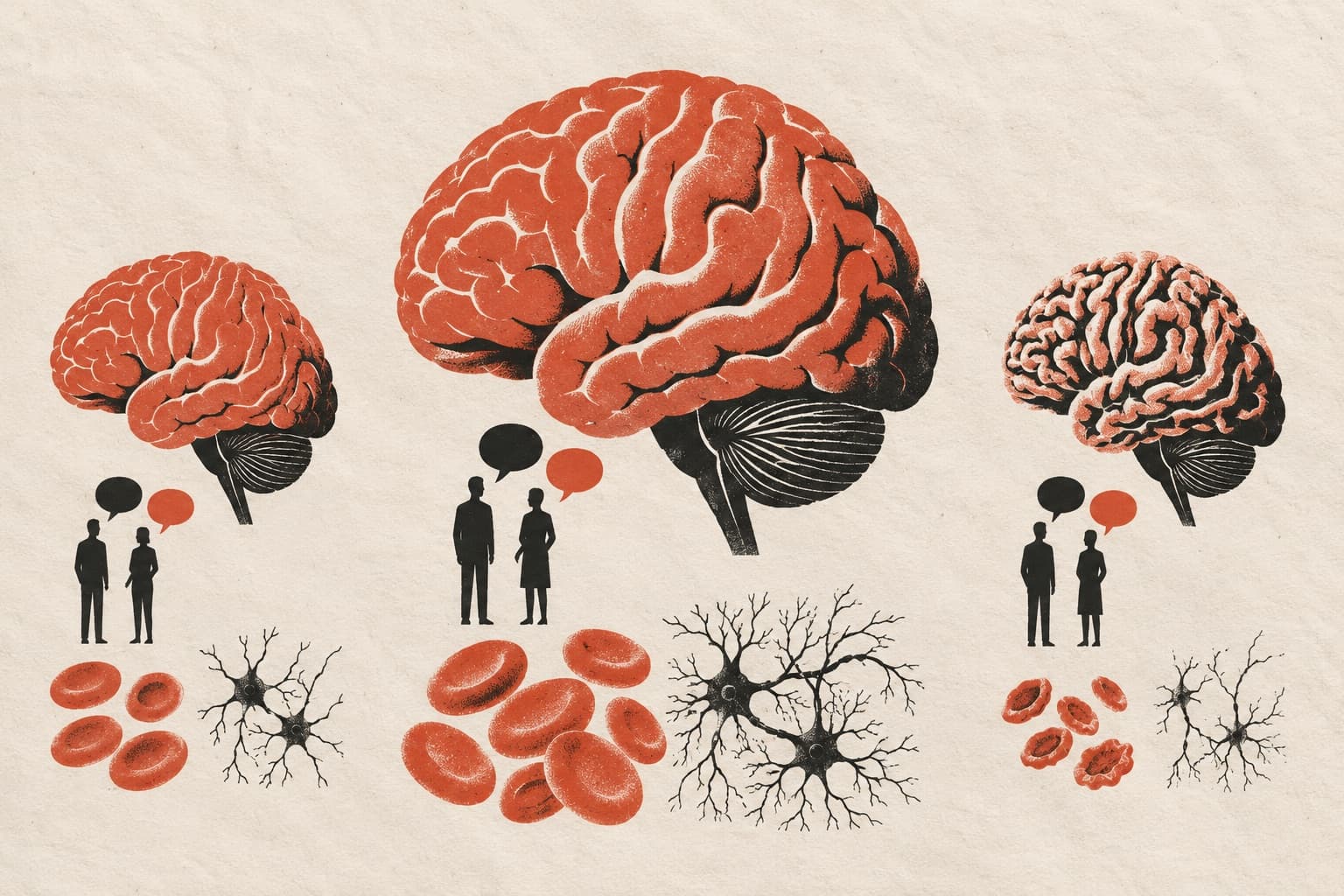
Researchers used brain scans to estimate the gap between apparent brain age and actual age. People with dementia had older-appearing brains than participants without cognitive impairment, while those with mild impairment had intermediate values. This brain-age gap had no independent associations with individual genetic or environmental risk factors. The authors presented the cohort as a regional resource for evaluating brain-imaging measures and testing aging and dementia models across diverse populations.
Why it matters
Models of brain aging and dementia need testing across genetically and socially diverse populations. This resource could help researchers assess how well those models apply beyond the populations in which they were developed.
Caveats
This observational cohort cannot establish cause and effect. Participants came from metropolitan Buenos Aires, and genetic ancestry analyses covered 191 of the 367 participants.
- Resources: datasets, atlases and tools
- Dementia
- Brain age gap
- Alzheimer's disease
- Mild cognitive impairment
- Humans
The paper
GeNED.ar cohort: Neuroimaging resource for aging studies in an admixed population from Argentina
Consejo Nacional de Investigaciones Científicas y Técnicas
NeuroImage, Jul 8, 2026, Open access

Comments
Be the first to comment.