Circulating elastin fragments drive systemic aging: Where do pro-aging elastin fragments come from? A mini-review
Abstract
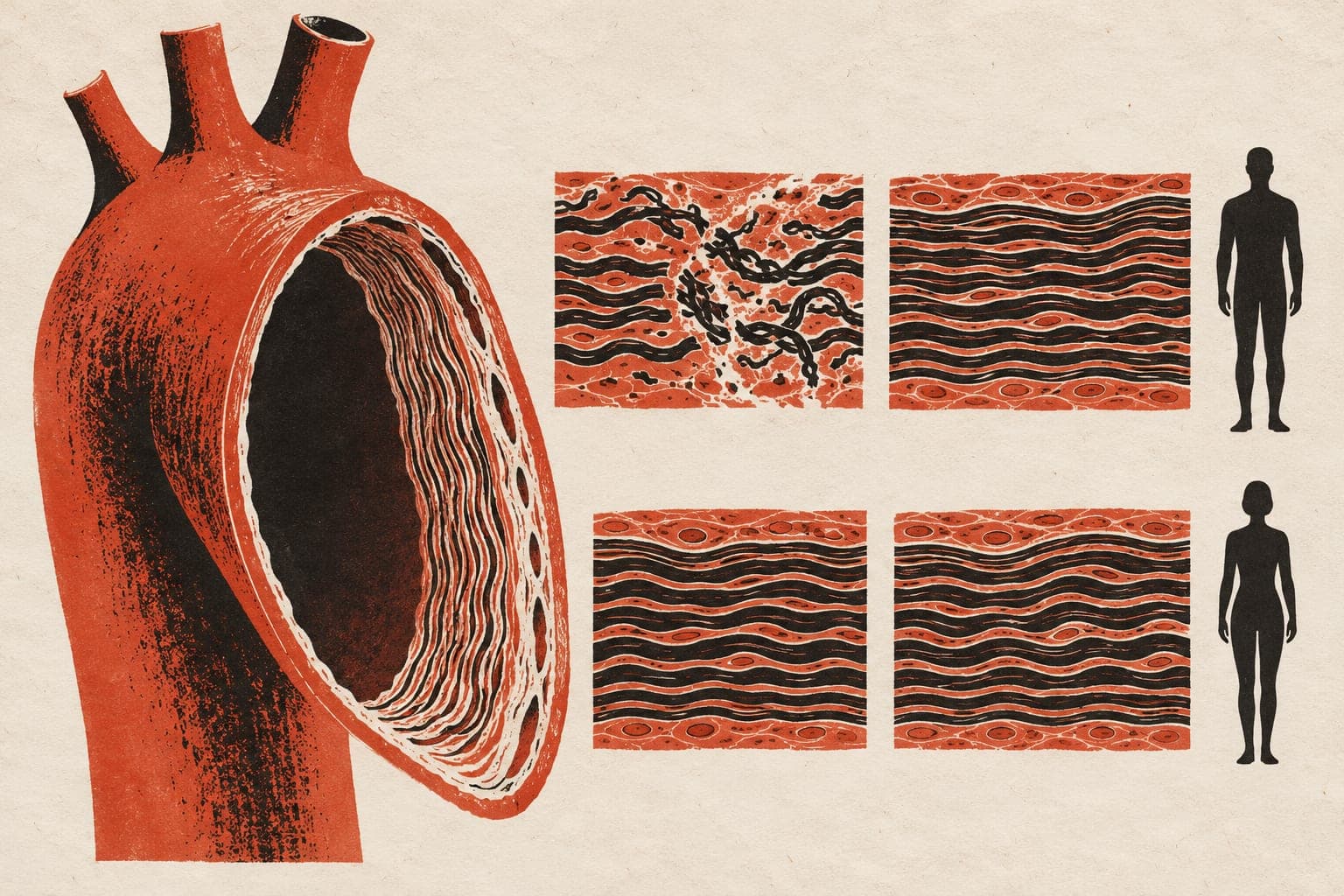
Circulating elastin fragments have emerged as potent mediators of inflammaging and systemic aging, yet a fundamental question persists: which anatomical compartments serve as the primary sources of these fragments during aging? Elastin is a structurally restricted protein distributed unevenly across tissues, predominantly at sites subject to repetitive mechanical loading, such as the aorta and large arteries, the lungs, and the skin. It is speculated that age-driven structural deterioration within these compartments, spanning arteriosclerosis, emphysema, and dermal extracellular matrix (ECM) remodeling, coupled with upregulated elastolytic protease activity (including neutrophil elastase, MMP-2, MMP-9, and MMP-12), sustains a chronic, low-grade release of bioactive elastin fragments into the circulation, thereby fueling inflammaging and systemic aging. Delineating the relative contributions of each source is therefore more than an anatomical exercise; it establishes a mechanistic framework for designing tissue-targeted interventions capable of disrupting the ECM-inflammaging axis. This mini-review examines the principal anatomical sources of circulating elastin fragments and the elastolytic enzymes responsible for their generation.
The paper
University of Michigan
Mechanisms of Ageing and Development, 7 Jul 2026