Aged perivascular fat worsens aortic stiffness in mice
Ex vivo tests in young and old mice showed that intact perivascular fat increased aortic stiffness only in older animals, alongside higher fat collagen levels.
American Journal of Physiology Regulatory, Integrative and Comparative Physiology
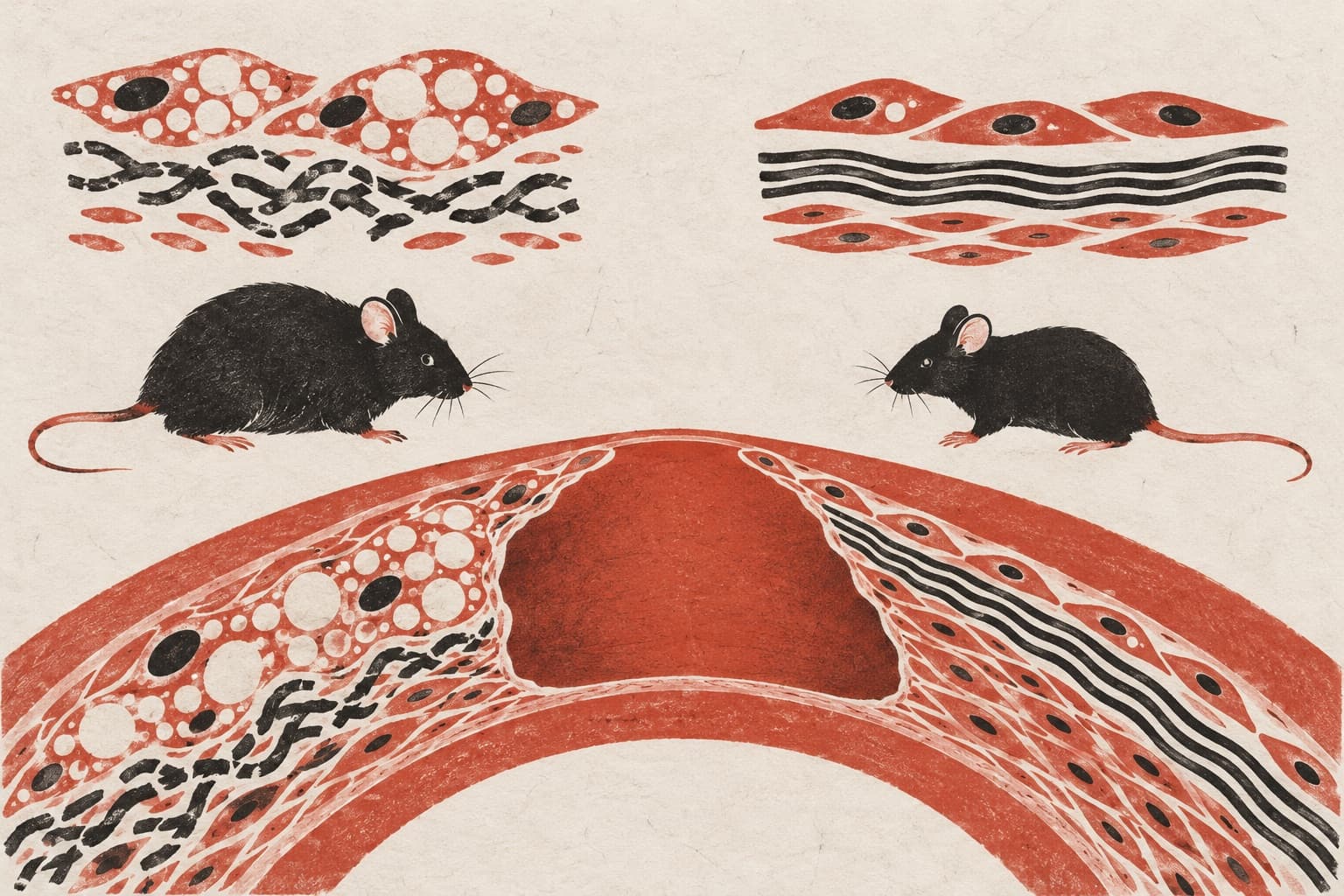
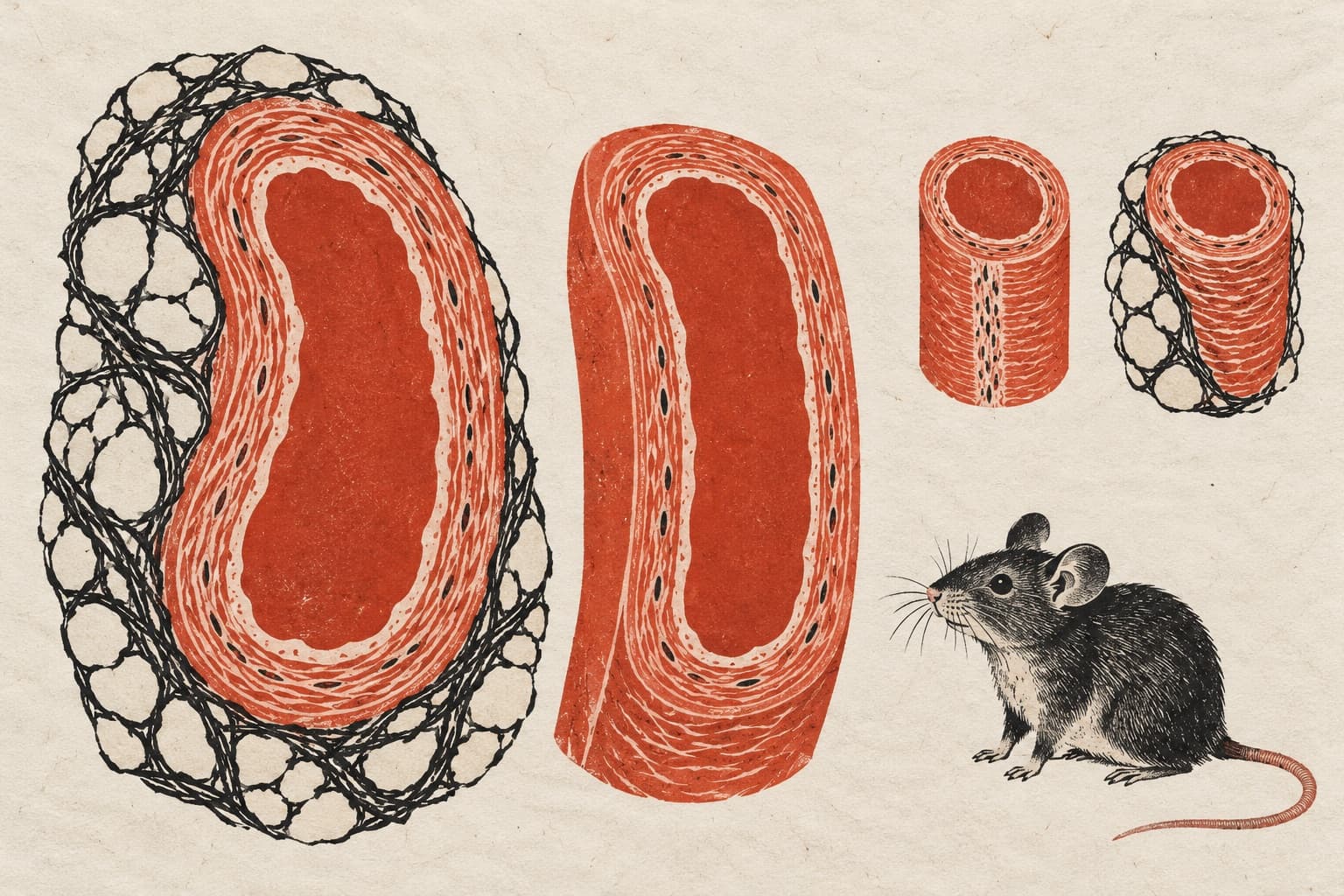
In mice, the adipose tissue surrounding the aorta alters vessel mechanics during aging. Researchers assessed ex vivo aortic stiffness with aortic perivascular adipose tissue either intact or removed in young mice aged 4 to 6 months and old mice aged 22 to 25 months. In young mice, aortic stiffness did not differ between vessels with intact adipose tissue and those with the tissue removed. In old mice, aortic stiffness was significantly greater when the surrounding fat remained intact compared with cleaned aortas. The researchers also measured collagen deposition within the fat layer and found significantly greater collagen accumulation in old mice compared with young animals. These findings suggest that aortic perivascular adipose tissue undergoes fibrotic remodeling with aging, contributing to increased arterial stiffness.
Why it matters
Large artery stiffening is a major risk factor for cardiovascular disease with age. The findings suggest that the fat layer surrounding vessels may actively promote vascular stiffening rather than remaining neutral or protective.
Caveats
Vessel compliance was measured ex vivo under controlled conditions rather than in living animals. The study was conducted in mice, and whether similar fibrotic remodeling occurs in human perivascular adipose tissue remains to be seen.
The paper
Aged Aortic Perivascular Adipose Tissue Exacerbates Aortic Stiffness in Mice
Show 5 more authors
Alexandra Canizales, Konner J. Terrebonne, Katherine A Smith, Jacopo Ferruzzi, Rhonda D. Prisby,The University of Texas at Arlington
American Journal of Physiology Regulatory, Integrative and Comparative Physiology · 1 Oct 2026