A cell-death protein promotes liver aging in mice
Four months of increased production of one protein in mouse liver cells promoted senescence, a state in which cells stop dividing, without triggering inflammatory cell death.
Our read
Mechanisms- Studied:
- Experiments in male C57BL/6J mice, four months, against control mice
- What changed:
- Livers of mice producing extra MLKL showed more signs of cell aging than controls
- The catch:
- Senescence markers and inflammatory signals served as proxies for liver aging
- In the record:
- One of 50 papers on MLKL on record: none yet with results in people, 12 in animals. Its result on cellular senescence agrees with all 3 other findings on record.
Editor of record: Boris Djordjevic · AgingResearch.News
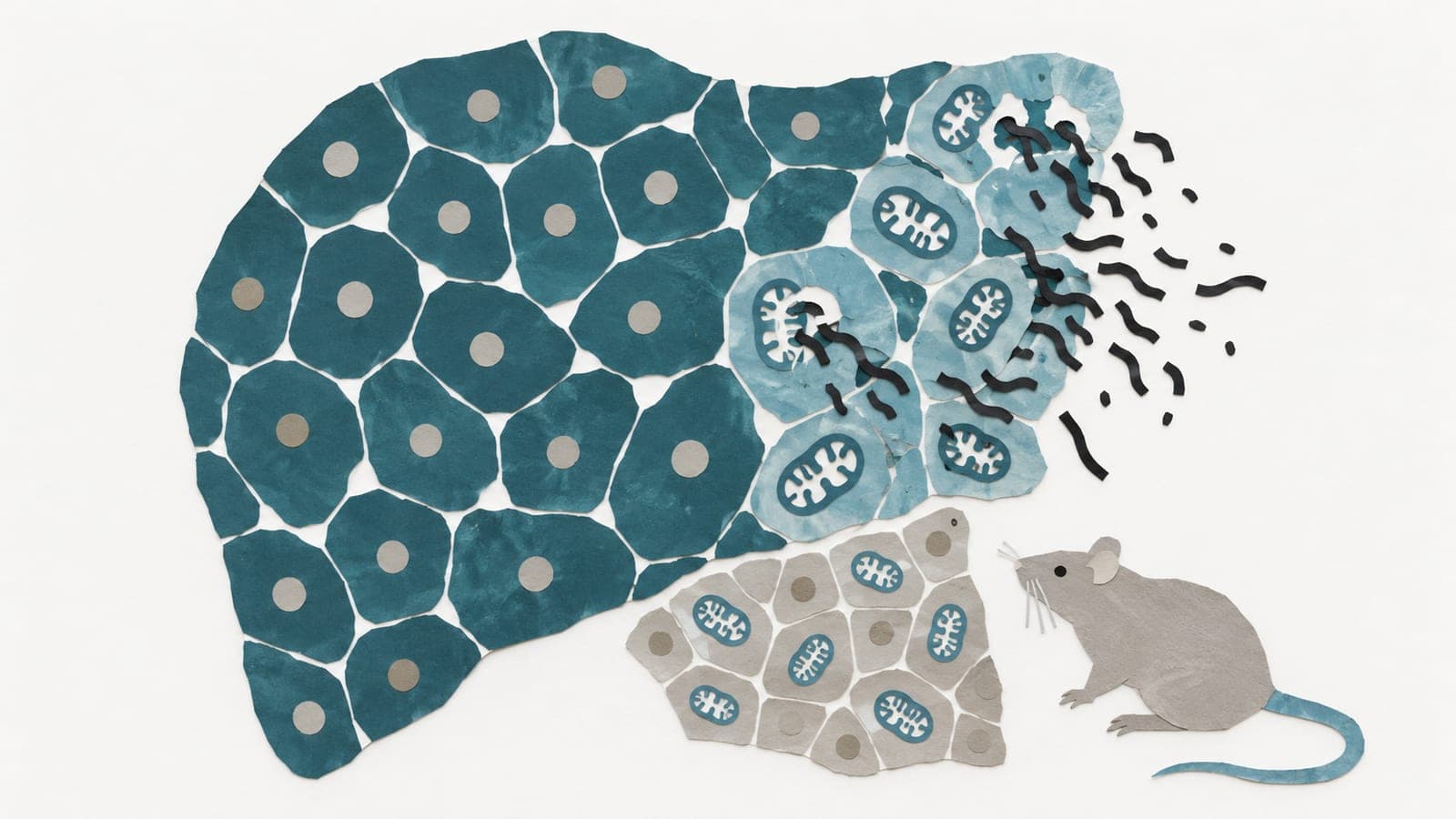
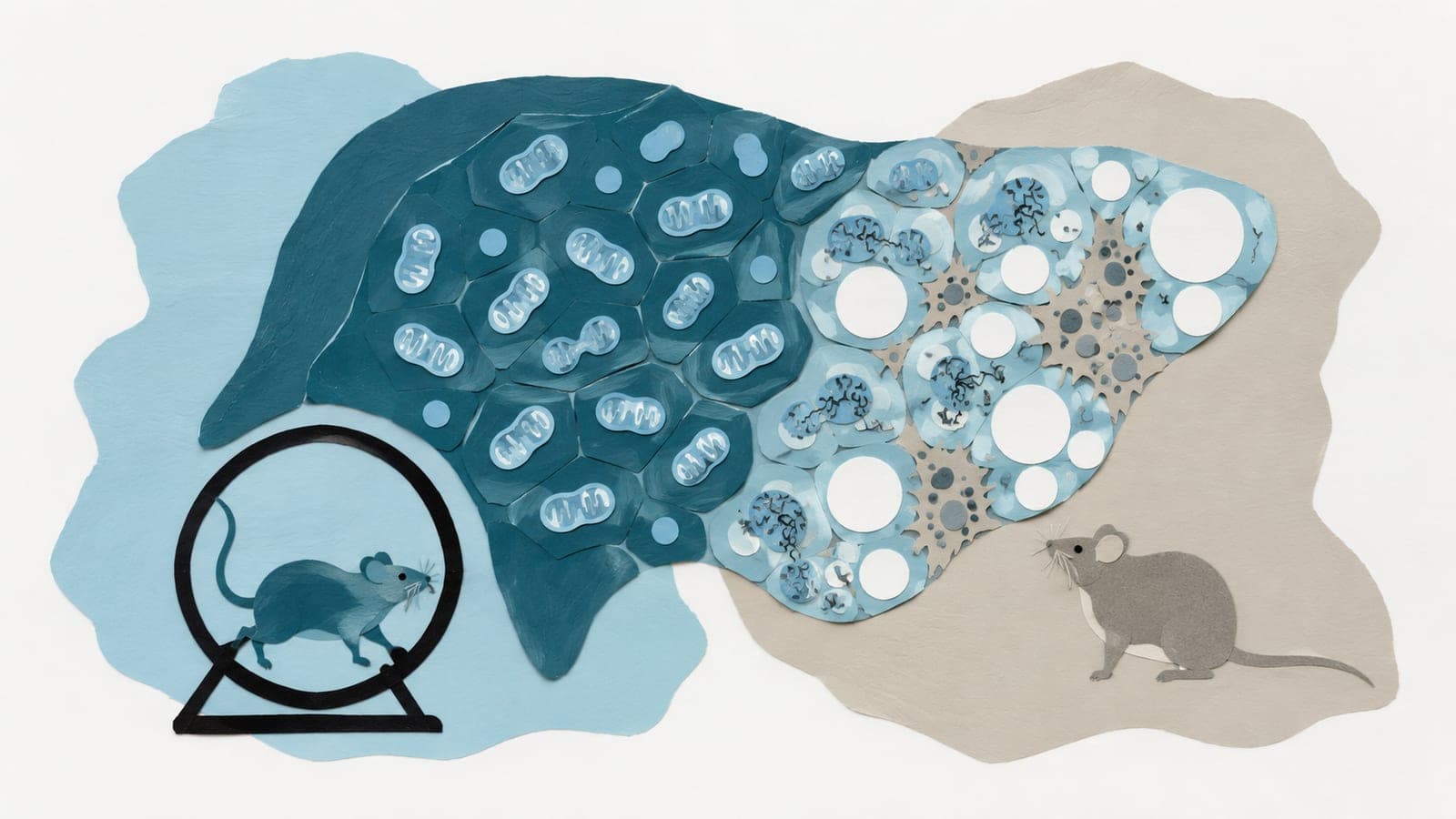
Male C57BL/6J mice were engineered to produce extra MLKL, a protein involved in inflammatory cell death, in their main liver cells. In this animal experiment, researchers activated the extra production at 1.5 months of age and examined the mice four months later. Compared with controls, their livers had more signs of senescence, a state in which cells stop dividing, and more inflammatory signals. The increase did not trigger inflammatory cell death.
In mouse liver cells grown in the lab, extra MLKL impaired mitochondria, the cells’ energy-producing structures. It also increased release of tiny particles carrying inflammatory material. The authors propose that mitochondrial stress and signals sent between cells help promote liver inflammation with age.
Why it matters
Chronic liver inflammation and metabolic dysfunction contribute to age-associated fatty liver disease. The findings identify MLKL as a potential target for age-associated liver disease.
Caveats
The main experiment increased MLKL in young mice; it did not test whether reducing MLKL helps already aged livers. The animal experiments used only male C57BL/6J mice.
The paper
OU Health Stephenson Cancer Center
Aging Cell, Jul 2026, Open access
doi.org/10.1111/acel.70618PubMed 42399678
Corrected, Oct 2, 2026
Comments
Be the first to comment.