Targeting Cellular Senescence Enhances Post-Burn Wound Healing in Aged Mice
Abstract
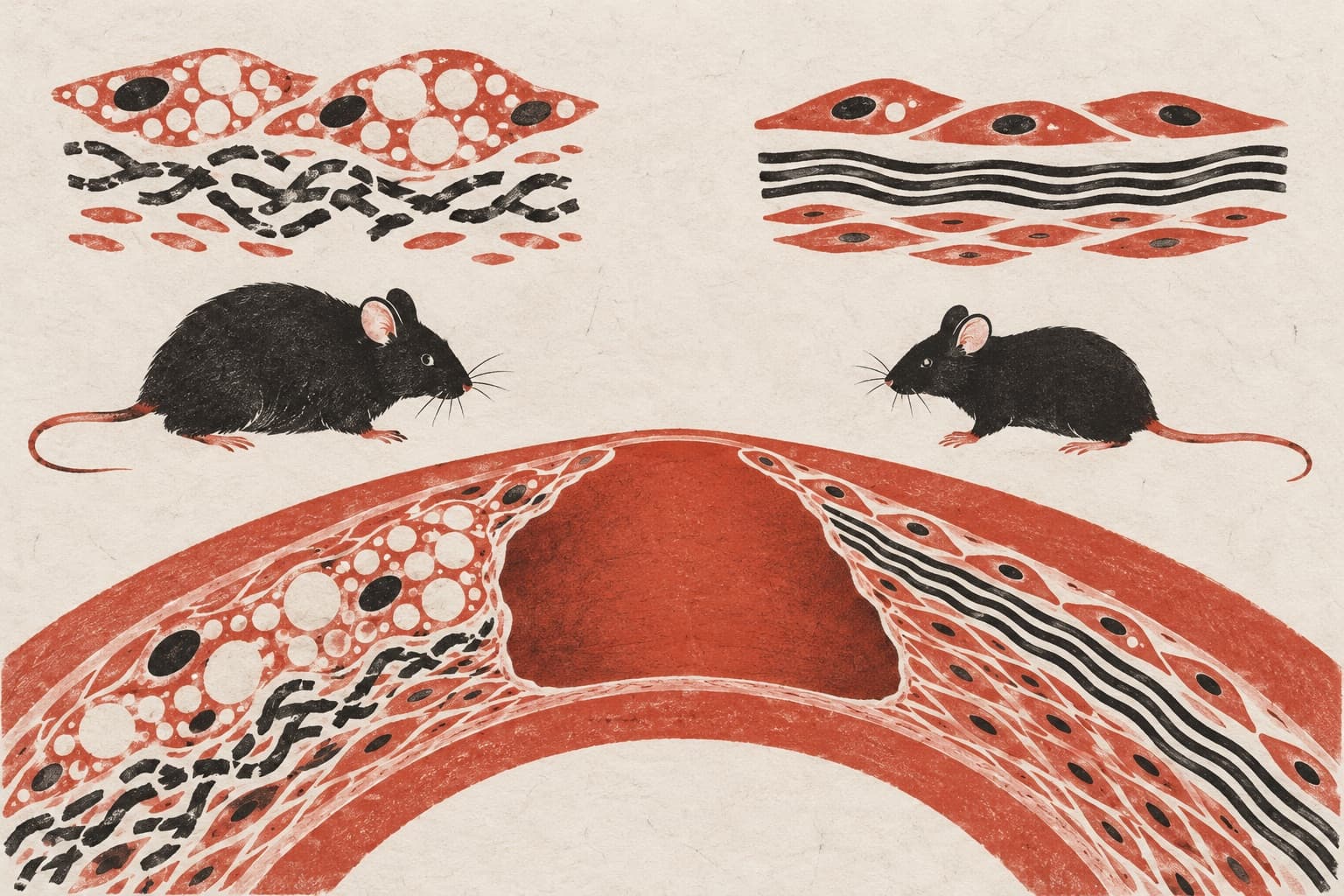
-Despite advancements in burn care, older burn patients continue to experience disproportionately high mortality rates. Impaired wound healing is a major prognostic indicator of burn patient survival, yet the mechanisms underlying delayed repair in older adults remain poorly understood. Cellular senescence, a hallmark of aging, contributes to tissue dysfunction and impaired regeneration, making it a potential mediator of age-associated deficits in burn wound healing. Here, we investigated the role of cellular senescence in postburn wound repair using a validated adult and aged murine full-thickness scald burn model and evaluated whether senolytic treatment with Dasatinib and Quercetin improves healing outcomes in aged mice. Thermal injury increased senescence-associated features in burn wounds, including senescence-associated beta-galactosidase-positive skin cells, and was associated with reduced myofibroblast-associated marker expression, increased extracellular matrix-degrading components, and delayed wound healing in aged mice. In contrast, senolytic treatment in aged burn mice reduced cellular senescence, demonstrated by a 4.4-fold decrease in senescence-associated beta-galactosidase-positive skin cells to baseline levels, increased alpha smooth muscle actin and type I collagen expression, and improved macroscopic burn wound healing. Together, these findings suggest that cellular senescence is associated with impaired skin repair after burn injury and that senescence-targeting therapies may represent a potential strategy to improve wound healing outcomes in older burn patients.
- Dasatinib + quercetin
- Cellular senescence
- Extracellular matrix remodelling
- Burn injury
- Senescence-associated beta-galactosidase
- Mice
The paper
University of Toronto
Shock, 19 Jun 2026, Open access