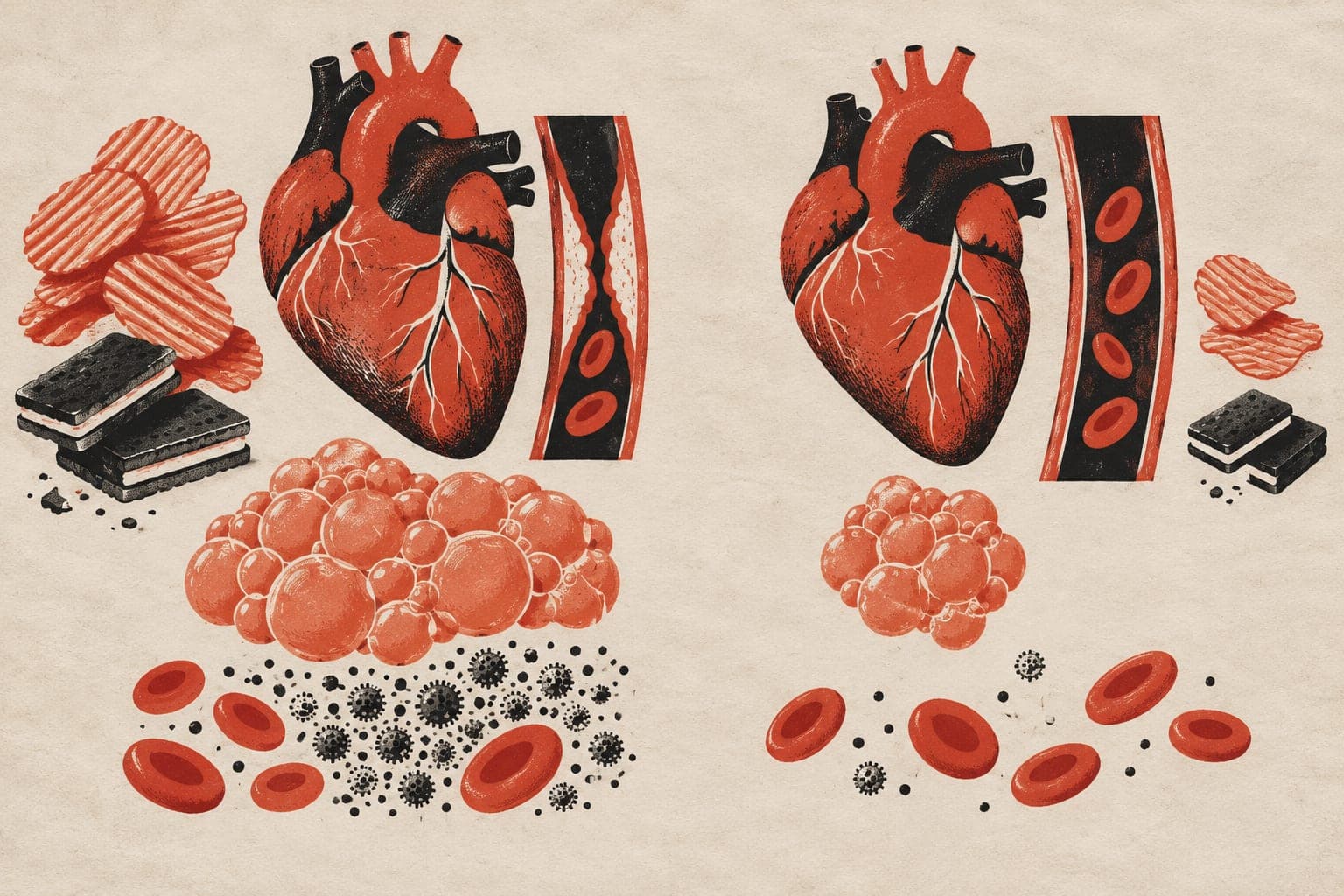
Diet quality assessed by healthy eating index and its association with metabolic aging: mediation by systemic immune-inflammation index
Independent replication
Abstract
BACKGROUND: Metabolic aging is characterized by insulin resistance, adverse lipid metabolism, and chronic low-grade inflammation, and is associated with higher risks of type 2 diabetes, cardiovascular disease, and mortality. Although diet quality may be related to these processes, evidence on the statistical role of systemic inflammation and the reproducibility of the association in a non-U. S. clinical setting remains limited. OBJECTIVE: To examine the association between diet quality, assessed by the healthy eating index-2015 (HEI), and metabolic aging markers, and to evaluate whether the Systemic Immune-Inflammation Index (SII) statistically partially accounts for this association in NHANES and in an external hospital-based cohort from China. METHODS: We conducted a cross-sectional analysis of 15,314 adults aged ≥20 years from NHANES 2005-2020 and an external hospital-based cohort of 833 adults who underwent health examination in Shandong, China, during 2024-2025. Metabolic aging was assessed by Homeostasis Model Assessment of Insulin Resistance (HOMA-IR) and the Atherogenic Index of Plasma (AIP). SII was calculated as platelet × neutrophil/lymphocyte counts. Multivariable linear regression, restricted cubic spline analyses, and statistical mediation analyses were performed. In the external cohort, HEI-2015 was used as a harmonized diet-quality metric to reproduce the same exposure definition, while acknowledging that it does not fully capture culture-specific dietary patterns. RESULTS: Higher HEI scores were inversely associated with HOMA-IR (β = -0.70, 95% CI: -1.10 to -0.30, p < 0.01) and AIP (β = -0.06, 95% CI: -0.08 to -0.04, p < 0.01) in NHANES. SII statistically accounted for 7.3 and 10.5% of the observed associations for HOMA-IR and AIP, respectively. Similar inverse associations were also observed in the external cohort, where the mediated proportions were larger. CONCLUSION: Higher diet quality was associated with lower metabolic aging markers, and SII statistically partially accounted for these associations. The external cohort reproduced the direction of the associations in a distinct Chinese clinical setting, but cultural differences and the cross-sectional design warrant cautious interpretation.
The paper
Qingdao Municipal Hospital; Shandong Tumor Hospital
Frontiers in Nutrition, May 28, 2026, Open access