Small strokes in mice cause a lasting brain-cell response
In mouse experiments, injury-responsive brain support cells persisted for at least nine months after a small stroke, with responses extending beyond the damaged area.
9 months
Edited by Boris Djordjevic · AgingResearch.News
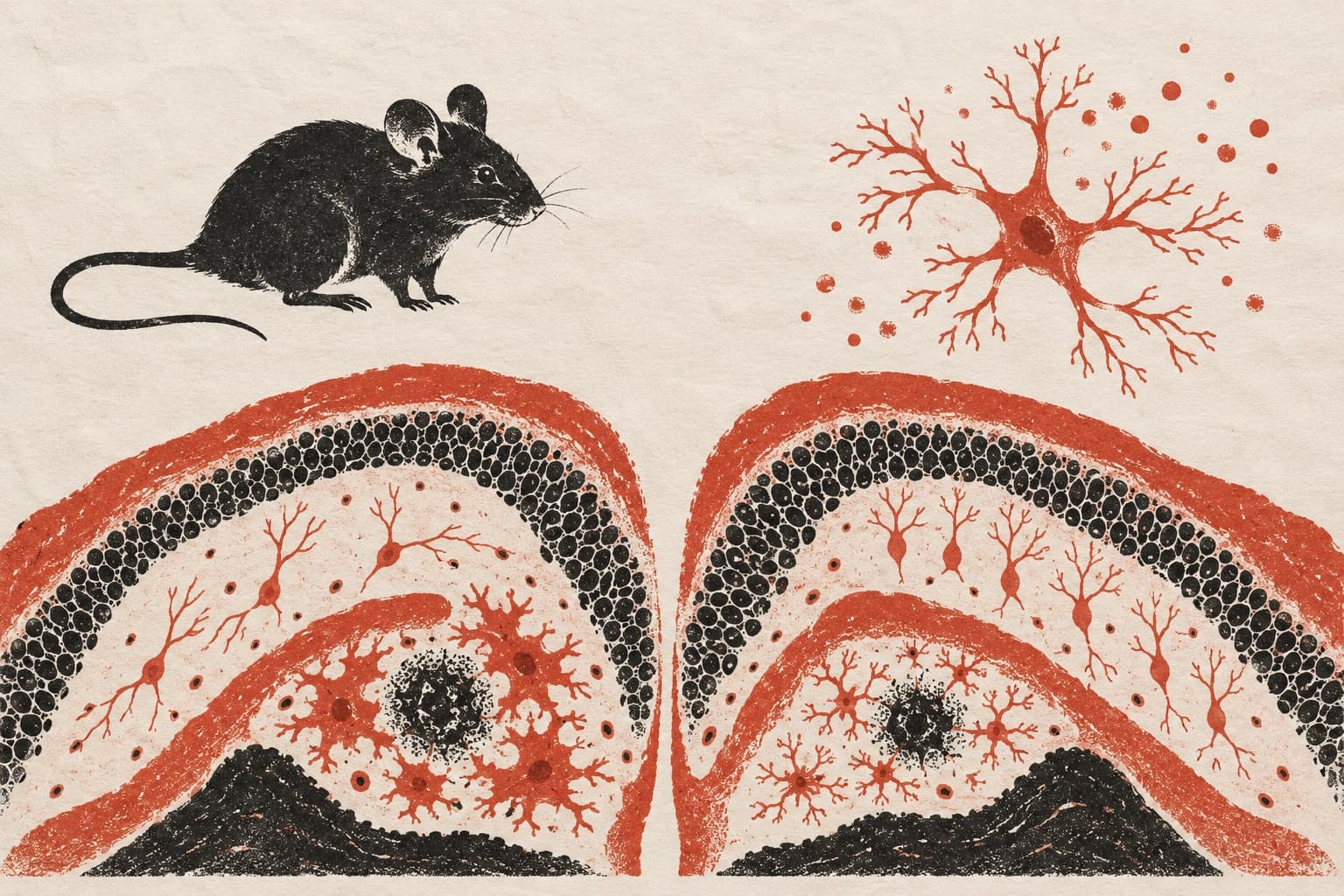
In experiments in male and female C57/B6 mice aged 4–6 months, researchers blocked a brain artery for 30 minutes to cause a small stroke mostly below the brain’s outer layer. They tracked astrocytes, cells that support brain function, and microglia, the brain’s immune cells, at one, three and seven days.
Astrocytes’ response to injury developed faster and spread farther than the microglial response. Reactive astrocytes persisted for at least nine months after stroke. Depleting microglia with drug-containing food enlarged the area of dead tissue but did not prevent the astrocyte response. The drug was given at 290 milligrams per kilogram of food for three weeks before stroke and one week afterward. In 20-month-old female mice, both cell types responded comparably strongly to those in younger mice.
Why it matters
In people, small, silent strokes can raise the risk of vascular dementia and Alzheimer’s disease. The authors propose using this mouse model to investigate the functional impact of injury-responsive astrocytes far from the original damage.
Caveats
The findings measured cell responses in mouse brain sections, not effects on brain function or dementia risk. The older-mouse comparison included only females, and all experimental groups had fewer than 20 animals.
The paper
Oregon Health & Science University
ASN Neuro, Jul 24, 2026, Open access
Comments
Be the first to comment.