Disrupting protein breakdown triggers tau protein clumps in mice
Experiments in mouse brains found paired, twisted tau protein filaments 72 hours after researchers inhibited protein-breaking machinery on nerve-cell surfaces.
Our read
Mechanisms- Studied:
- Experiments in mice, 72 hours
- What changed:
- Inhibiting neuroproteasomes triggered tau protein to form paired helical filaments in mouse brains
- The catch:
- Mouse brains were examined only 72 hours after injecting the inhibitor
- Stake:
- Eli Lilly and Company funded the study. An author founded C2N Diagnostics and holds shares in it.
- In the record:
- One of 3,633 papers on APOE on record: 970 with results in people, 95 in animals.
- Why it’s aging research:
- It studies organisms or tissues that aged naturally.
Editor of record: Boris Djordjevic · AgingResearch.News
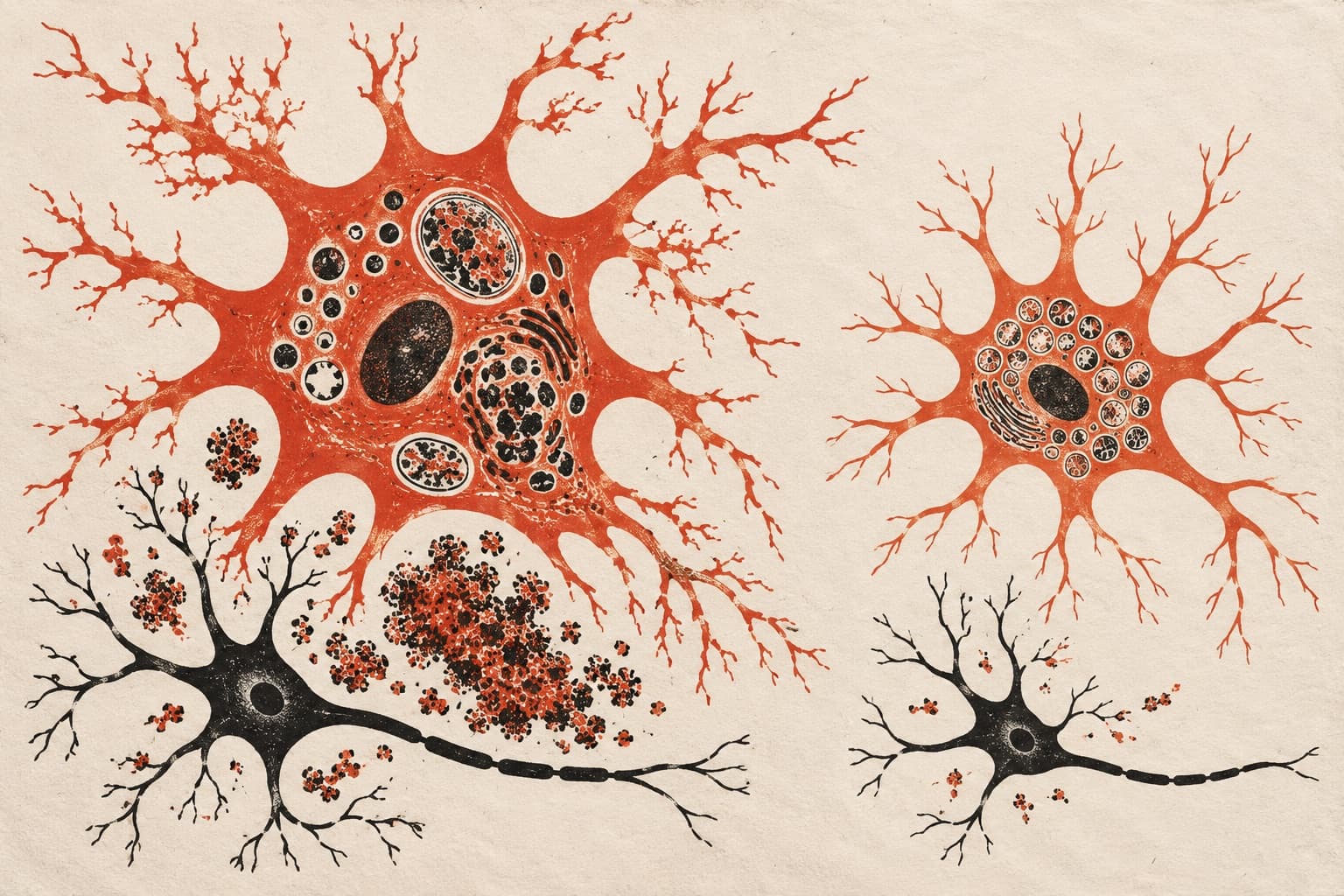
In experiments in mice and mouse nerve cells grown in the lab, researchers selectively inhibited neuroproteasomes, protein-breaking machinery on nerve-cell surfaces. This triggered tau, a protein found in nerve cells, to form paired, twisted filaments. These shared key biochemical and structural features with filaments from human Alzheimer's disease brains. Researchers examined mouse brain samples 72 hours after injecting the inhibitor into the hippocampus, a brain region involved in memory.
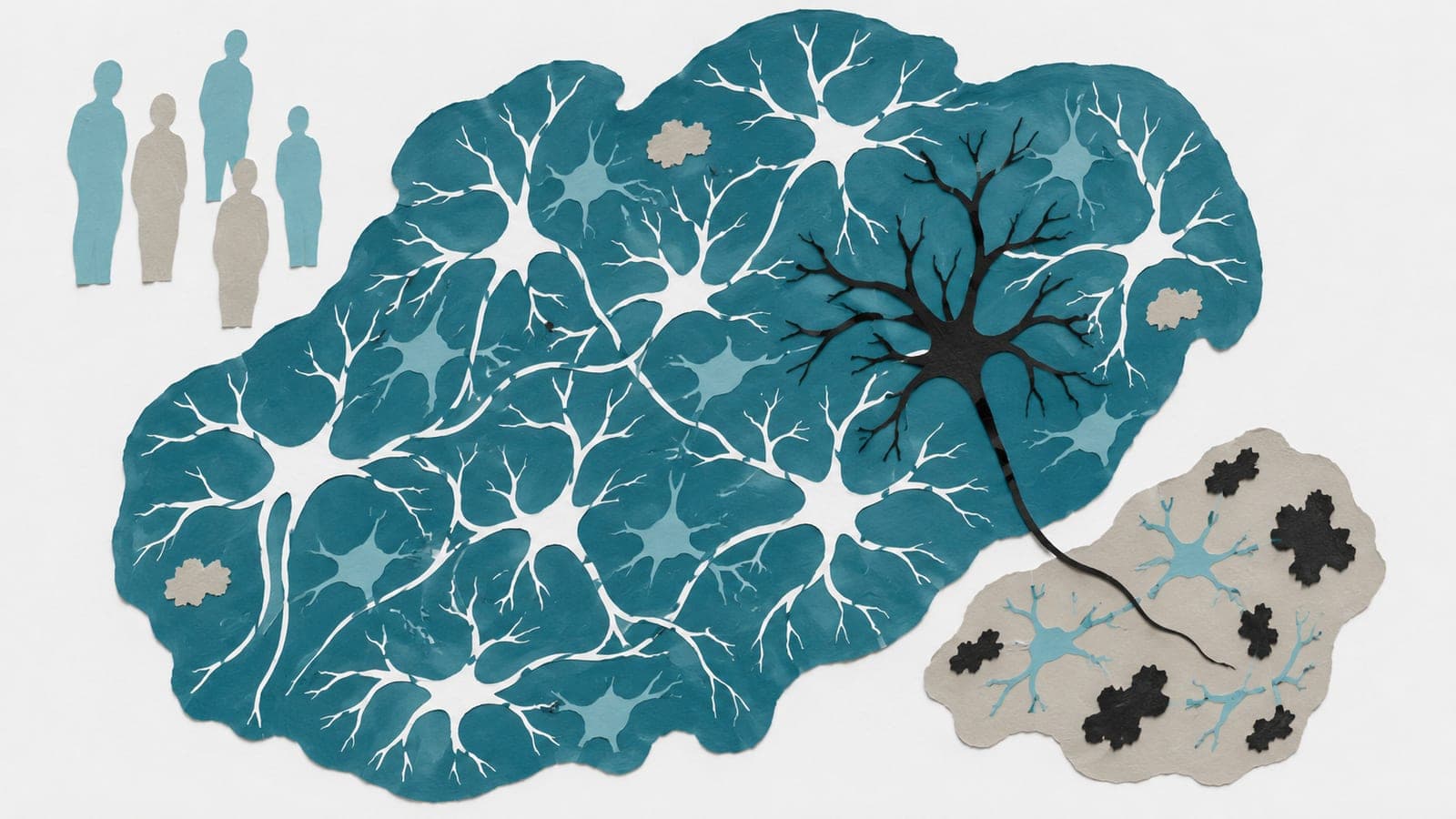
Mouse neurons carrying E4, a human version of the Alzheimer's risk gene APOE, accumulated tau clumps after modest neuroproteasome disruption. Neurons carrying the E2 version resisted tau accumulation. Mice carrying E4 also had fewer neuroproteasomes at nerve-cell surfaces than mice carrying E3 or E2.
Why it matters
The authors linked genetic risk and an age-related decline in neuroproteasomes to Alzheimer's-related tau changes. They identified this machinery as a potential target for preserving protein balance.
Caveats
The causal experiments used inhibitors in mice and lab-grown mouse neurons. They do not establish that preserving neuroproteasome function would prevent Alzheimer's disease in people.
The paper
Columbia University Irving Medical Center
Nature Neuroscience, May 29, 2026
Comments
Be the first to comment.