More of a transport protein reduced brain disease signs in mice
An experiment in genetically engineered mice found fewer disease-related brain changes at nine months when SORLA, a transport protein, was increased.
Our read
Mechanisms- Studied:
- Experiments in PS19 mice, against PS19 mice without extra SORLA
- What changed:
- Mice with extra SORLA had fewer disease-related brain changes than PS19 mice without extra SORLA
- The catch:
- Treatment started after disease develops was not measured
- Stake:
- Genomics Core funded the study.
- In the record:
- One of 23 papers on SORL1 on record: 6 with results in people, 3 in animals.
- Why it’s aging research:
- Old against young, or naturally aged tissue.
Editor of record: Boris Djordjevic · AgingResearch.News
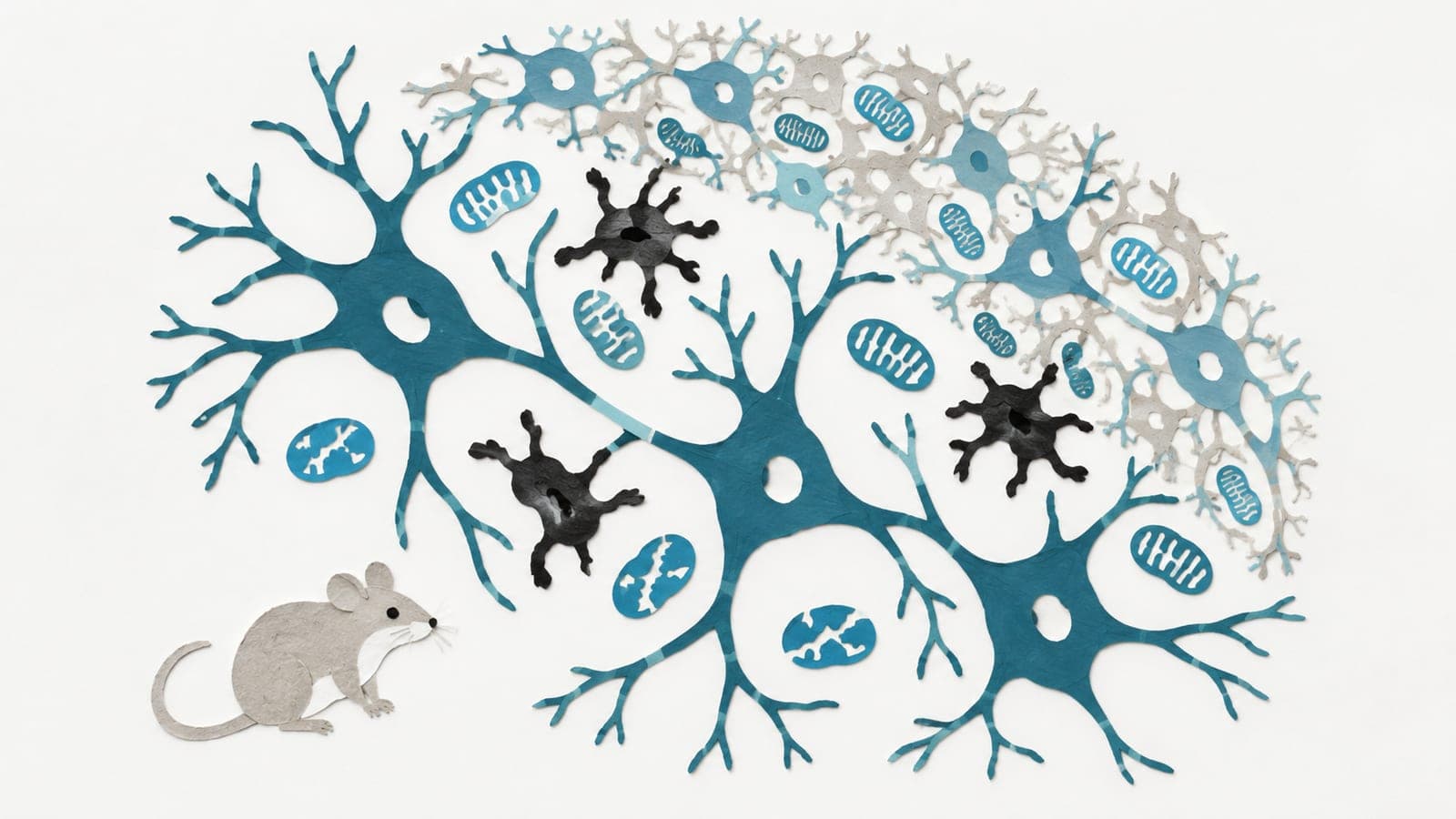
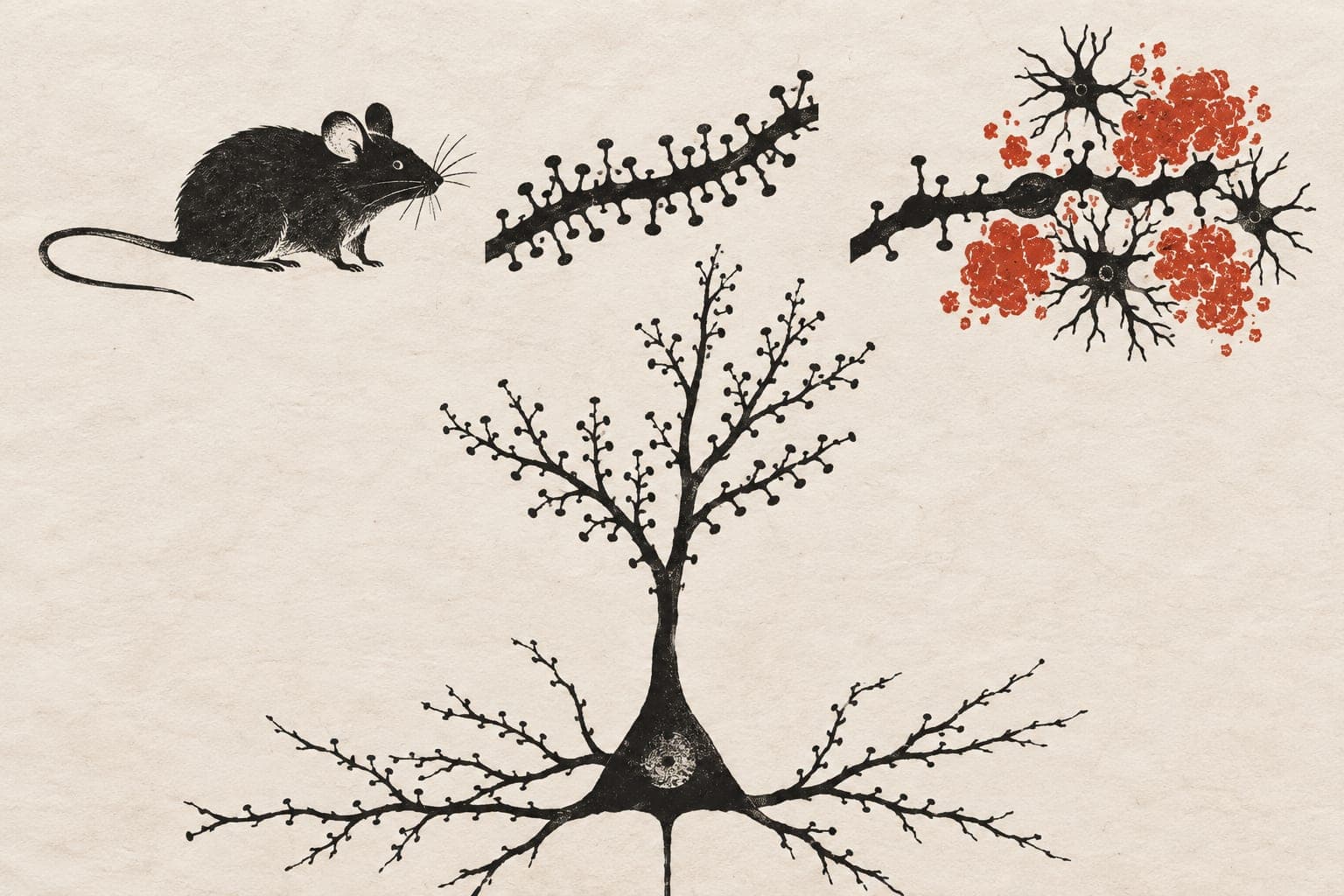
An experiment used PS19 mice, which carry a disease-linked mutation in the brain protein tau. Researchers crossed them with mice engineered to produce more SORLA, a protein that helps move materials within cells. They examined brain changes at nine months of age.
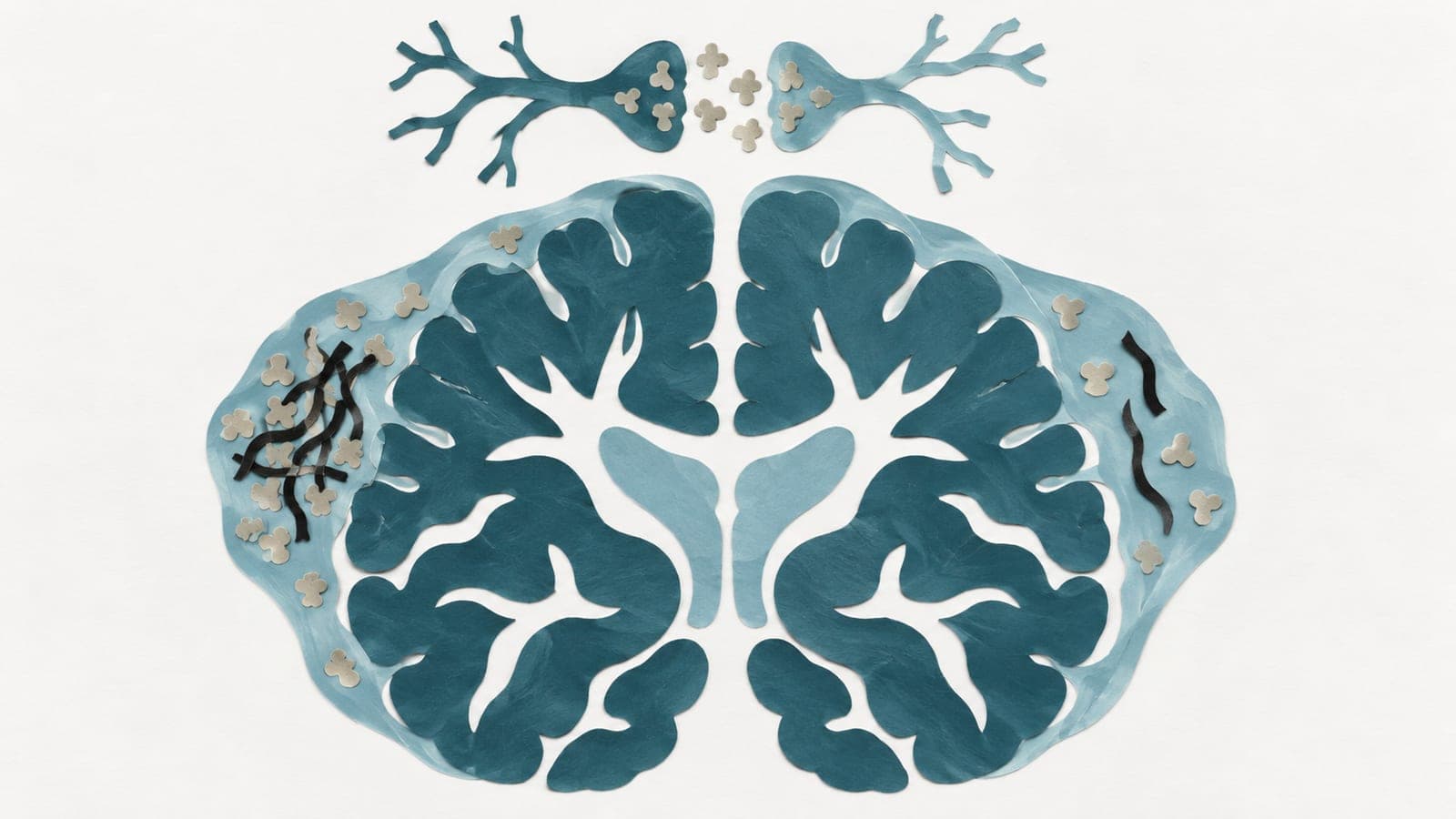
Compared with PS19 mice without extra SORLA, these mice had less abnormal chemical modification of tau, less enlargement of fluid-filled brain spaces and less loss of connections between nerve cells. Higher SORLA also reduced overactivation of glia, the brain’s support cells, and reduced impairment in the strengthening of nerve-cell connections. Analyses of proteins and gene activity found fewer disease-related changes in the hippocampus, a brain region involved in memory. Deleting SORLA instead worsened tau aggregation and glial overactivation in PS19 mice.
Why it matters
The work addressed whether a protein linked to Alzheimer’s disease also influences tau-related damage in aged brains.
Caveats
Genetically increasing SORLA did not test whether a treatment started after disease develops would help. These findings came from a mouse model, not people.
The paper
SORLA up-regulation suppresses pathological effects in aged tauopathy mouse brain
Sanford Burnham Prebys Medical Discovery Institute
Science Advances, Jul 17, 2026, Open access
Comments
Be the first to comment.