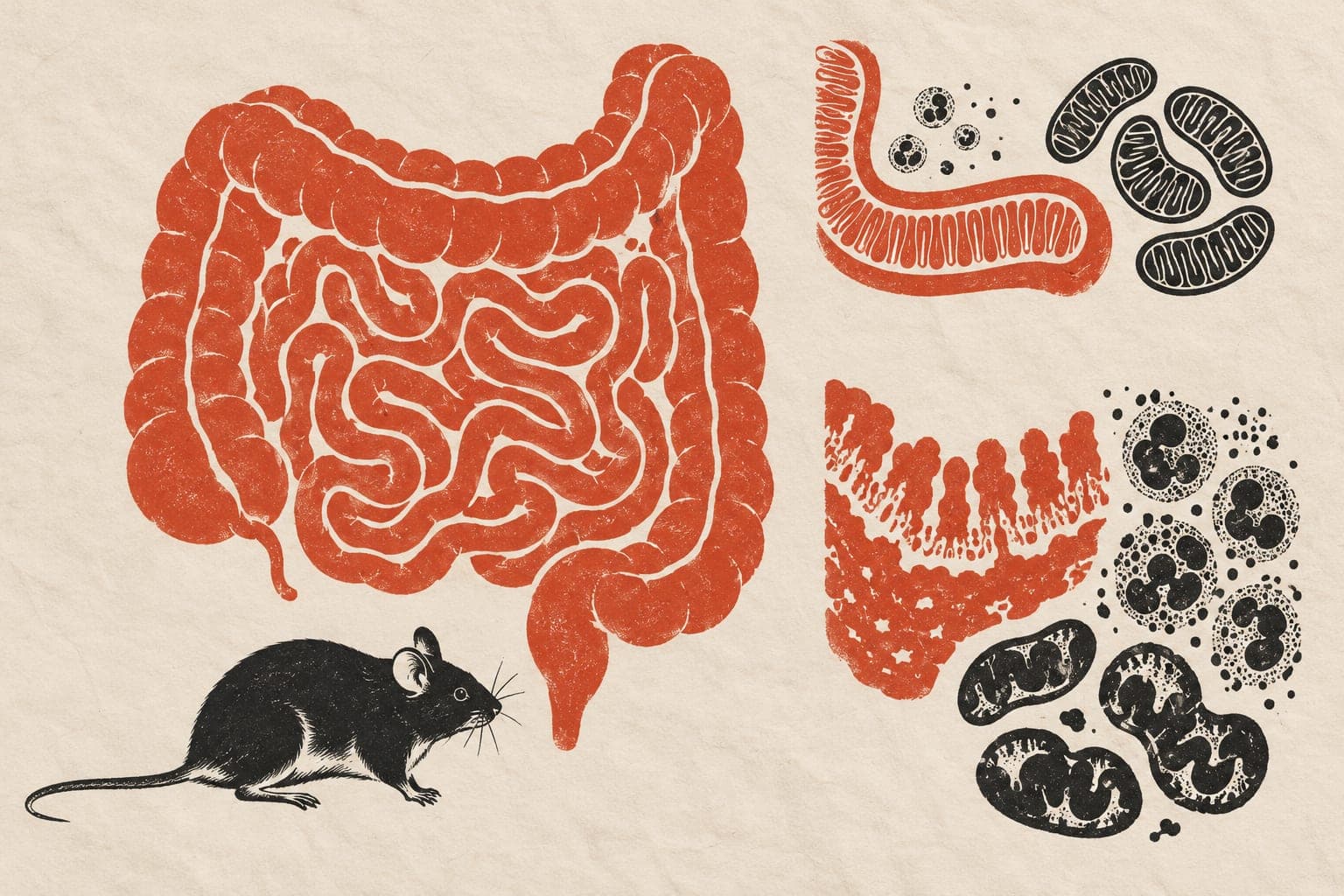
Soil microbes protect mice from disease and extend lifespan
After eight weeks of soil exposure, mice showed anti-inflammatory immune changes; the authors also reported protection against several diseases and longer health span and lifespan.
Limit: The supplied material does not quantify how much lifespan increased
Edited by Boris Djordjevic · AgingResearch.News
Laboratory mice of both sexes on a C57BL/6 genetic background were exposed to local soil microbes in controlled experiments. Researchers compared soil-exposed mice with conventionally housed mice and mice housed on heat-sterilized soil. They examined gut microbes and immune responses in 16-week-old mice after eight weeks of exposure.
Sustained colonization by soil microbes was associated with anti-inflammatory responses in the gut and elsewhere in the body. Regulatory T cells, immune cells that limit immune responses, expanded. The authors reported protection against colitis, inflammation of the colon, as well as obesity, diabetes and sepsis, a life-threatening response to infection. They also reported longer lifespan and more time in good health. In a nine-week colitis experiment, soil-exposed recipients had milder inflammation than conventionally housed recipients.
Why it matters
The mouse model offers a way to investigate how environmental microbes and immune regulation contribute to lifespan and time spent in good health.
Caveats
These were laboratory mouse experiments, including an induced colitis model, not tests of soil exposure in people. The supplied material does not quantify the reported lifespan extension.
The paper
Georgia State University
Gut Microbes, May 24, 2026, Open access