Reducing a muscle protein weakened mice before muscle loss
Experiments in 3-month-old male mice found that reducing the protein lowered muscle force before muscle mass declined over eight weeks.
Limit: Effects of restoring UNC45B on age-related muscle decline were not measured
Edited by Boris Djordjevic · AgingResearch.News
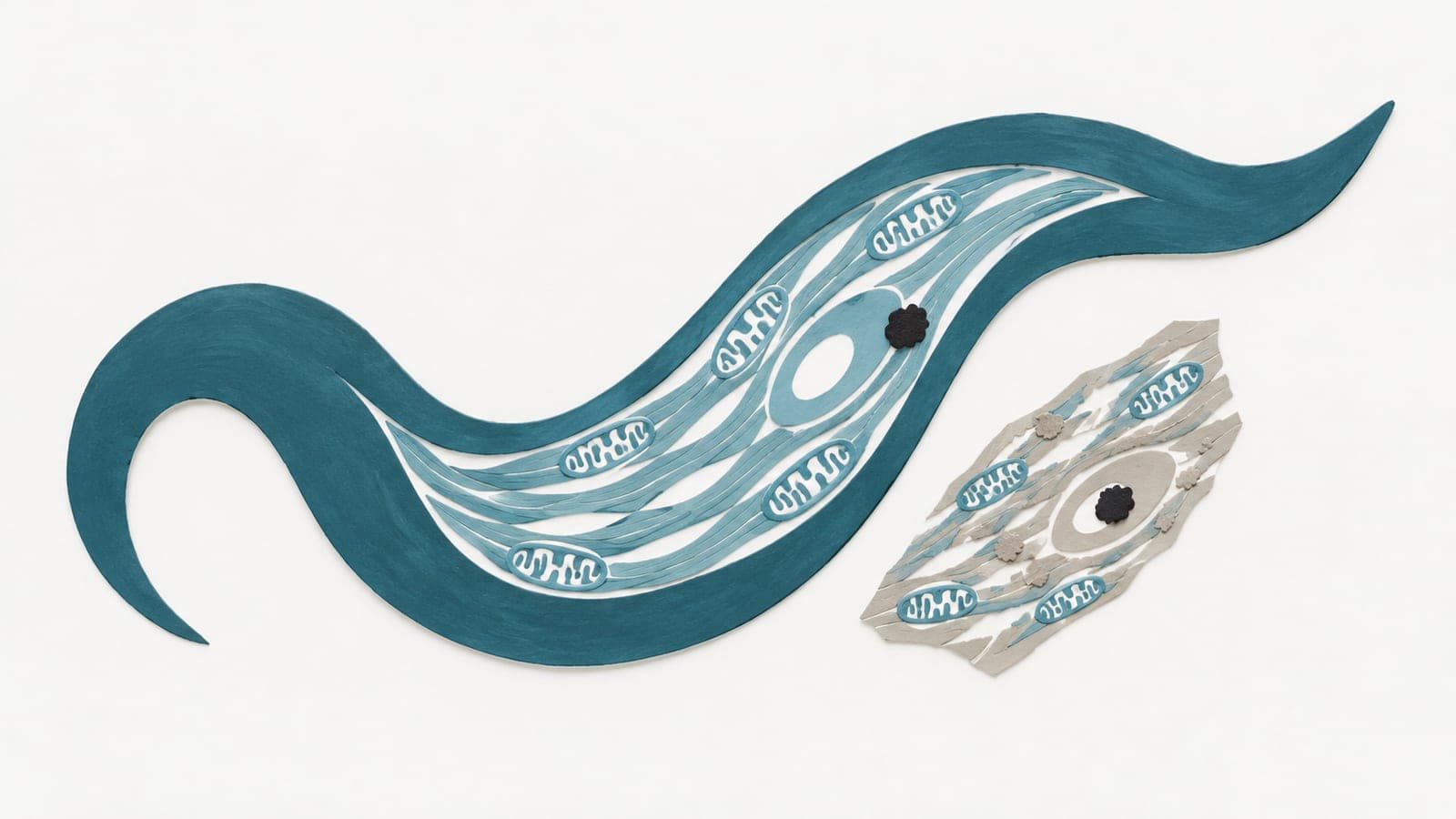
Experiments in male C57BL/6J mice aged 3 to 24 months examined UNC45B, a helper protein for myosin, which powers muscle contraction. Its levels in the gastrocnemius, a calf muscle, declined with age, particularly at 24 months. Researchers used a virus to reduce UNC45B in one lower leg of 3-month-old males, using the other leg as a control. Muscle force decreased at two weeks. Gastrocnemius mass and bone mineral density were lower at eight weeks.
In separate genetically engineered mice, switching off the gene for UNC45B throughout skeletal muscle reduced muscle mass and force. These mice had less deep sleep and lower body temperature. Their glucose tolerance and insulin sensitivity did not differ from controls.
Why it matters
Sarcopenia is the loss of muscle mass and strength with age. The experiments address how changes within muscle fibers might contribute to it.
Caveats
The experiments reduced or removed UNC45B; they did not test whether restoring it could prevent age-related muscle decline. The local reduction experiments used young male mice.
The paper
UNC45B Reduction With Aging: A Myofiber-Intrinsic Promoting Factor for Sarcopenia
Nagoya Institute of Technology
Aging Cell, Apr 21, 2026, Open access


Comments
Be the first to comment.