Lactobacillus paragasseri ameliorates age-dependent thermotaxis decline in Caenorhabditis elegans
Abstract
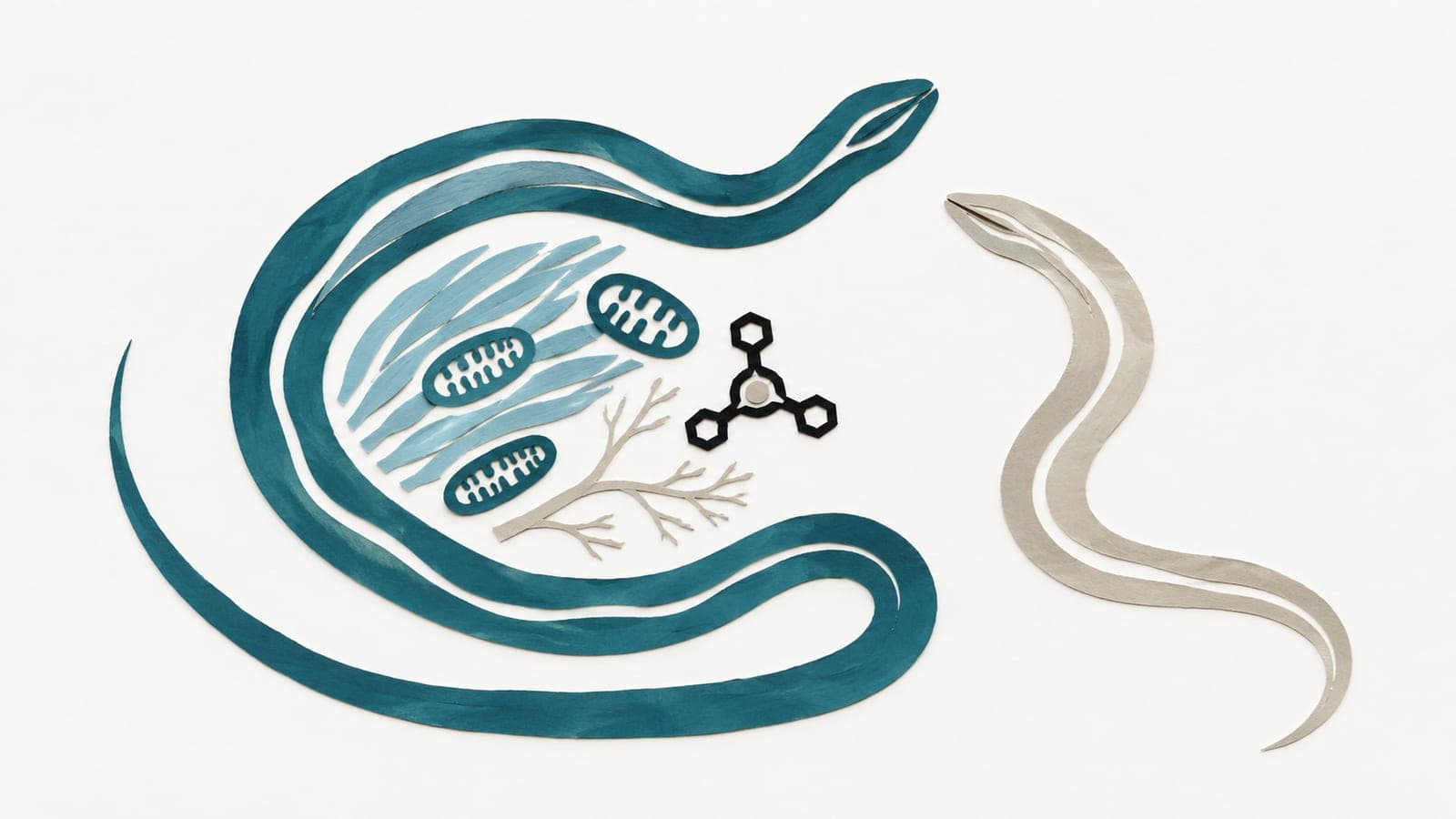
Diet can modulate cognitive aging, but the underlying mechanisms are poorly understood. Here, we show that specific lactic acid bacteria (LAB) ameliorate age-dependent decline of associative learning behavior in the nematode Caenorhabditis elegans. Screening of LAB and bifidobacterial species, mixed with the standard Escherichia coli (E. coli) diet, revealed that Lactobacillus paragasseri (Lb. paragasseri) protects against behavioral aging without affecting growth, lipid storage, or lifespan. Different treatment of bacteria suggested that Lb. paragasseri contains heat-labile, yet freeze-stable bacterial components responsible for the beneficial effect. Calcium imaging revealed that Lb. paragasseri suppresses age-associated hyperactivation of AWC sensory neurons, a key driver of behavioral decline. Furthermore, the influence of Lb. paragasseri required the FOXO transcription factor DAF-16. Proteomic profiling identified differentially expressed proteins between aged animals fed E. coli alone and those fed a mixture of E. coli and Lb. paragasseri. Together, these findings highlight Lb. paragasseri as a potential microbiota-based intervention for preserving neural function during aging.
- Lactobacillus paragasseri
- Bifidobacteria
- FOXO signalling
- Lipid and ceramide metabolism
- Thermotaxis
- C. elegans
The paper
Megmilk Snow Brand (Japan); Nagoya University
Scientific Reports, 17 Apr 2026, Open access