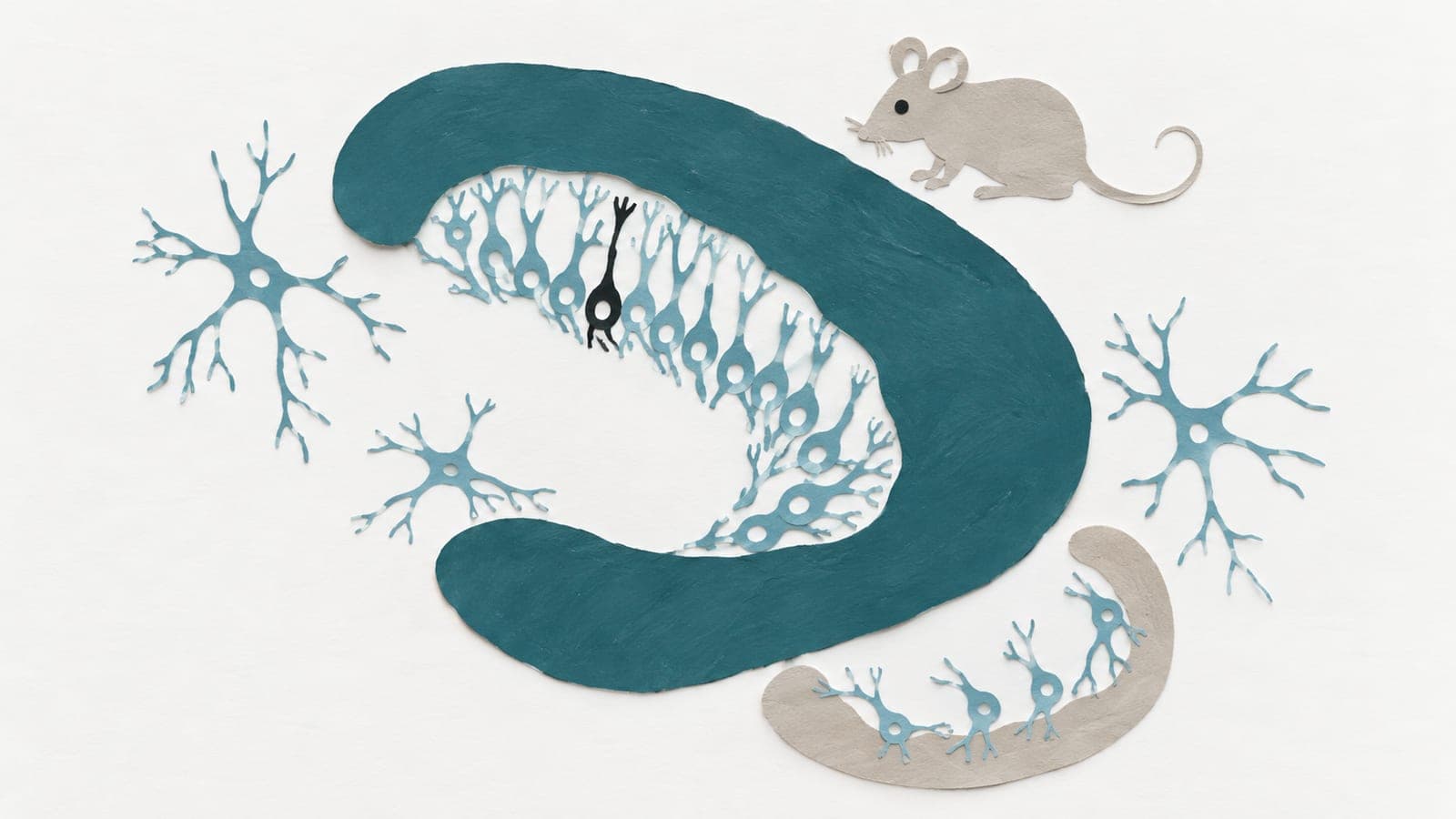
KMO deletion preserves non-associative learning and SVZ neurogenesis in aging mice
Abstract
Activation of the kynurenine pathway (KP) by age-related chronic inflammation has been linked with cognitive decline and altered neurogenesis. When upregulated, kynurenine 3-monooxygenase (KMO), a rate-limiting enzyme, drives the KP toward oxidative metabolism and the production of neurotoxic metabolites. Here, we show that genetic deletion of KMO preserves olfactory habituation and dishabituation, a form of non-associative learning, and alters subventricular zone (SVZ) proliferative and neurogenic activity in aging mice. Olfactory habituation and dishabituation were assessed in young (4-5 months), middle-aged (9-12 months), and old (22-30 months) wild-type (WT) and KMO-/- male and female mice. WT mice displayed progressive habituation decline, with deficits to non-social odors emerging in middle age and extending to social odors in old age. In contrast, KMO-/- mice maintained habituation and dishabituation to both odor types across age groups, despite differences in exploration strategies. At the cellular level, SVZ cell proliferation declined with age in WT mice. In contrast, KMO-/- mice exhibited greater proliferative activity and increased neuroblast-associated labeling compared to WT controls. Our findings suggest a previously unrecognized role for KMO in non-associative learning and in shaping SVZ cellular indices during aging. These results support further investigation into KMO-dependent KP metabolism as a modulator of behavioral and neurogenic processes across the lifespan.
- KMO
- Tryptophan–kynurenine metabolism
- Neuroblast-associated labeling
- Olfactory habituation and dishabituation
- SVZ cell proliferation
- Mice
The paper
The University of Texas at San Antonio Health Science Center
Behavioural Brain Research, 15 Apr 2026