Aging linked to about half of retinal nerve fiber thinning in glaucoma
A cohort study of 200 treated glaucoma patients and 73 healthy people estimated that normal aging contributed around half of thinning in glaucoma.
10.1 years
Limit: Glaucoma treatment could alter thinning rates, affecting the fraction attributed to aging
Edited by Boris Djordjevic · AgingResearch.News
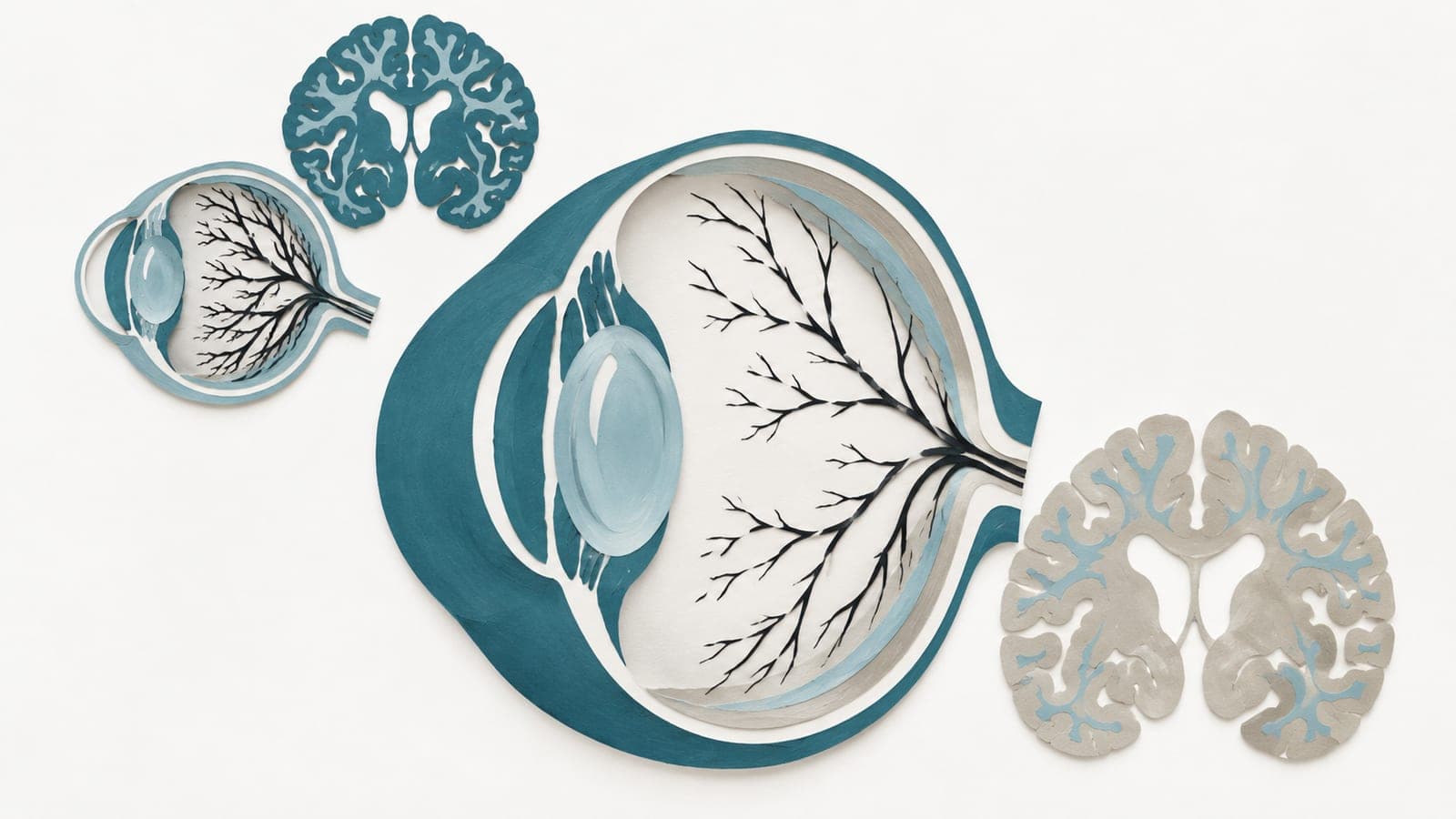
A prospective observational cohort study followed 200 patients treated for open-angle glaucoma and 73 healthy people. Glaucoma damages the nerve carrying signals from the eye to the brain. Participants had a median age of 68.3 years and a median follow-up of 10.1 years. Researchers scanned one eye per person every six months to measure the nerve fiber layer in the retina, the light-sensitive tissue at the back of the eye.
The statistical model estimated that this layer thinned by 0.54 micrometers per year in healthy participants. After adjustment for other factors, glaucoma was associated with an additional 0.47 micrometers of thinning per year. The authors concluded that normal aging contributed around half of the thinning observed in patients treated for glaucoma.
Why it matters
The study addressed how to distinguish normal age-related changes in the retina from changes linked to glaucoma.
Caveats
The observational design could not establish cause and effect. The glaucoma results came from treated patients and do not establish the pattern in untreated disease.
The paper
Impact of ageing on progressive thinning of the retinal nerve fibre layer in glaucoma
Dalhousie University
The British Journal of Ophthalmology, Mar 20, 2026