Eye length linked to nerve layer thickness differently by age
In adults, nerve fibre layers were thicker with longer eyes up to 24.0 millimetres, but thinner above 26.5 millimetres.
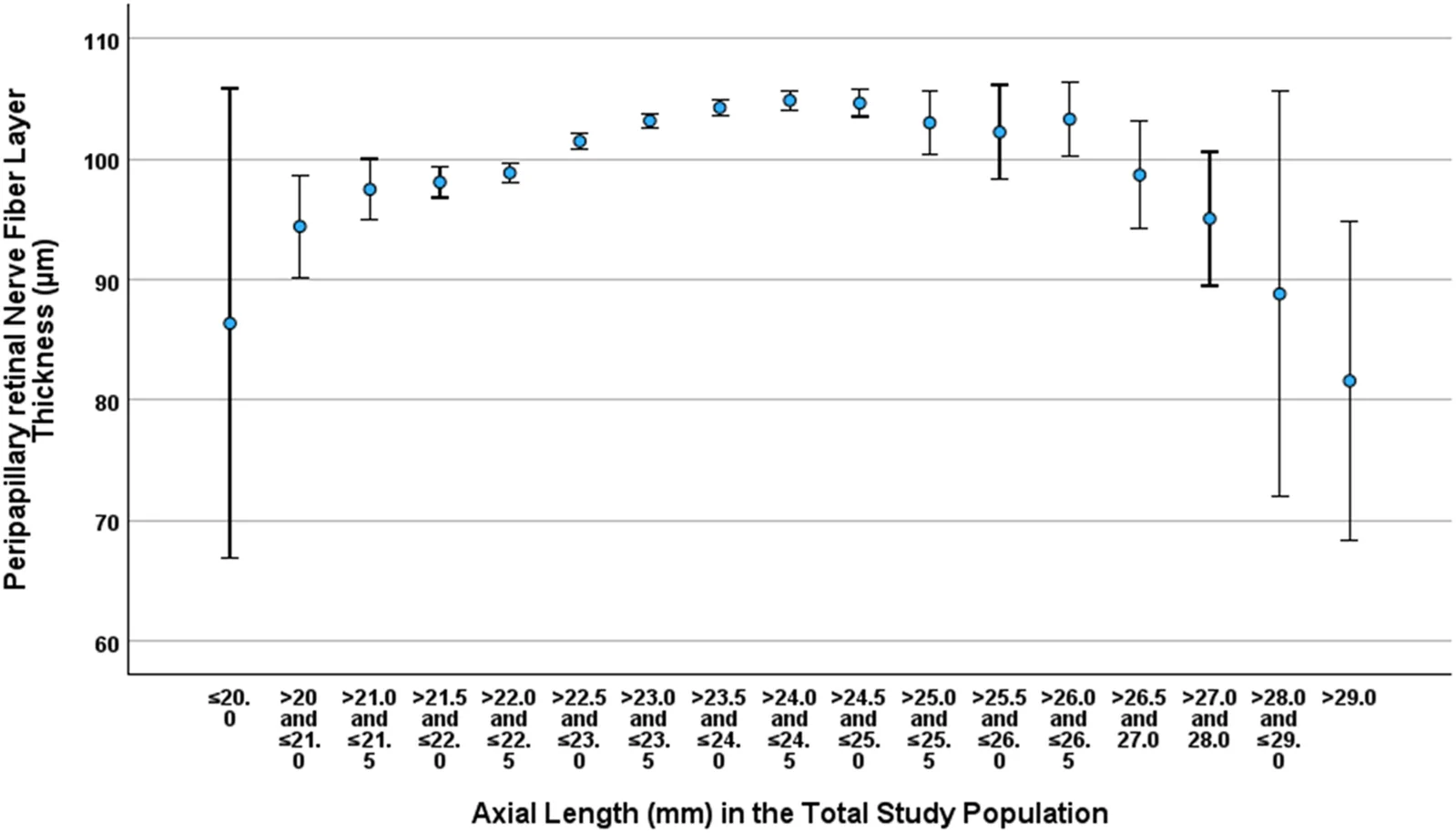
An observational analysis examined 23,384 eyes from 11,785 adults and children in four population-based studies. The adult studies enrolled people aged 40 or older, with one study focused on those aged 85 or older. The children’s study enrolled participants aged six or older. Researchers used optical scans to measure the nerve fibre layer around the optic nerve at the back of the eye. They also measured eye length from front to back.
In adults, thickness increased with eye length up to 24.0 millimetres, stayed level, then decreased above 26.5 millimetres. In children, longer eyes were associated with a thicker layer even among very short-sighted eyes. Younger age was also associated with a thicker layer.
Why it matters
The study addresses how to interpret nerve fibre measurements across ages. The authors concluded that reference values for different parts of this layer depend on eye length.
Caveats
These observational associations do not establish that eye length or age caused the differences in nerve fibre thickness.
- Optic neuropathy
- Axial length
- Estimated cerebrospinal fluid pressure
- High myopia
- Intraocular pressure
- Humans
The paper
Rothschild Foundation Hospital
Ophthalmology Science, 25 Aug 2026