Decellularized extracellular matrix restores Fibronectin/Integrin β1 balance through extracellular vesicles to rejuvenate chondrocytes and alleviate osteoarthritis progression
Abstract
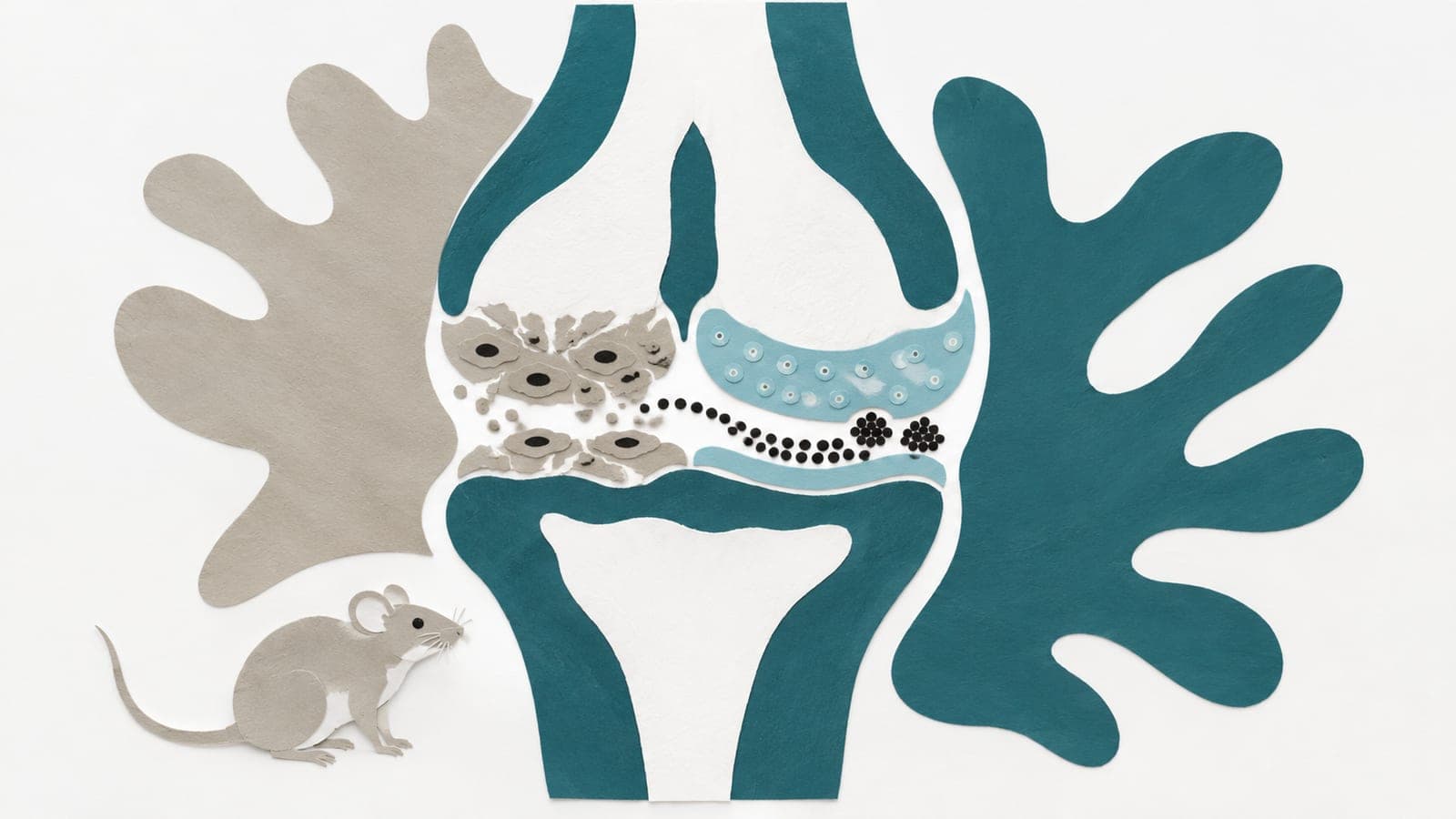
INTRODUCTION: Osteoarthritis (OA) is a prevalent degenerative joint disease driven largely by chondrocyte senescence. Extracellular vesicle (EV)-based therapies have emerged as a promising strategy; however, the extensive stem-cell expansion required to obtain therapeutic EV doses unavoidably erodes their potency. OBJECTIVES: Leveraging our prior finding that decellularized extracellular matrix (dECM) rejuvenates stem cells during in vitro expansion, we further investigate whether dECM could resolve the current bottleneck in EV therapy by preserving therapeutic efficacy even in late-passage cells. METHODS: Human adipose-derived stromal cells (hADSCs) were expanded to passage 15 on either tissue culture plastic (TCP) or dECM, and their EVs were isolated. We first interrogated the capacity of dECM-primed EVs to counteract chondrocyte senescence and ER stress in vitro, then validated their therapeutic impact in a rat OA model. Mechanistic insight was pursued through proteomic profiling, followed by loss- and gain-of-function studies using pharmacologic inhibitors and targeted knockdown. RESULTS: Late-passage EVs generated under dECM (dECM-P15-EVs) surpassed those under TCP (TCP-P15-EVs) in alleviating chondrocyte senescence and ER stress. In vivo, dECM-P15-EVs attenuated cartilage degradation more effectively than their conventionally cultured counterparts. Proteomics revealed dECM-P15-EVs were enriched in both FN and its receptor integrin β1 (ITGB1). Either pharmacologic blockade or siRNA-mediated knockdown of FN in dECM or of ITGB1 in EV-producing cells abrogated the anti-senescence and chondro-protective benefits of dECM-P15-EVs. Further experiments implicated FN/ITGB1 transfer as a critical step in re-activating downstream SIRT1 signaling. CONCLUSION: By reinstating FN/ITGB1 homeostasis and reinvigorating SIRT1-dependent pathways, dECM-P15-EVs effectively counteract chondrocyte senescence and OA progression-offering a scalable, senescence-resistant platform for next-generation EV therapy.The Translational Potential of this Article: Producing the large quantities of EVs required for clinical OA therapy necessitates prolonged expansion of stem cells, which inevitably blunts EV efficacy. dECM culture restores the potency of EVs without additional biosafety concerns. Thus, dECM-P15-EVs offer strong translational promise as an advanced, EV-centric OA therapy that overcomes current limitations. THE TRANSLATIONAL POTENTIAL OF THIS ARTICLE: Producing the large quantities of EVs required for clinical OA therapy necessitates prolonged expansion of stem cells, which inevitably blunts EV efficacy. dECM culture restores the potency of EVs without additional biosafety concerns. Thus, dECM-P15-EVs offer strong translational promise as an advanced, EV-centric OA therapy that overcomes current limitations.
- Decellularized extracellular matrix-primed extracellular vesicles
- Extracellular matrix
- FN1
- Osteoarthritis
- Endoplasmic reticulum
- Rats
The paper
Tongji University
Journal of Orthopaedic Translation, 20 Dec 2025