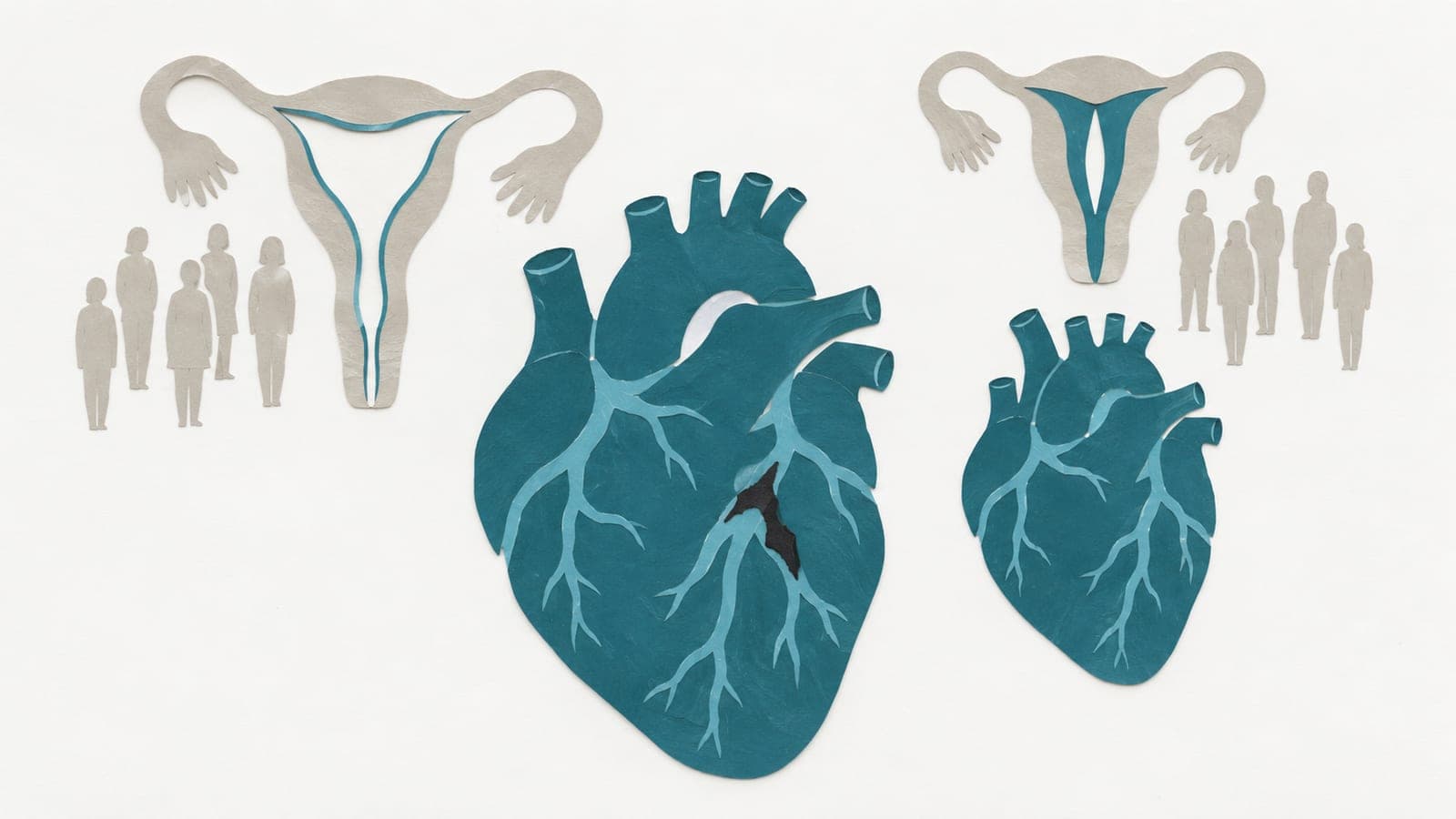
Ovarian reserve and endothelial health in healthy reproductive-age women
Abstract
CONTEXT: While the literature suggests women with diminished ovarian reserve may have increased metabolic risk, implications for long-term health are unknown. OBJECTIVE: This work aimed to investigate the relationship between ovarian reserve markers at baseline with a subsequent measure of endothelial dysfunction, as a proxy for cardiovascular risk. METHODS: This prospective cohort study was conducted in a community-based setting. Participants included 322 individuals from the Ovarian Aging Study (OVA), a National Institutes of Health-funded study of ovarian aging (average age 35.4 years at the time of baseline ovarian reserve measurements, and age 45.1 years at the time of endothelial dysfunction measurement). This study investigated the association of ovarian reserve markers at baseline with a subsequent (average of 9.7 years) assessment of cardiovascular risk using the Endothelial and Peripheral Arterial Tone reactive hyperemia index (RHI) score of endothelial function. Secondary outcomes including the American Heart Association PREVENT score, metabolic syndrome, telomere length, and mitochondrial DNA were evaluated. RESULTS: RHI as a continuous outcome was significantly positively associated both with antimüllerian hormone (AMH) and antral follicle count (AFC) on fully adjusted models (AMH coefficient 0.052; 95% CI, 0.008-0.096; P = .02; AFC coefficient 0.017; 95% CI, 0.001-0.032; P = .04). For secondary outcomes, the only result that was statistically significant was the association of fully adjusted AFC with metabolic syndrome (odds ratio 0.92; 95% CI, 0.86-0.99; P = .02). A sensitivity analysis of the premenopausal cohort (N = 246) had similar findings. CONCLUSION: In this longitudinal cohort of women with normal ovarian aging, baseline ovarian reserve markers of AMH and AFC were positively associated with endothelial function as a continuous outcome. Baseline ovarian reserve markers were not related to most secondary outcomes of cellular aging and metabolic risk.
- Mitochondrial DNA maintenance
- Telomerase and telomere maintenance
- Cardiovascular disease
- Endothelial dysfunction
- Metabolic syndrome
- Humans
The paper
University of California, San Francisco
The Journal of Clinical Endocrinology and Metabolism, 12 Mar 2026