Single-cell aging trajectories reveal a dynamic coupling between nuclear size and proteasome concentration
Abstract
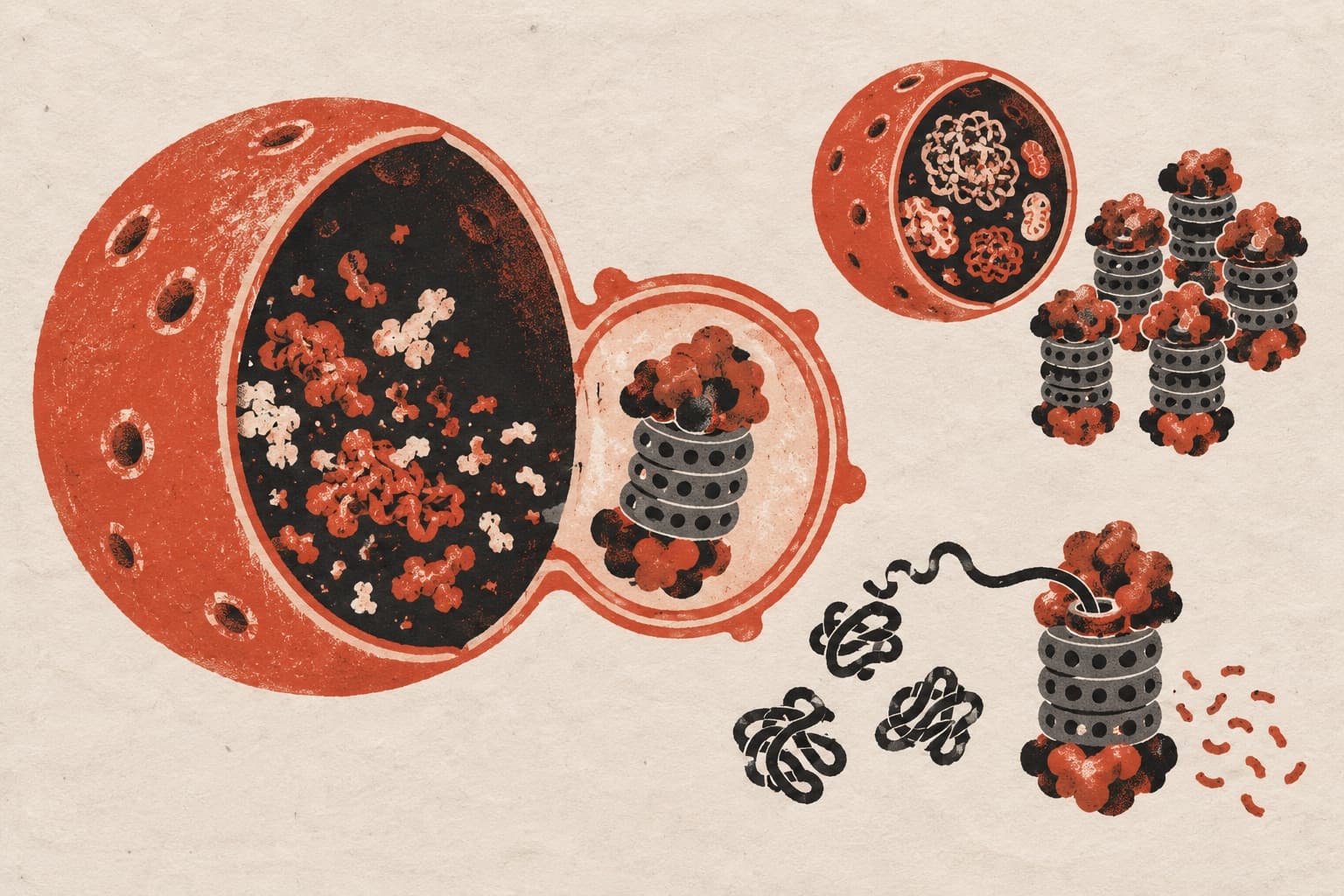
Yeast replicative aging is cell autonomous and thus a good model for mechanistic study from a dynamic systems perspective. Utilizing an engineered strain and a high-throughput microfluidic device, we analyzed the dynamic trajectories of thousands of single yeast mother cells throughout their lifespan, using fluorescent reporters that cover a wide range of biological processes. We found that proteostasis markers are the strongest predictors of the lifespan of individual cells. We observed that proteasome concentration in the nucleus shows dynamics distinct from those in the cytoplasm, with much more rapid decrease during aging; such behavior can be accounted for by the increase of nuclear size in a simple mathematical model of transport. We hypothesize that nuclear enlargement may dilute key nuclear factors, potentially contributing to aging. Our large-scale single-cell dynamics dataset provides a valuable resource for analyzing relationships among aging hallmarks.
The paper
University of California, San Francisco
iScience, 19 Jan 2026