Proteasome activity maintains red blood cell integrity during storage and restoration
Inhibiting the proteasome accelerates ATP depletion, protein aggregation, and clearance markers in stored and aged red blood cells.
Antioxidants
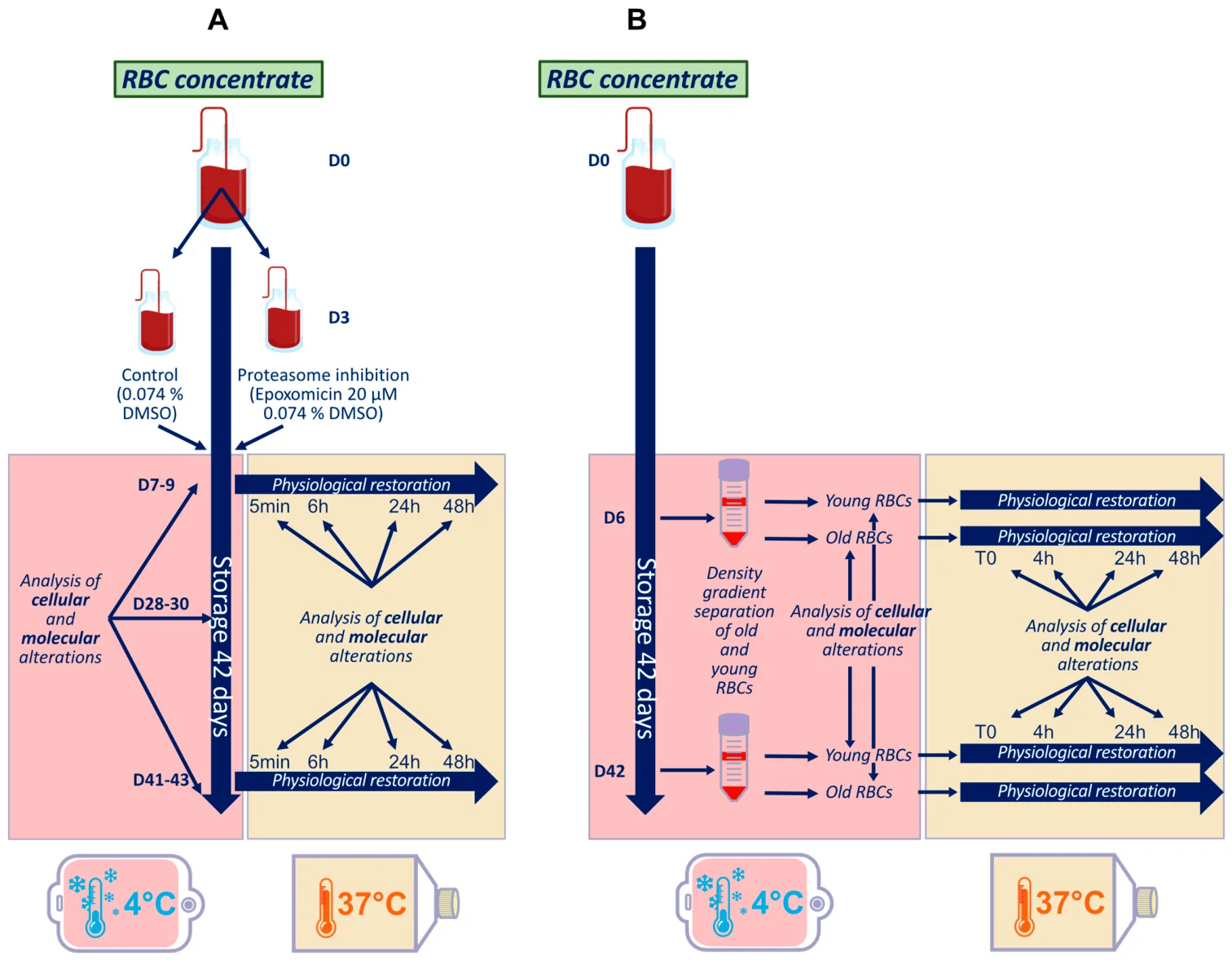
Researchers examined red blood cells in vitro to determine how proteasome inhibition affects cell quality during storage and physiological restoration. Using the inhibitor epoxomicin, the team tracked cellular alterations during storage and compared young and old red blood cell subpopulations. Proteasome inhibition during storage depleted ATP and altered cell morphology without causing immediate oxidative damage. When returned to physiological conditions, the inhibited cells suffered accelerated ATP loss, extensive protein aggregation, reduced deformability, hemolysis, and increased phosphatidylserine exposure. These detrimental effects were especially severe in long-stored cells. Red blood cells aged in vivo also displayed low proteasomal activity and responded similarly upon physiological restoration, showing that proteasome decline drives features of red blood cell senescence.
Why it matters
The findings identify proteasomal dysfunction as a key hallmark of aging in anucleate cells that triggers molecular damage and marks cells for clearance. Supporting proteasome function could provide a strategy to maintain red blood cell quality and improve transfusion efficacy.
Caveats
The experiments were conducted in vitro using isolated cells and chemical inhibitors rather than measuring outcomes in living transfusion recipients.
The paper
The Proteasome Safeguards Red Blood Cell Integrity During Storage and After Transfusion
Show 13 more authors
Mickaël Marin, Michaël Dussiot, Céline Rodriguez, Monika Dzieciątkowska, Marie Tamagne, Camille Roussel, Stéphanie Vicca, Olivier Hermine, Pierre A. Buffet, Benoît Vingert, Steven L. Spitalnik, Angelo D’Alessandro, Michel Prudent,Inserm
Antioxidants · 9 Sep 2026 · CC BY