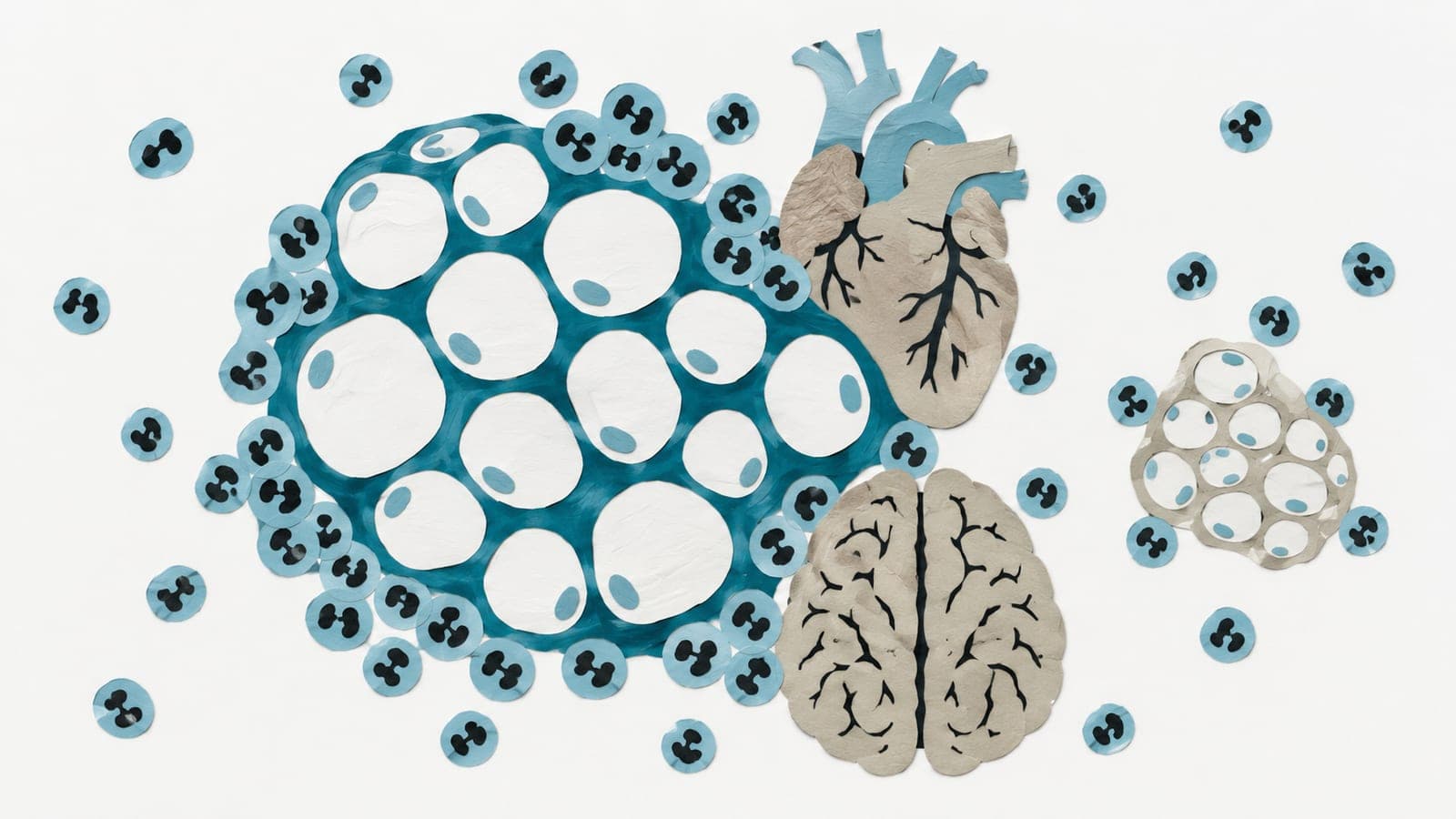
Beyond BMI: visceral adiposity assessed by the lipid accumulation product index shows independent associations with IL-5 and TNF-β in older adults
Abstract
BACKGROUND: Visceral adiposity contributes to inflammaging, but body mass index (BMI) may poorly reflect fat redistribution in late life. The lipid accumulation product (LAP) index is a surrogate of visceral adiposity; its immune correlates in older adults remain incompletely defined. METHODS: In this cross-sectional study, we analyzed 206 community-dwelling older adults (mean age 75.9 ± 7.5 years; 57.3% women). Clinical, functional, anthropometric, metabolic, and biochemical data were collected with circulating cytokine and chemokine concentrations. Associations between LAP and immune mediators were explored using correlation analyses and progressively adjusted multivariable linear regression models. RESULTS: LAP did not differ by sex (p = 0.825). Women showed lower IL-10 (p = 0.011), IL-12p70 (p = 0.004), IL-3 (p = 0.017), IL-4 (p = 0.006), IL-15 (p = 0.013), and higher RANTES/CCL5 (p = 0.029). In the overall cohort, LAP correlated with BMI (p < 0.001) and glycaemia (p < 0.001), and inversely with HDL-C (p < 0.001). LAP was correlated with eotaxin (p = 0.029), MCP-1 (p = 0.038), IL-5 (p = 0.016), and TNF-β (p = 0.007) after age/sex adjustment. In fully adjusted regression models, IL-5 (p = 0.023) and TNF-β (p = 0.002) remained independently inversely associated with LAP, whereas MCP-1 and eotaxin lost significance after BMI adjustment. Associations between IL-5, TNF-β and other conventional measure of central adiposity ( waist-to-hip ratio) were weaker and less consistent than those observed for LAP index. CONCLUSION: In older adults, LAP index may capture an immunometabolic phenotype not fully explained by BMI alone. Higher LAP index is independently associated with lower IL-5 and TNF-β, suggesting a potential selective impairment of regulatory immune signaling with increasing visceral lipid accumulation.
The paper
University of Perugia
Aging Clinical and Experimental Research, 24 Feb 2026