Why didn't the senior citizen cross the road? Gait speed in community-dwelling older adults with mobility limitations relative to pedestrian crossing times
Abstract
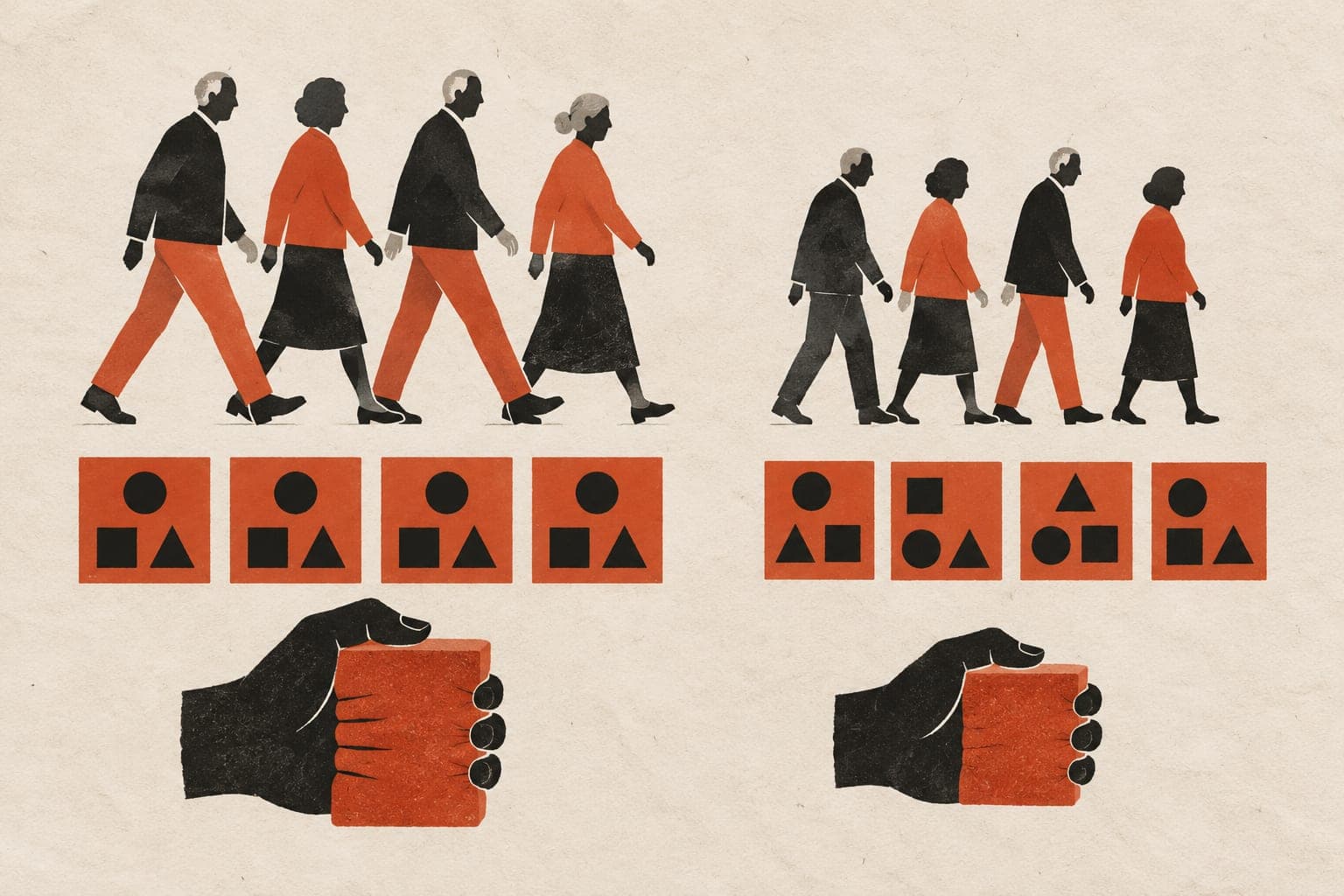
BACKGROUND: Supporting older adults to maintain physical activity is a key tool in combating the rising prevalence of physical frailty and its associated social, health and economic burden. Walkability of the physical environment, which in urban areas includes pedestrian infrastructure and safety, is a key facilitator of physical activity. Road crossings may be one such factor that impacts walkability for older populations. OBJECTIVE: This study aimed to determine what proportion of community dwelling adults ≥65 years of age classified as frail/pre-frail in terms of their lower limb physical function would meet the 1.2 m/s required walking speed for pedestrian crossings, and the demographic characteristics associated with low gait speed. METHODS: Four-metre walking speed data from 1110 older adults in two randomised controlled trials were analysed. Gait speed and the proportion meeting the 1.2 m/s 'green signal' crossing time was calculated. Generalised linear models explored differences in gait speed by sex, age, education, marital status, socioeconomic status and physical function. RESULTS: Seventeen (1.5%) of the sample walked fast enough at their usual comfortable pace to cross during a 1.2 m/s green signal. The mean gait speed for the sample was 0.77 (SD 0.19). Older age, lower physical function and non-white ethnicity were characteristics associated with slower gait speed. CONCLUSIONS: Pedestrian crossings assuming a gait speed of 1.2 m/s are inadequate for mobility-limited older adults to cross at a comfortable walking speed. Further studies are needed to assess the impact of slow gait speed on outdoor physical activity and to develop policies for more accommodating pedestrian infrastructure.
The paper
University of Bath; University of Birmingham
Age and Ageing, 28 Nov 2025