Impact of age on gait parameters under motor and cognitive dual-task conditions
Abstract
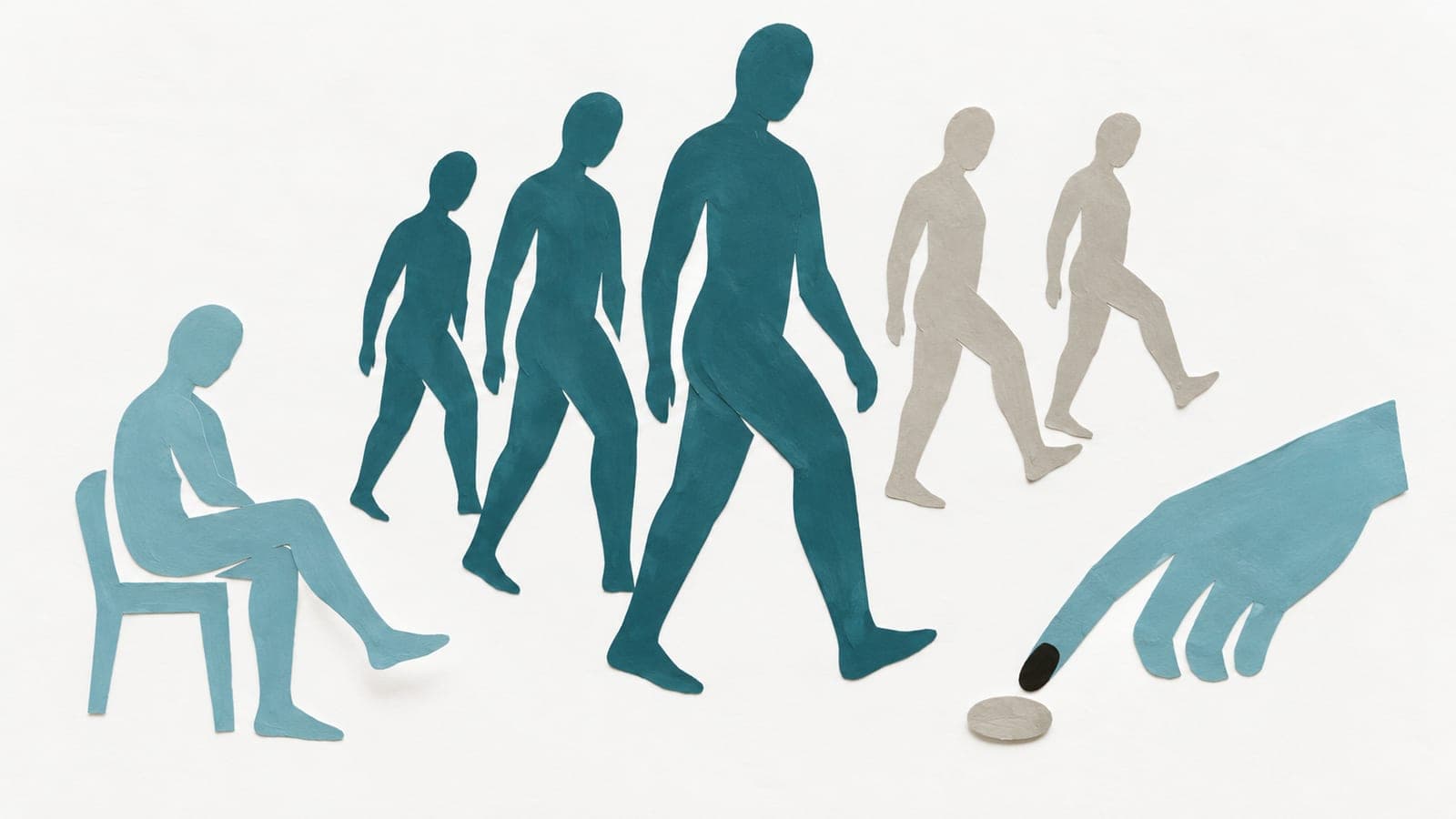
BACKGROUND: Aging in humans is a complex process characterized by functional decline over time, leading to a decrease in quality of life. The physiological effects of aging lead to deviations from normal gait, difficulties in maintaining balance, and ultimately mobility limitations. Walking is a complex task that requires the cooperation of both sensorimotor and cognitive systems. The aim of this study was to examine the effects of dual-task exercises involving cognitive and motor tasks on gait parameters with aging. Our study was designed as a cross-sectional study. RESEARCH QUESTION: METHODS: A total of 75 individuals living in the Northern Cyprus, divided into 3 groups with 25 individuals in each group as young group (25-44 years), middle age (44-64 years), and old age (65 years and above), were included in the study. The 10-m walking test and the footprint method were used to evaluate the walking parameters of the individuals were used in the study. To evaluate the dual task, motor secondary task (carrying a cup on a tray while walking), arithmetic cognitive secondary task (PASAT 3 test) and verbal fluency cognitive secondary task (saying animal names starting with the letter "K") were used. RESULTS: It was determined that individuals in the older age group had an increase in walking time and cadence, and a decrease in step length and double step length in motor and cognitive dual tasks compared to young and middle-aged individuals (p < 0.05). Although step width increased in the older age group and we could not find a difference between the groups (p > 0.05). CONCLUSION: It was concluded that both motor and cognitive dual tasks have an effect on gait quality with advancing age.
The paper
Near East University; Pamukkale University
Journal of Bodywork and Movement Therapies, 30 Sep 2025