Extra tasks in pool exercise gave no consistent cognitive advantage
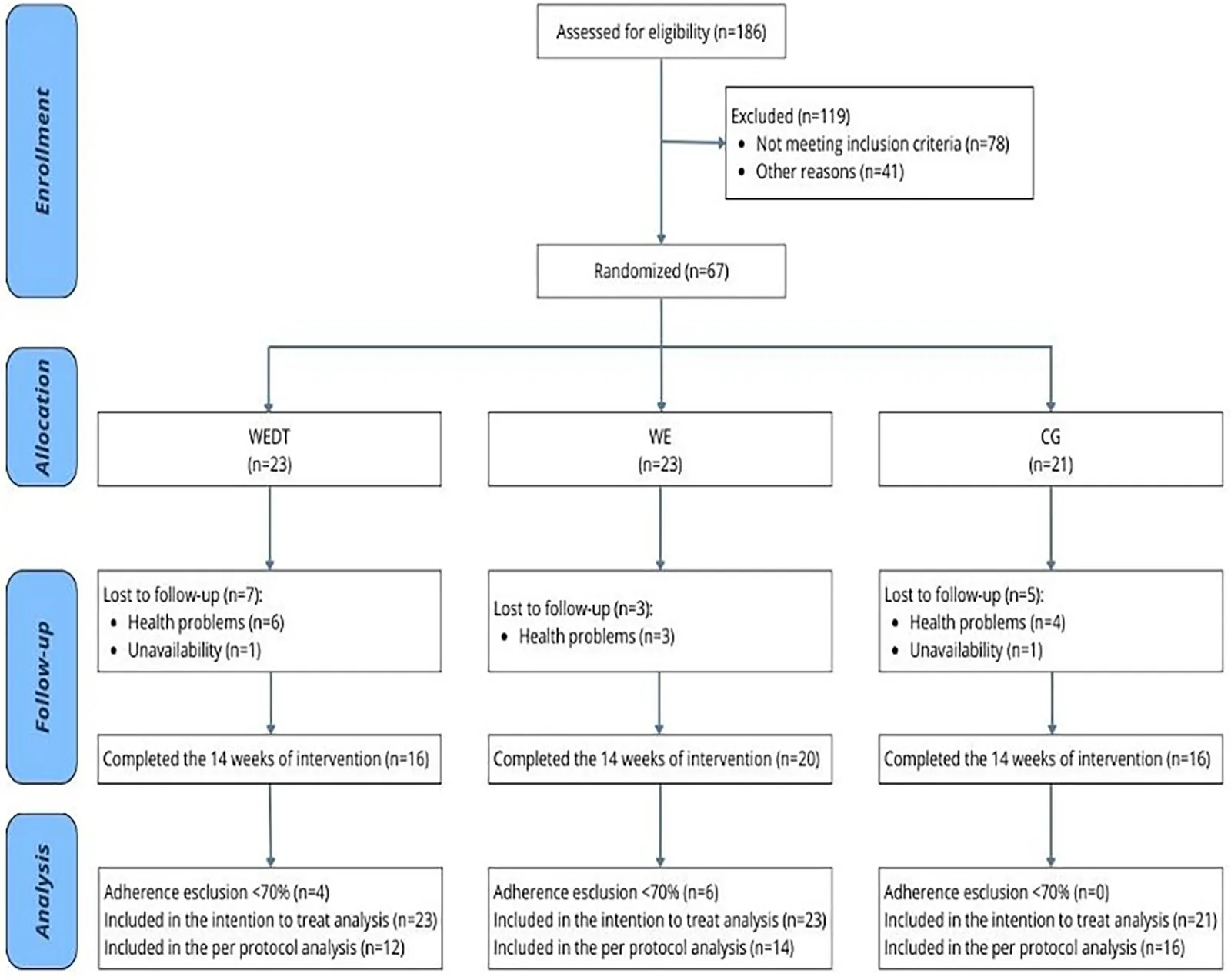
A 14-week randomised trial assigned 67 older women to pool exercise with added tasks, conventional pool exercise or no exercise.
14 weeks, registered RBR-4tzrdjz
In 67 older women in Porto Alegre, Brazil, a randomised trial tested whether adding simultaneous tasks to pool exercise offered extra benefits. Researchers assigned 23 women to exercise with added tasks, 23 to conventional pool exercise and 21 to no exercise. The exercise programmes scheduled two sessions a week for 14 weeks.
The main analysis included all women as assigned. The groups did not differ significantly in how their scores changed on a test of overall thinking skills. Scores on a test of naming words by category rose in the added-task group, fell in the conventional exercise group and stayed stable in controls. Physical effects were modest and varied across measures.
Why it matters
The trial addressed whether doing two tasks at once during exercise offers older women extra support for thinking skills in later life.
Caveats
Average attendance was 55.2% with added tasks and 65.7% with conventional exercise, reducing the exercise dose actually received. The trial involved 67 older women over 14 weeks.
- Dual-task water-based exercise
- 6-minute walk test
- Dual-task Timed Up and Go
- Electromyography
- Handgrip strength
- Humans
The paper
Federal University of Rio Grande do Sul
Frontiers in Physiology, 25 Sep 2026