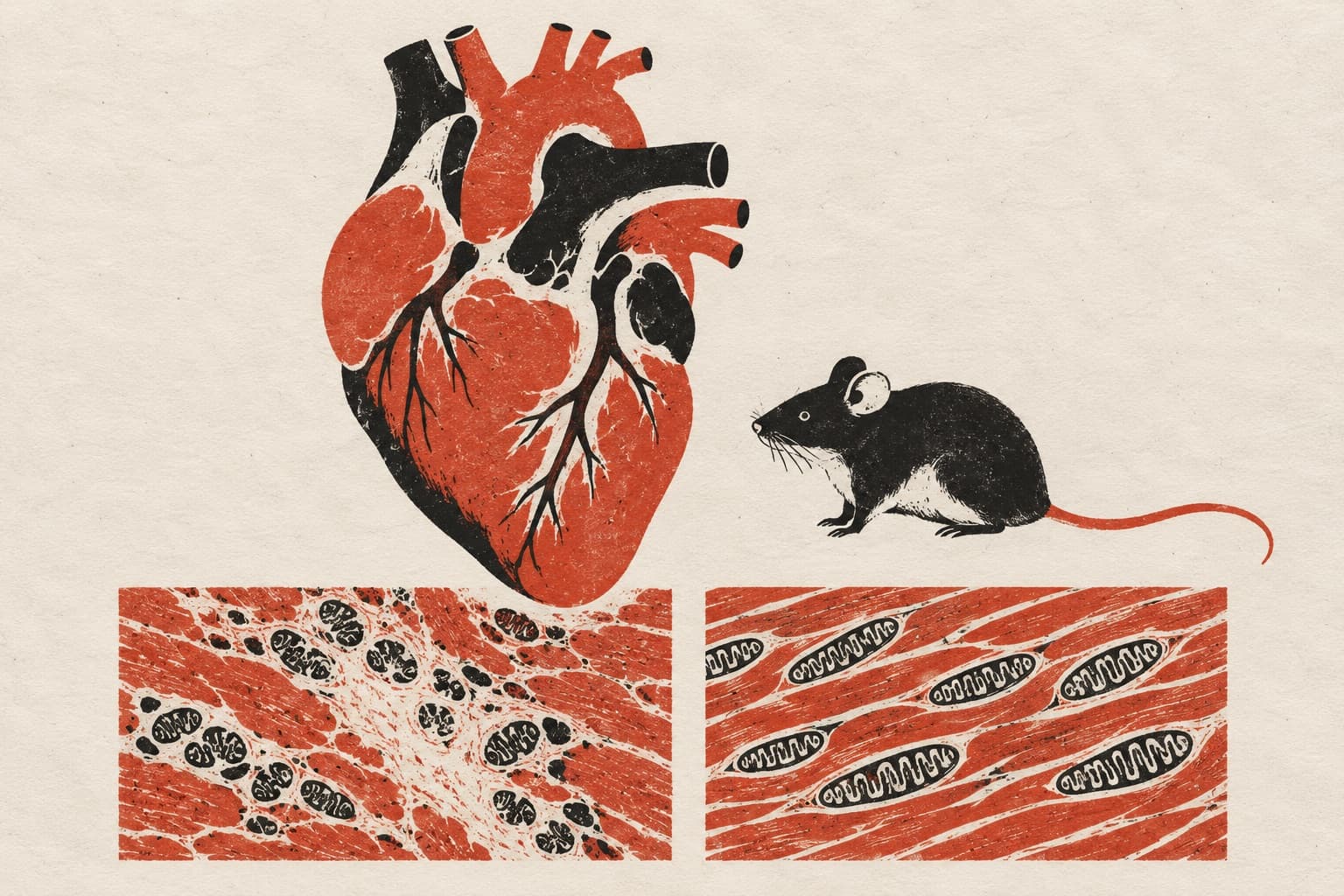
Long-term Senolytic Treatment Prevents Endothelial Dysfunction in Arterial Aging
8 months
Abstract
Endothelial senescence is a critical contributor of arterial dysfunction and age-related cardiovascular diseases. This study demonstrates that long-term senolytic treatment with dasatinib plus quercetin (D+Q; 5 mg/kg + 50 mg/kg biweekly for 8 months) in mice significantly attenuates vascular endothelial senescence. D+Q lowered senescence markers (p21 protein and SA-β-gal positivity) in aged mesenteric arteries and human umbilical vein endothelial cells (HUVECs), while maintaining endothelial integrity. Transcriptomic analysis indicated activation of the relaxin signaling pathway and upregulation of nitric oxide synthase isoforms. Mechanistically, D+Q reversed age-related eNOS uncoupling by promoting dimerization, increased nitric oxide bioavailability, and reduced mitochondrial dysfunction, evidenced by restored mitochondrial ultrastructure, decreased mitochondrial mass, and lowered reactive oxygen species (ROS) production. Consequently, D+Q restored endothelium-dependent vasodilation and enhanced blood flow in aged mesenteric arteries following acetylcholine stimulation. These findings demonstrate that clearance of senescent endothelial cells via senolytic therapy mitigates arterial aging by restoring mitochondrial homeostasis and eNOS function, highlighting its therapeutic potential for age-related vascular dysfunction.
- Dasatinib + quercetin
- Cellular senescence
- Mitochondrial fission and fusion
- Endothelial dysfunction
- Vascular dysfunction
- Mice
The paper
First Affiliated Hospital of Wenzhou Medical University; Shenzhen University
Aging and Disease, 16 Nov 2025