Sphingosine kinase SPHK-1 maintains sphingolipid metabolism to protect lysosome membrane integrity in C. elegans
Abstract
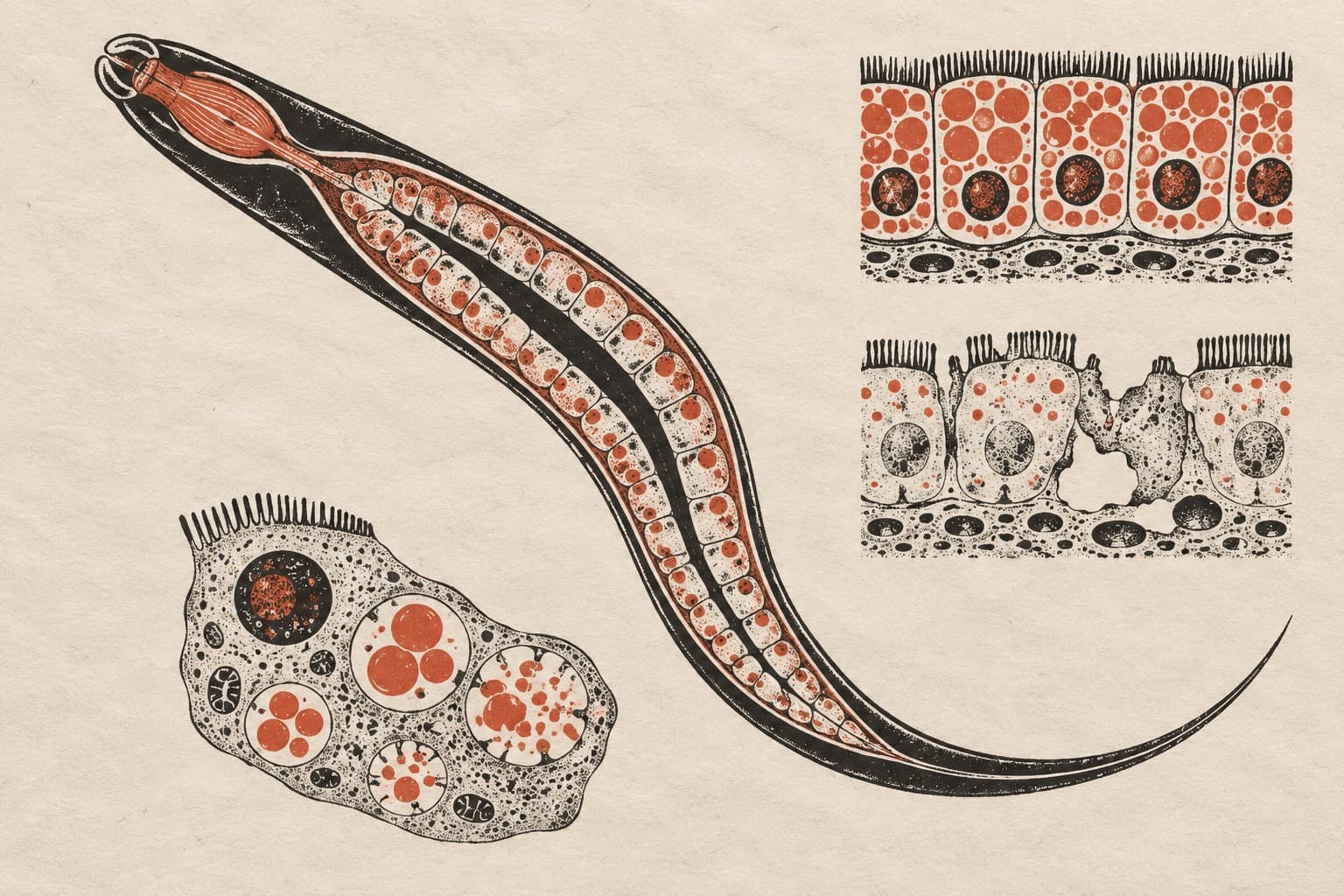
The maintenance of lysosome membrane integrity is vital for cell homeostasis and viability, but the underlying mechanisms are not well understood. In this study, we identified a novel role of SPHK-1, the sole Caenorhabditis elegans sphingosine kinase, in protecting lysosome membrane integrity. Loss of SPHK-1 affects lysosomal integrity and degradative function, causing cargo accumulation and lysosome membrane rupture. sphk-1(lf) mutants show severe defects in embryonic and larval development and have significantly shortened lifespan. We found that sphk-1(lf) mutants accumulate high levels of sphingosine, predominantly in lysosomes. Accordingly, sphingosine supplementation leads to the appearance of damaged lysosomes in wild-type worms. We identified sptl-1 and sptl-3 mutations that fully suppress the lysosomal integrity defects in sphk-1(lf) mutants. sptl-1 and sptl-3 encode serine palmitoyltransferases that catalyze the first and rate-limiting step of de novo sphingolipid synthesis. Loss of sptl-1 alleviates sphingosine accumulation, reverses lysosomal integrity and degradation defects, and restores normal development and longevity in sphk-1(lf) mutants. Our study indicates that sphingolipid metabolism via sphingosine kinase is important for maintaining lysosome membrane integrity and function, and is essential for animal development and longevity.
The paper
Chinese Academy of Sciences
Molecular Biology of the Cell, 5 Nov 2025