Maintenance of Physiological and Molecular Processes Through Food Restriction During Offspring Provisioning in the Adult Zebra Finch
Abstract
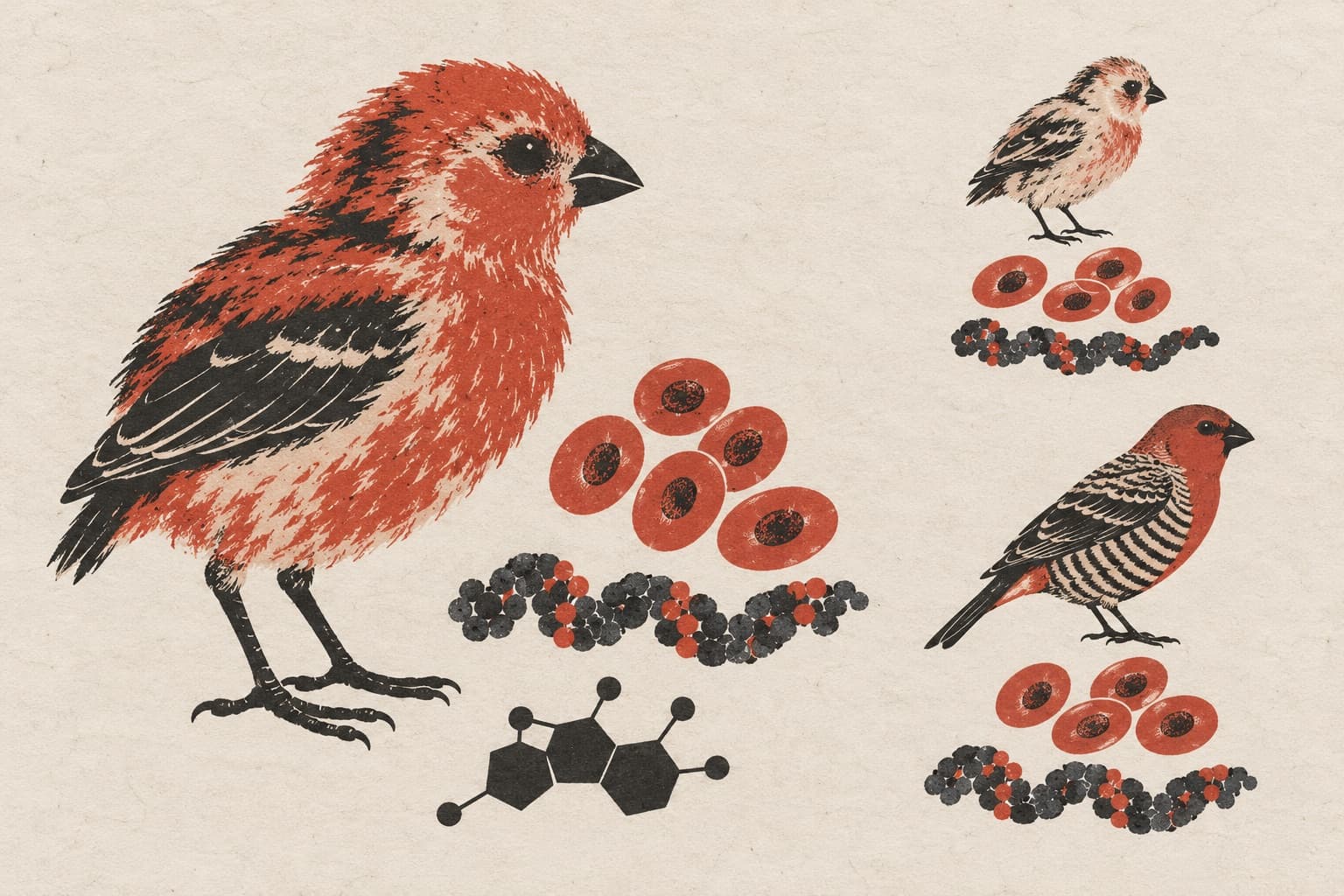
Food restriction is a common environmental stressor, and it can have beneficial effects such as increased longevity when applied to non-reproducing adults. At the molecular level, food restriction can have beneficial effects through increased DNA repair, reduced DNA damage and longer telomeres, but a lack of food may also hinder the ability to utilize carotenoids, or antioxidants obtained from diet. When food restriction overlaps with a period of high energetic demand, such as during offspring provisioning, a combination of the two may instigate reproductive trade-offs. In this study, adult zebra finches (Taeniopygia guttata castanotis) were exposed to either ad libitum (control) or 40% restricted (food-restricted) diet while raising their young. Blood samples and beak pictures of parents were taken when birds were paired (before treatment), when their offspring fledged (~13 days on treatment), and when their offspring reached nutritional independence (~40 days on treatment). DNA was extracted from red blood cells to quantify telomere length and DNA damage, RNA was extracted from whole blood to quantify expression of DNA repair genes, and beak pictures were used to quantify beak color as a measure of carotenoids. We found that while provisioning their offspring, food-restricted birds increased the length of their telomeres, while controls did not alter telomere length. However, there was no effect of food restriction on DNA damage, gene expression of Pot1, Neil3, Aptx, or Hspa2, or beak color, and DNA damage and telomere length were not significantly associated with each other. The results of this study suggest that food-restricted parents provisioning offspring are behaviorally calorically restricting themselves and promoting genomic maintenance. Furthermore, the lack of significance in DNA damage and repair under food restriction suggests the relationship between telomeres, oxidative stress, repair mechanisms, and morphometric indicators of antioxidants under food restriction is complex and requires further exploration.
The paper
Auburn University
Journal of Experimental Zoology Part A, Ecological and Integrative Physiology, 12 Aug 2025