LAMA4⁺ CD90⁺ eCAFs provide immunosuppressive microenvironment for liver cancer through induction of CD8⁺ T cell senescence
Abstract
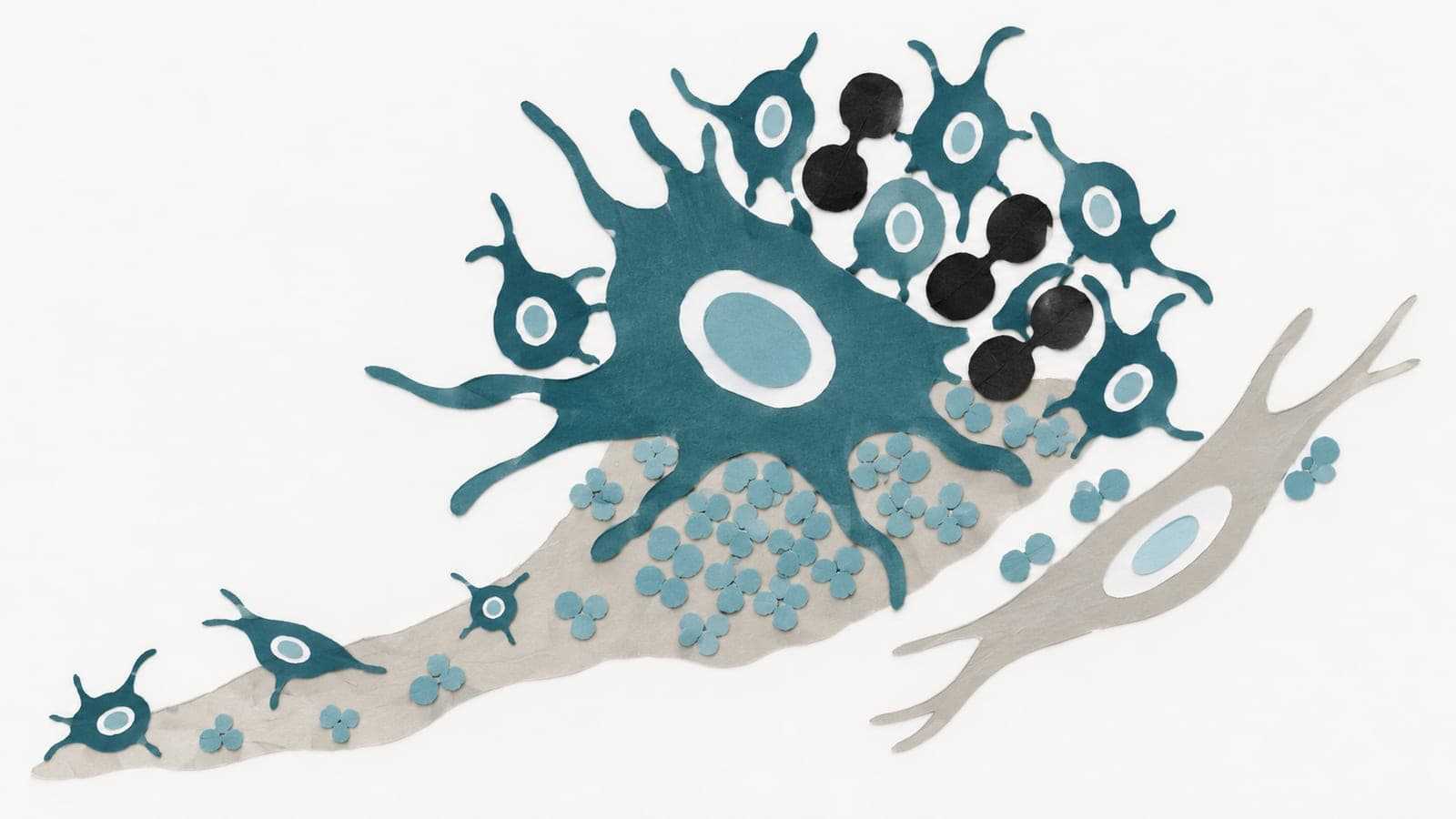
Despite significant advances in cancer biology research and treatment, clinical outcomes for patients with liver cancer remain unsatisfactory. The biological and molecular mechanisms underlying the bidirectional signaling between tumor cells and the tumor microenvironment (TME), which promotes tumor progression in the liver, remain to be elucidated. Fibroblasts are crucial regulators of tumor progression and response to therapy; however, our understanding of their roles remains limited. Here, we integrated single-cell RNA sequencing and spatial transcriptomic data of pan-liver cancers to characterize the different subtypes of cancer-associated fibroblasts (CAFs). siRNA transfection was used for knockdown the expression of LAMA4. Western blot assay was used for gene expression analysis. Flow cytometry was used to detect proliferation, toxicity and cytolytic capacity of CD8⁺ T cells. To establish a spontaneous murine hepatocellular carcinoma (HCC) model, a combined DEN and CCL4 approach was performed. Notably, we identified CD90⁺ extracellular matrix CAFs (eCAFs) associated with poor prognosis. These CD90⁺ eCAFs, located distal to the tumor nest, overlapped with the distribution of CD8⁺ T cells. Functional experiments demonstrated that CD90⁺ eCAFs recruited CD8⁺ T cells and inhibited their function through secretion of LAMA4. Further investigation revealed that LAMA4 induced the CD8⁺ T cell senescence through a DNA damage signaling pathway mediated by the receptor ITGA6. In a mouse model of spontaneous HCC, targeting LAMA4 can inhibit the progression of malignant transformation and synergize with anti-PD-1 therapy. Our study reveals the function of specific CAFs subtypes and highlights the importance of interactions with the immune system.
The paper
Anhui Medical University; Guangzhou Medical University Cancer Hospital
Cell Communication and Signaling, 28 Apr 2025