Senescence linked to loss of liver zone identity in mice
An animal study mapped gene activity in mouse livers of multiple ages, linking senescence patterns to changes in gene patterns defining specialised liver zones.
bioRxiv
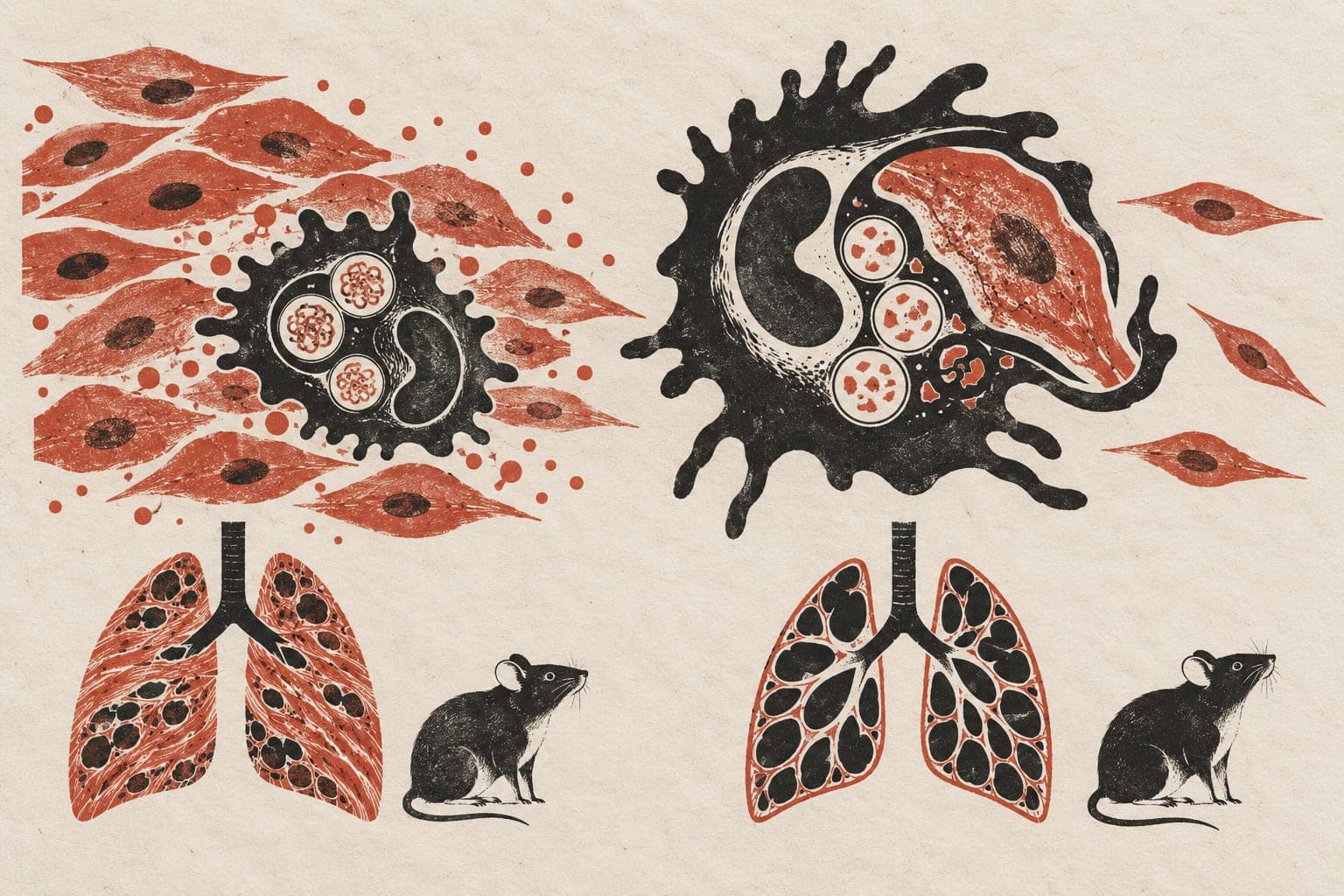
In a laboratory animal study, researchers mapped gene activity in livers from wild-type mice—animals without engineered mutations—of multiple ages. They examined cellular senescence, a state in which cells stop dividing, alongside the liver’s zones of specialised metabolic activity. Older livers lost their usual zone-specific gene activity patterns. Gene activity characteristic of the middle zone spread, while activity marking another zone diminished by 18 months.
Senescence patterns differed by age, zone and sex and were associated with changes in zone markers. Researchers saw similar changes in mice genetically altered to develop accelerated senescence. The authors said this supported a causal role for senescent cells in liver aging.
Why it matters
The liver relies on specialised zones to perform different metabolic tasks. Understanding how those identities change with age could help clarify senescence’s contribution to declining liver cell function.
Caveats
Gene activity signatures indicated senescence and zone identity; their associations alone did not establish cause and effect. This mouse study was a preprint and had not been peer-reviewed.
- Cellular senescence
- ERCC1
- Senescence-associated secretory phenotype (SASP)
- Cellular senescence signatures
- No-zone hepatocyte-like cluster abundance
- Mice
The paper
Cellular senescence is associated with age-related loss of liver zonation and hepatocyte function
Show 26 more authors
Kathryn Lande, Meiyi Li, K Garrett Evensen, Aaron Havas, Zhen Miao, Jane Zhang, Samuel Peters, Jiayi Hu, Luise Angelini, Maggie Klaers, Jennie Brocksome, Adam Lewis, Nishitha Paidimukkala, Mary E Brown, Chase M Carver, Marissa J Schafer, Jeffrey H Albrecht, April Wehner, Peter Adams, Constantin Aliferis, Oyedele Adeyi, Sundeep Khosla, Xiao Dong, Jinhua Wang, Paul D Robbins, Nancy Zhang,bioRxiv · 10 Aug 2026 · Preprint, not peer-reviewed