A protein reduced dialysis-related tissue scarring in mice
In a dialysis mouse model, the protein SIRT3 also suppressed immune cell senescence, a state in which cells stop dividing.
Paper by Funing Wang, Xiaoqian Chen, Hong Deng et al.

Limit: The abstract does not quantify the reduction in scarring
Edited by Boris Djordjevic · AgingResearch.News
Researchers studied a peritoneal dialysis mouse model and RAW264.7 macrophages, immune cells grown in the lab. Peritoneal dialysis uses fluid in the abdomen to filter waste. The experiments altered levels of SIRT3, a protein, and tested honokiol, a drug that activates it, in mice.
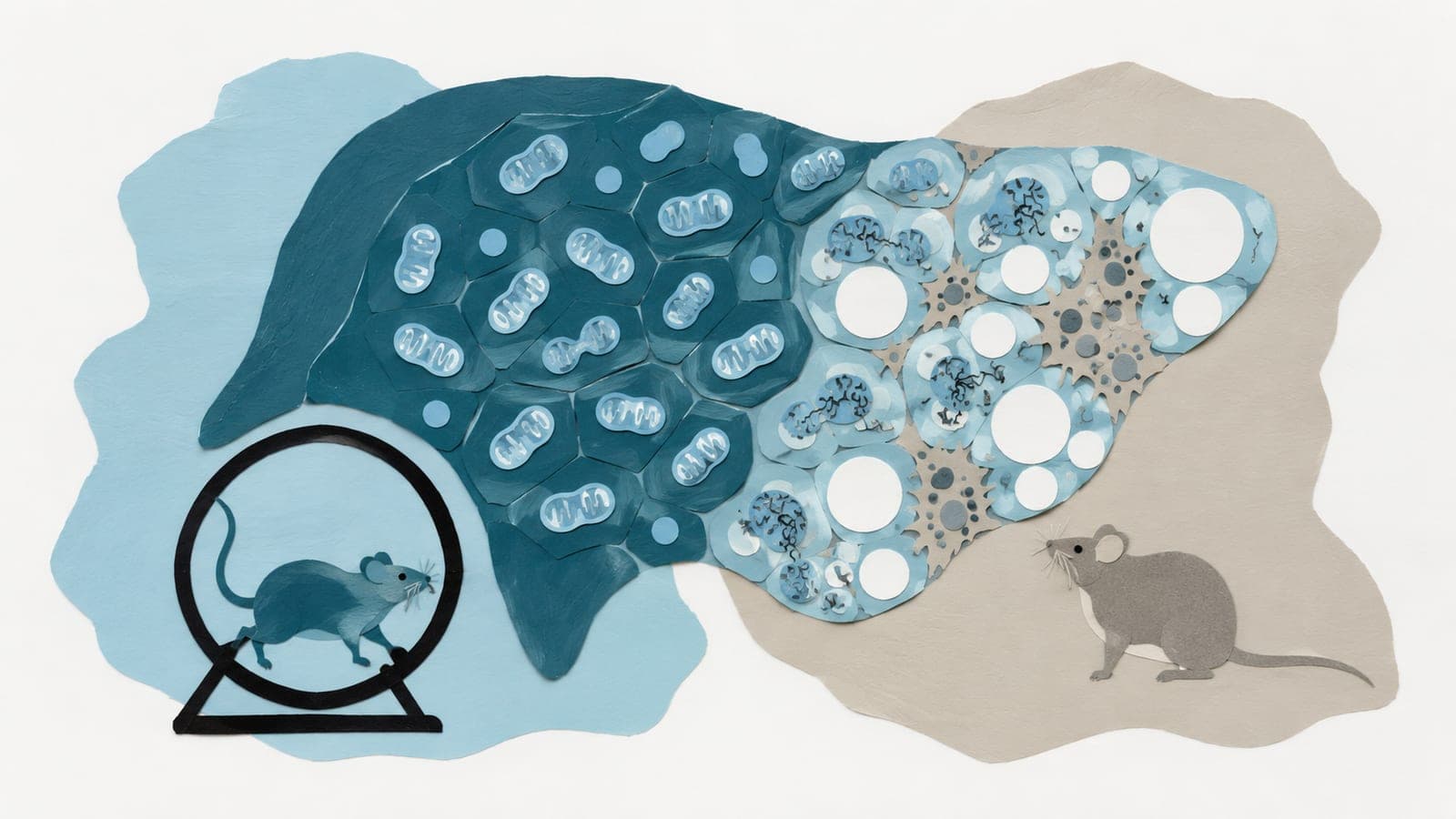
In macrophages, dialysis fluid lowered SIRT3 levels, alongside damage to mitochondria, the cells’ energy-producing structures, and release of mitochondrial DNA. Markers of senescence also rose. Increasing SIRT3 or activating it reversed these changes, while reducing SIRT3 produced similar changes to dialysis fluid. The authors also reported reduced scarring of the abdominal lining in the mouse model. They attributed the effects to SIRT3 inhibiting the opening of a mitochondrial pore mediated by BNIP3, another protein. This blocked mitochondrial DNA release and suppressed an inflammatory signaling pathway.
Why it matters
The work addresses how mitochondrial damage and senescence-related inflammation are connected to scarring during long-term peritoneal dialysis.
Caveats
These were experiments in mice and cells grown in the lab, not people receiving dialysis. The abstract does not quantify the reduction in scarring.
Where the evidence stands
Honokiol
- 16 independent labs in 8 countries
- 2 trials
- Funders: National Natural Science Foundation of China and others
- 3 of 41 findings with company ties
SIRT3
- 124 independent labs in 27 countries
- 5 findings against
- Funders: National Natural Science Foundation of China and others
- 13 of 348 findings with company ties
The paper
Funing Wang, Xiaoqian Chen, Hong Deng et al.
Frontiers in Cell and Developmental Biology, Nov 2, 2026, CC BY, Accepted, not yet published

Comments
Be the first to comment.