Personalized in situ bioprinting of skin: designing a blueprint for clinical translation
Abstract
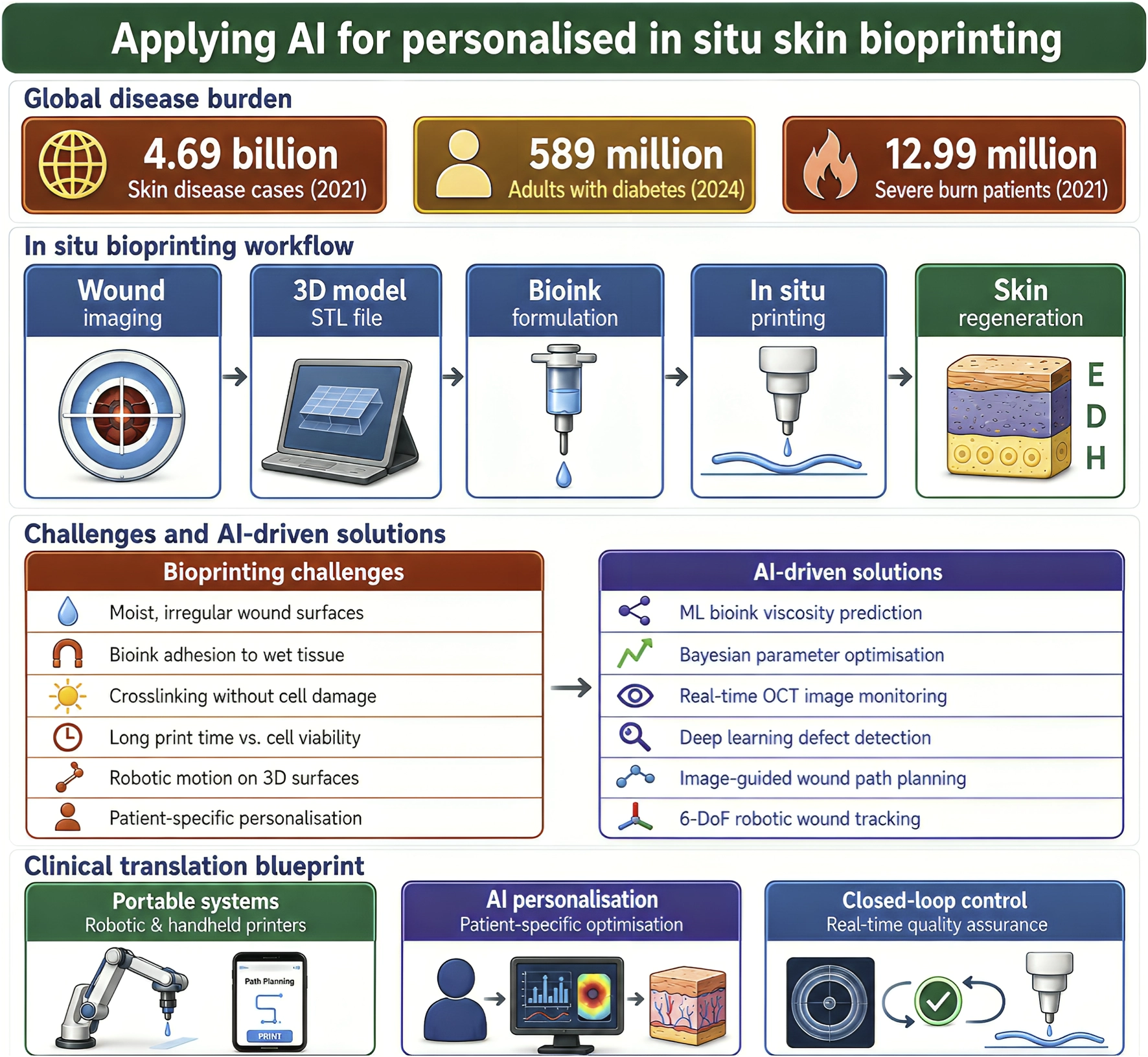
In situ 3D skin bioprinting offers a revolutionary paradigm for directly regenerating massive cutaneous defects right on a patient’s wound bed. However, translating this technology from the bench to the bedside remains heavily bottlenecked by hostile wound microenvironments, delicate cell viability constraints, and unpredictable tissue deformation during surgery. To overcome these primary hurdles hindering its clinical translation, this review proposes a comprehensive blueprint for integrating artificial intelligence (AI) into the in situ bioprinting of skin. It describes how AI can optimize bioinks, design patient-specific grafts from medical images, and enable real-time adaptive printing through predictive modeling and feedback. The review presents a framework for developing intelligent, portable systems for personalized skin therapy while addressing biomaterials, personalization, quality control, and AI-related ethical issues. This roadmap ultimately bridges the gap between delicate laboratory protocols and autonomous, precision-guided intraoperative interventions tailored for real-world clinical deployment.
The paper
Alexandria University
Frontiers in Bioengineering and Biotechnology, 12 Oct 2026, CC BY