Behavioral symptoms differed years before cognitive impairment
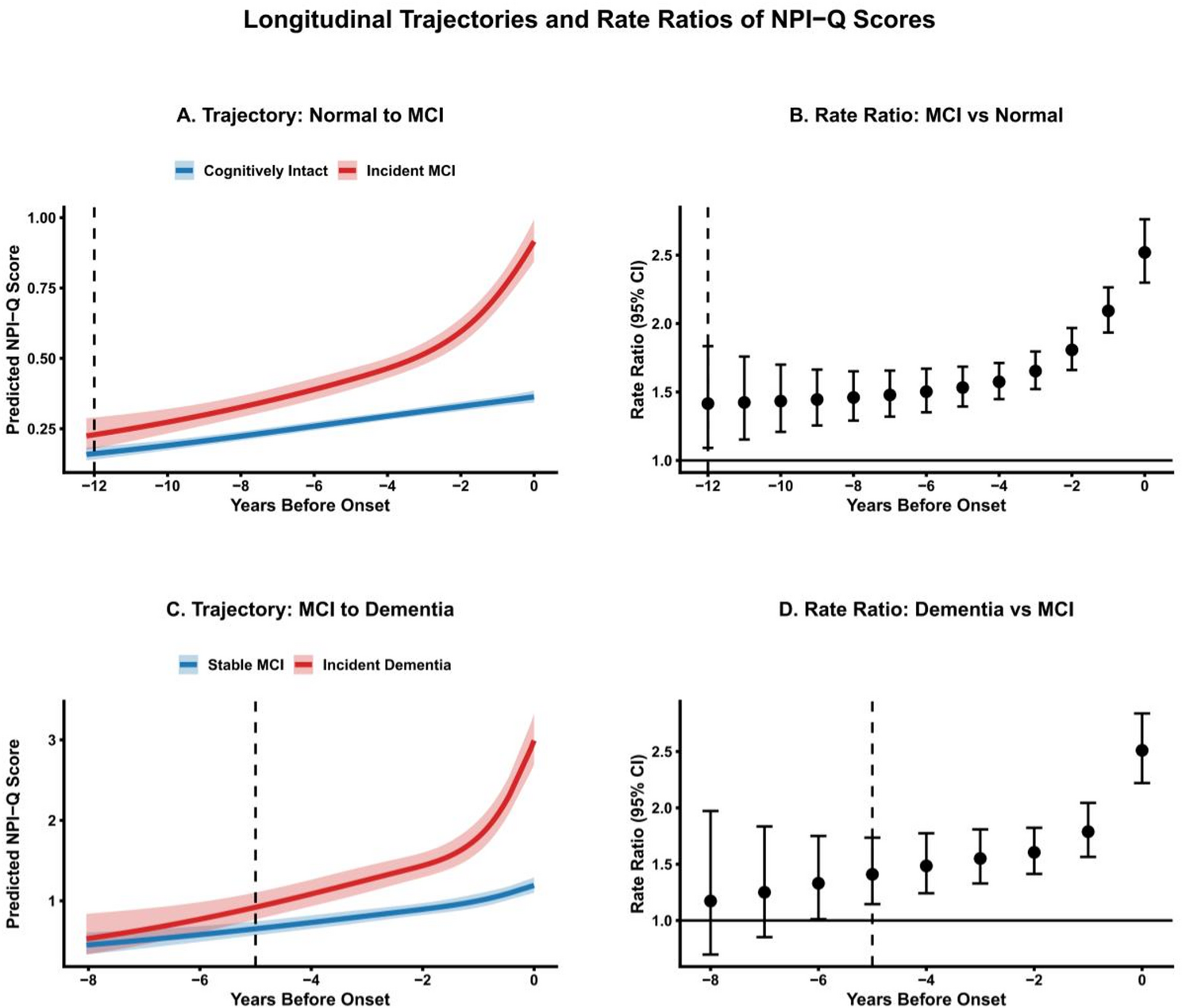
Models identified symptom differences 12 years before mild cognitive impairment diagnosis and five years before dementia diagnosis in adults aged 60 or older.
Limit: The observation window did not capture when symptom differences began
Edited by Boris Djordjevic · AgingResearch.News
Researchers analyzed data from 11,781 cognitively normal adults aged 60 or older from the National Alzheimer’s Coordinating Center in an observational study. They assessed behavioral and psychological symptoms with a questionnaire and modeled symptom patterns around diagnoses. Among participants, 2,865 developed mild cognitive impairment, which involves difficulties with thinking or memory, and 731 subsequently developed dementia.
Overall symptom patterns already differed at the earliest time examined, 12 years before mild cognitive impairment diagnosis. Before dementia, differences first became statistically significant five years before diagnosis. Both time points also met the researchers’ predefined criteria for accelerating symptom changes.
Why it matters
The authors suggest that tracking behavioral and psychological symptoms over time may provide complementary information about behavioral progression as cognitive impairment and dementia develop.
Caveats
The observational analysis cannot establish cause and effect, and individual predictive value requires validation. The 12-year estimate fell at the boundary of the observation window, so it does not establish when differences began.
- Mild cognitive impairment
- Dementia
- Neuropsychiatric symptoms
- Alzheimer Disease–Related Neuropathologic Measures
- Cerebrovascular pathologies
- Humans
The paper
Neuropsychiatric symptoms trajectories preceding incident mild cognitive impairment and dementia
Shandong University
Alzheimer's Research & Therapy, Oct 28, 2026, Open access, CC BY-NC-ND


