Aspirin initiation before 65 links to lower Alzheimer's risk
Across electronic health records and insurance claims databases, starting aspirin before age 65 was consistently associated with lower incident Alzheimer’s disease risk.
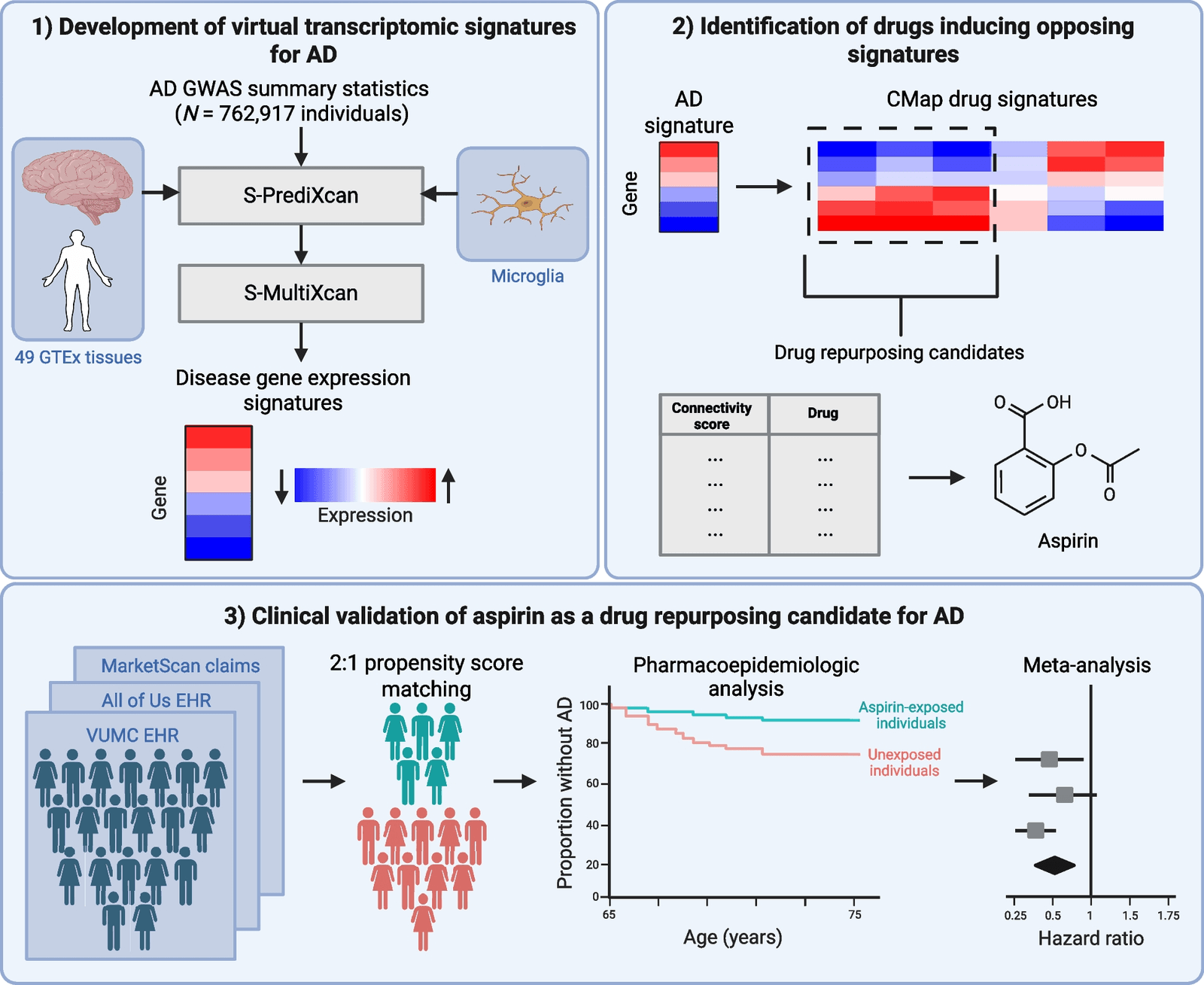
In human health records and cortical organoids, researchers evaluated aspirin as a repurposed candidate against Alzheimer’s disease. The authors generated disease expression signatures from genetically predicted transcriptomic changes in bulk tissues and microglia. They then queried Connectivity Map profiles to pinpoint compounds predicted to reverse those signatures, identifying aspirin across multiple models. The team tracked clinical outcomes in longitudinal electronic health records from Vanderbilt University Medical Center and the NIH All of Us Research Program, alongside national claims data. Across these datasets, starting aspirin before age 65 was consistently associated with reduced risk of incident Alzheimer’s disease. Cumulative drug exposure and APOE ε4 carrier status also appeared to influence the association. In lab tests, aspirin opposed Alzheimer’s-related neuronal pathway changes more effectively in wild-type cortical organoids than in an Alzheimer’s disease organoid model.
Why it matters
Repurposing existing drugs by pairing genetic and transcriptomic signatures with clinical records offers a path to identify accessible therapies for age-related neurodegenerative decline.
Caveats
The clinical findings come from observational databases that cannot establish causation. Additionally, cellular experiments showed that aspirin exerted weaker transcriptomic effects in an organoid model of Alzheimer’s than in wild-type cells.
The paper
Integrating genetically predicted transcriptomic signatures with longitudinal real-world data for drug repurposing in Alzheimer’s disease
Grabowska ME, Chen R, Zhou Y et al.
Alzheimer's Research & Therapy · 2 Oct 2026