Education links to better cognition independent of brain pathology
Across two aging cohorts spanning normal cognition to mild Alzheimer’s disease, higher education tracked with better cognitive performance even after adjusting for multimodal brain pathology.
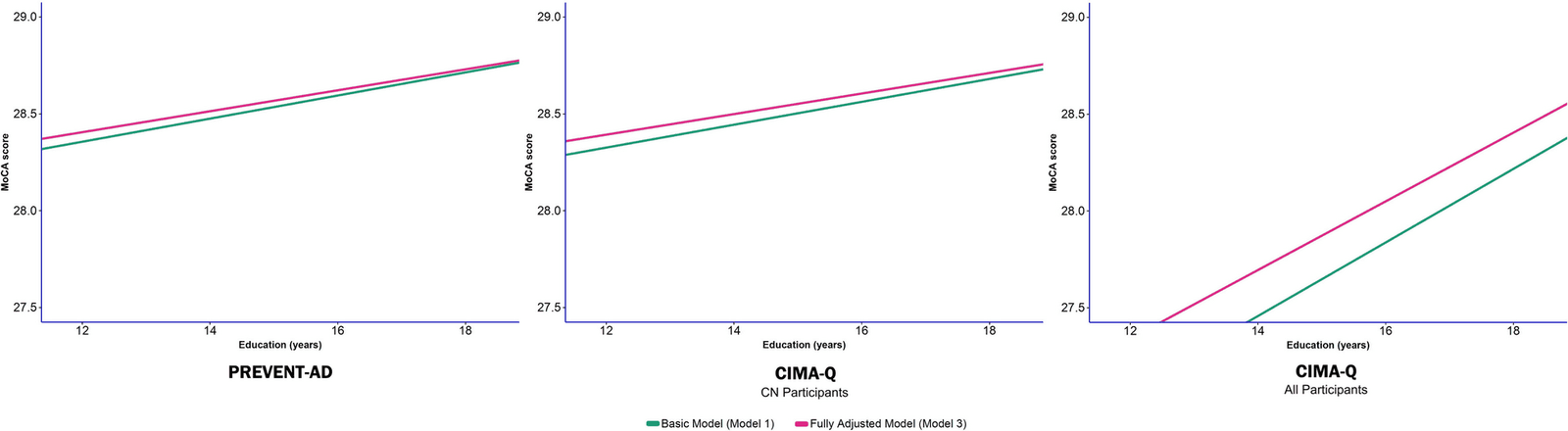
In human participants spanning normal cognition to mild Alzheimer’s disease, researchers analyzed data from the PREVENT-AD and CIMA-Q cohorts to evaluate education as a proxy for cognitive reserve. They tested whether education and a multidimensional questionnaire related to cognitive outcomes before and after controlling for brain pathology, including white matter hyperintensity volume, neurodegeneration measures, and plasma Alzheimer’s biomarkers.
Higher education was consistently associated with better cognitive performance across cohorts. These associations persisted after adjusting for cerebrovascular, neurodegenerative, and Alzheimer’s disease pathology markers. However, education had limited associations with pathology burden itself and did not significantly moderate the link between pathology and cognition. Longitudinally, education related more consistently to baseline cognitive performance than to rates of cognitive change over time.
Why it matters
The findings clarify how cognitive reserve operates during brain aging, suggesting education supports cognitive performance through mechanisms that do not simply reduce or buffer against measurable neuropathology.
Caveats
The study relied on observational cohort data, and education failed to significantly moderate the relationship between pathology and cognition or consistently predict long-term cognitive trajectories.
The paper
Education, cognitive reserve and brain pathology in aging and Alzheimer’s disease: evidence from preclinical and symptomatic cohorts
Raeesi S, Metz A, Chadwick K et al.
Alzheimer's Research & Therapy · 2 Oct 2026