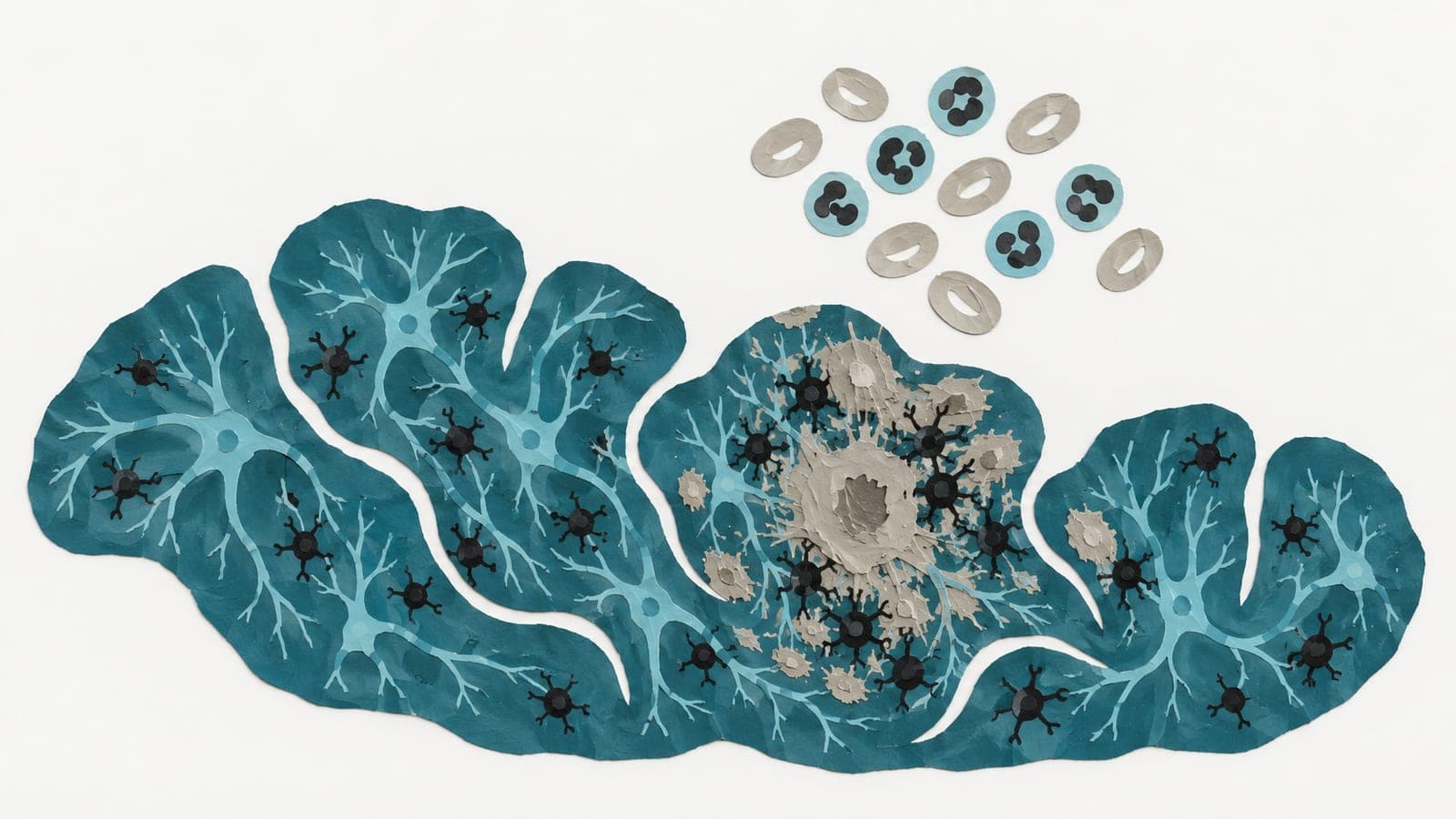
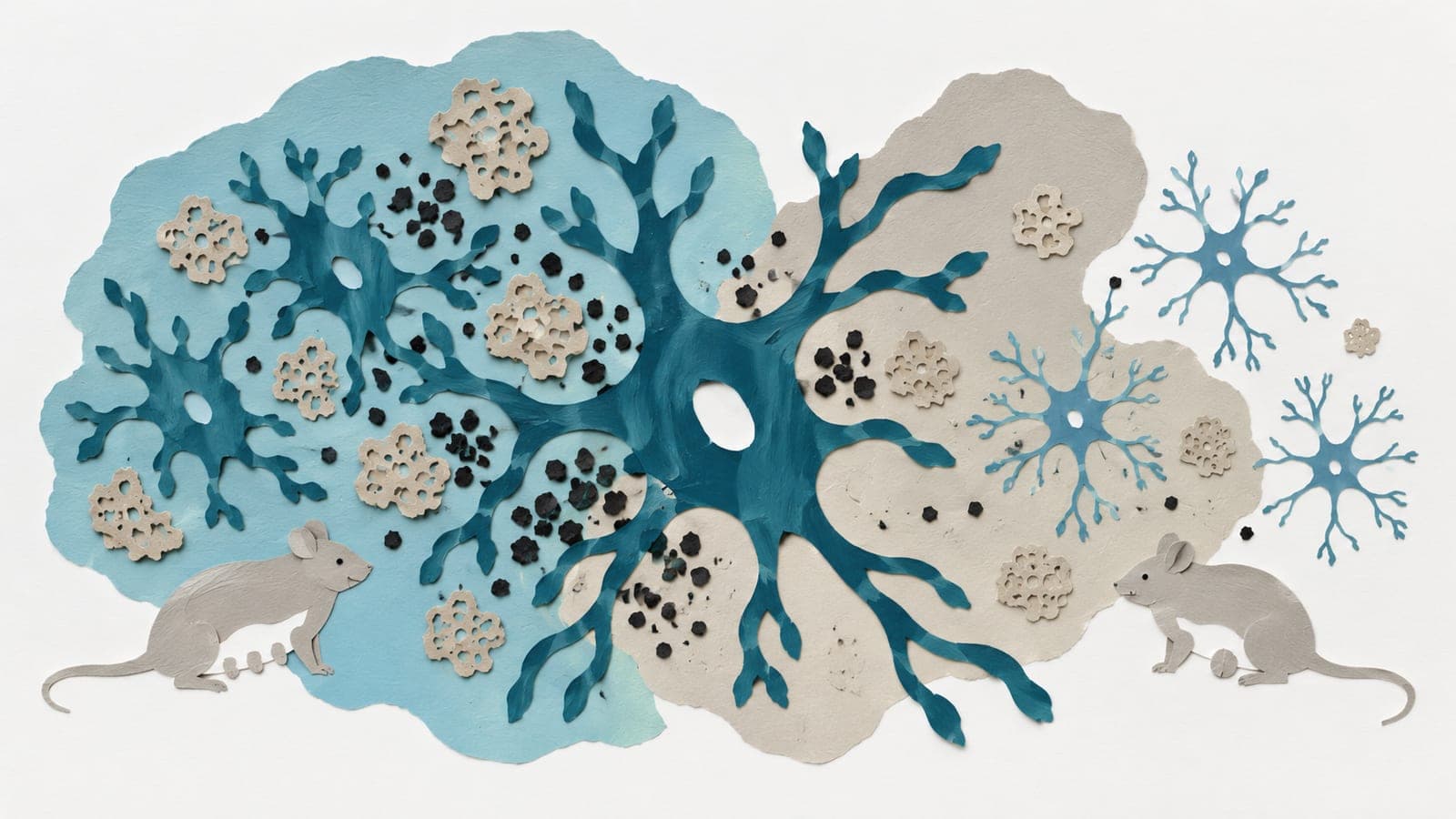
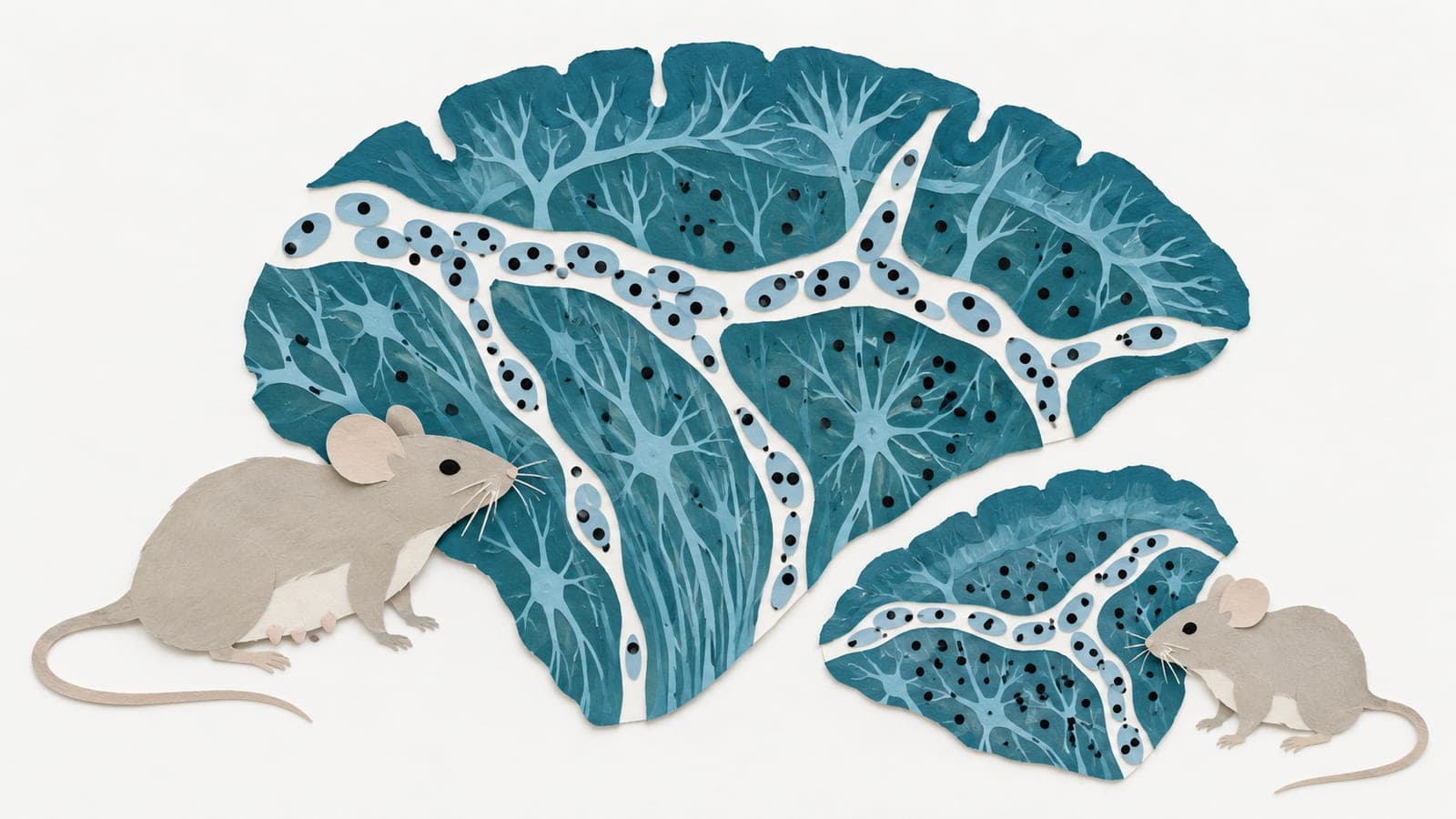
Low brain blood flow changed brain immune cells in aged mice
Experiments in aged mice found that long-term reductions in brain blood flow altered the mix and gene activity of T cells, a type of immune cell.
Limit: T-cell composition and gene activity were measured, not the functions of individual subsets
Edited by Boris Djordjevic · AgingResearch.News
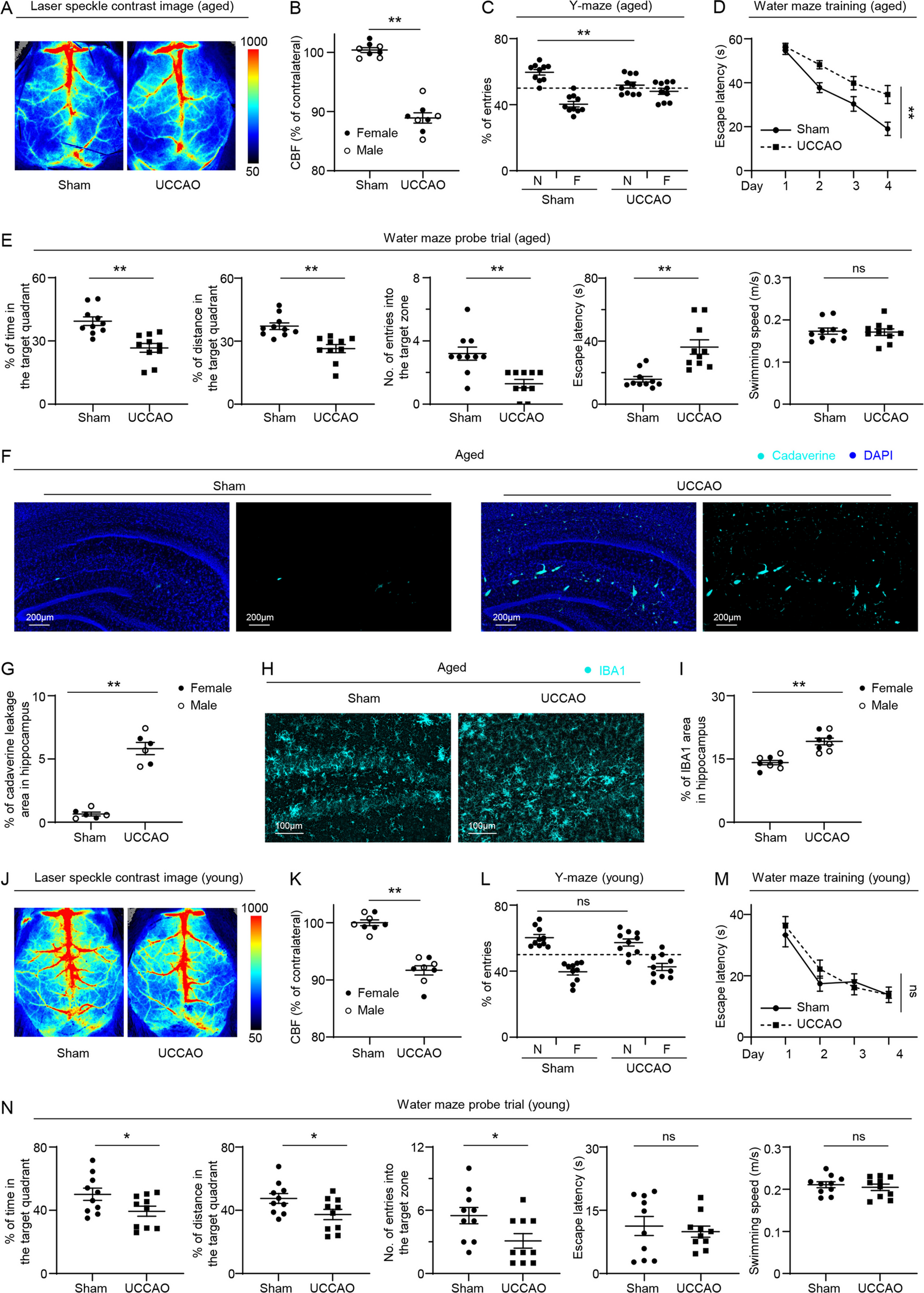
Aged mice with chronically reduced blood flow to the brain developed cognitive impairment in an animal experiment. Researchers studied T cells, a type of immune cell, that had entered the brain. They measured the mix of cell groups and their gene activity.
Several T-cell groups increased. Gene activity changed differently across groups, with little overlap in the genes affected. Changes in the mix of groups contributed substantially to the overall changes in gene activity. The researchers also found increased activity of the gene for interleukin-17A, an immune signaling protein. Compared with a control antibody, an antibody that neutralized this protein reduced leakage through the blood-brain barrier, which separates blood from brain tissue. It also reduced brain inflammation and improved cognitive function.
Why it matters
Reduced brain blood flow contributes to vascular dementia, a cause of cognitive impairment in older people. Understanding the immune response may help clarify how this age-related disease develops.
Caveats
These experiments used aged mice with experimentally reduced brain blood flow. They did not test whether blocking interleukin-17A benefits people with vascular dementia.
The paper
Rutgers, The State University of New Jersey
Journal of Neuroinflammation, Oct 22, 2026, Open access, CC BY-NC-ND