Inhibiting an immune signal improved nerve regrowth in aged mice
Aged mice given an inhibitor of immune signaling starting four weeks before nerve injury showed better nerve fiber regrowth and rebuilding of insulation.
Limit: Treatment began four weeks before injury, limiting relevance to treatment after unexpected injuries
Edited by Boris Djordjevic · AgingResearch.News
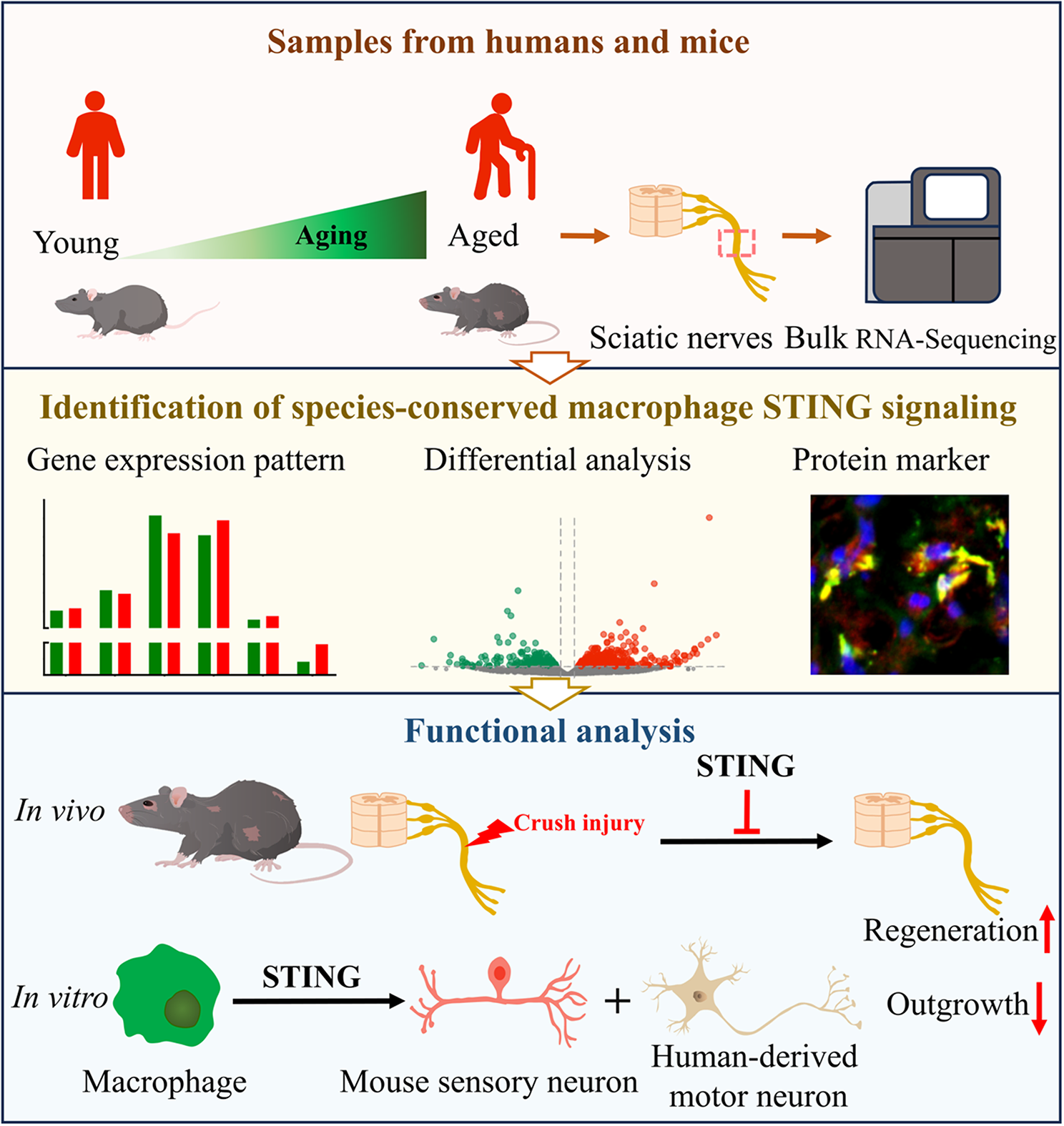
Experiments in aged mice tested whether inhibiting STING, a protein involved in immune signaling, improved nerve repair after injury. The mice received a STING inhibitor starting four weeks before injury, with post-injury dosing duration varying by the outcome assessed. Inhibition improved nerve fiber regeneration and the rebuilding of the fibers’ insulating coating.
The researchers also compared gene activity in sciatic nerve tissue from young and aged human donors and mice. In both species, aged nerves showed increased STING signaling in macrophages, immune cells. Protein measurements confirmed this finding. In experiments using cells grown together in the lab, activating STING in macrophages suppressed nerve fiber growth in human-derived and mouse neurons, cells that transmit nerve signals.
Why it matters
Peripheral nerve repair declines with age, contributing to poor recovery after injury. The work points to a possible target for efforts to restore repair capacity in older individuals.
Caveats
The nerve-repair benefits came from experiments in mice, not treatment studies in people. Dosing began before injury, and the abstract did not report sample sizes or harms.
The paper
Sun Yat-sen University
Journal of Translational Medicine, Oct 24, 2026, Open access, CC BY-NC-ND