Stressful events linked to incontinence in women 45 and older
At least three stressful life events were associated with an 88% higher relative risk of incontinence than no events over nine years’ median follow-up.
Limit: Recall errors in reported stressful life events could misclassify women's exposure
Edited by Boris Djordjevic · AgingResearch.News
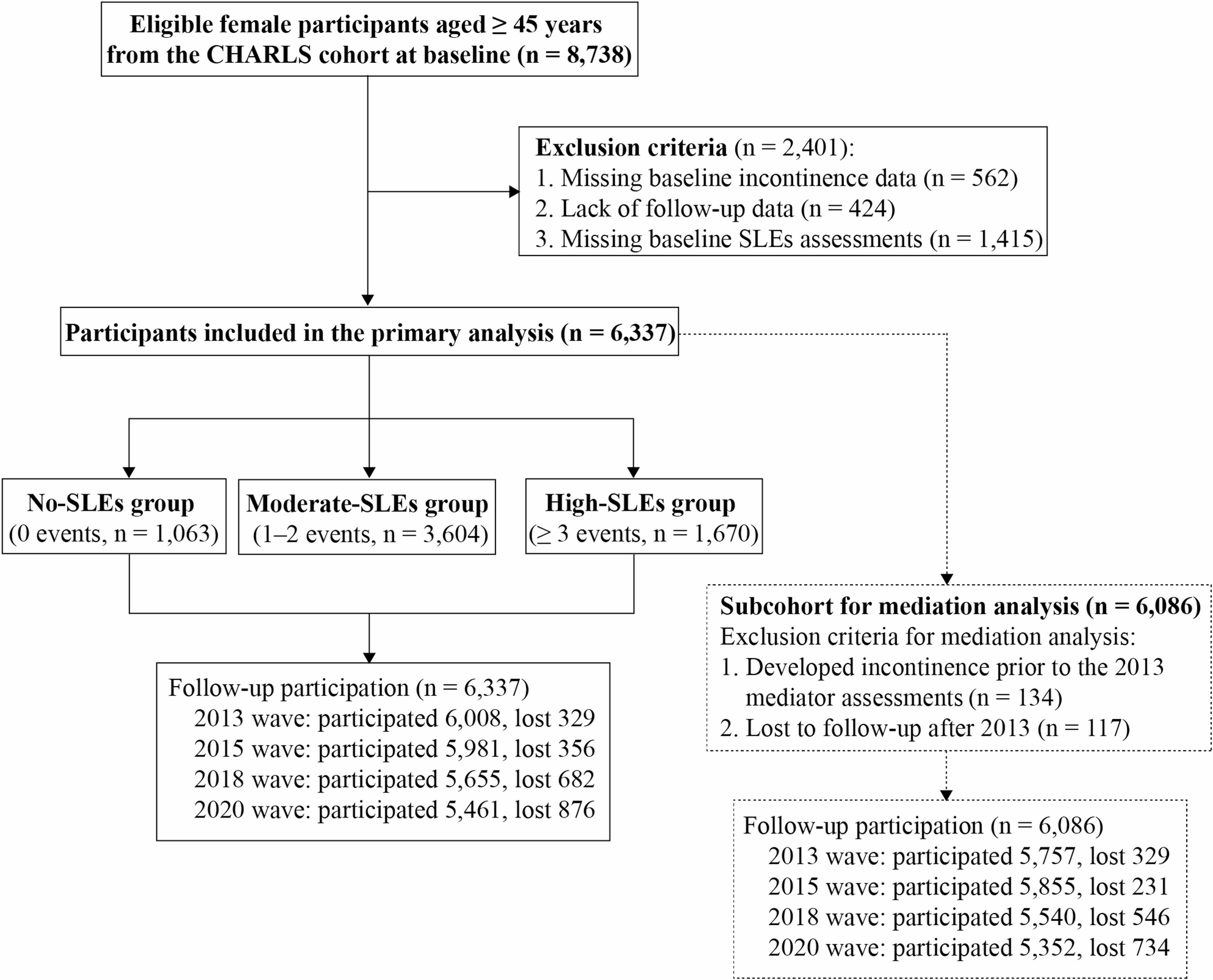
A prospective observational study followed 6,337 women aged 45 and older in China who had no incontinence at the start. Researchers used data from the China Health and Retirement Longitudinal Study, spanning 2011–2020. They grouped women by reported stressful life events: none, one or two, or at least three.
Over a median follow-up of nine years, 12.66% developed urinary or fecal incontinence—loss of bladder or bowel control. Compared with no events, one or two were associated with a 31% higher relative risk; at least three were associated with an 88% higher relative risk. The range of likely values for one or two events included no difference. Analyses accounted for demographic characteristics, health behaviors and other illnesses. A separate analysis estimated that depressive symptoms could account for 14.88% of the association in the highest-exposure group.
Why it matters
For middle-aged and older women, the authors supported developing healthy-aging strategies that combine attention to past adversity and psychological health with incontinence screening.
Caveats
This observational study could not establish cause and effect, including whether depressive symptoms explained part of the link. It did not study men, younger women or women who already had incontinence.
- Stressful life events
- Fecal incontinence
- Depressive symptoms
- Incident incontinence
- Urinary incontinence
- Humans
The paper
Chinese Academy of Medical Sciences & Peking Union Medical College
BMC Public Health, Oct 20, 2026, Open access, CC BY-NC-ND
